

Freemasons were everywhere in Revolutionary America, which makes the topic a magnet for both proud exaggeration and dark speculation. Here are the documented facts on four famous cases, followed by what they do and do not add up to.
George Washington
Mount Vernon’s digital encyclopedia, written by the director of collections at the George Washington Masonic National Memorial, sets out the record:
- November 4, 1752: at age 20, Washington received the first degree, Entered Apprentice, in the Lodge at Fredericksburg, Virginia, paying two pounds and three shillings.
- March 3, 1753: passed to Fellowcraft. August 4, 1753: raised to Master Mason.
- The lodge’s surviving minute book records him attending only two more meetings, in 1753 and 1755.
- After the war he grew more involved. In 1788 he agreed to serve as charter master of the Alexandria lodge, renamed Alexandria-Washington Lodge No. 22 after his death.
- At his funeral in 1799, members of the Alexandria lodge performed Masonic rites.
Being persuaded that a just application of the principles, on which the Masonic Fraternity is founded, must be promotive of private virtue and public prosperity, I shall always be happy to advance the interests of the Society, and to be considered by them as a deserving brother.
George Washington to King David’s Lodge, Newport, Rhode Island, 1790
The Capitol cornerstone, September 18, 1793
The Architect of the Capitol describes the cornerstone laying as the first large public event in the federal city. The newspaper invitation was addressed to the Masonic fraternity. Lodges from Maryland and Virginia marched “with music playing, drums beating, colors flying.” Washington, acting as grand master pro tem according to Mount Vernon, laid an engraved silver plate and lowered the stone onto it. Three masters carried corn, wine and oil to consecrate the stone, and the day ended with a 500-pound barbecued ox.
The plate named the Grand Lodge of Maryland and Lodge No. 22 of Alexandria. It also dated the event “in the year of Masonry 5793.” Confirmed The cornerstone itself was later buried under foundation work and lost. The Architect of the Capitol believes a large sandstone block found at the southeast corner of the House wing is the stone. The silver plate has never been found.
Benjamin Franklin
- Franklin joined St. John’s Lodge in Philadelphia in 1731. The lodge’s 1731 account survives among his papers at the National Archives’ Founders Online.
- In 1734 he became Grand Master of Pennsylvania. That June he printed the first Masonic book published in America: a reprint of Anderson’s Constitutions of the Free-Masons. The Scottish Rite Masonic Museum and Library notes he never put his name in it, but his own Pennsylvania Gazette advertised it as “Reprinted by B. Franklin.” He was still trying to sell leftover copies in 1750.
Paul Revere
The Paul Revere House’s curator traces his Masonic life:
- He joined St. Andrew’s Lodge in Boston in 1760, at 25, and became its Master in December 1770.
- Between 1762 and 1797 there were only four years when he held no Masonic office.
- The lodge met at the Green Dragon Tavern, which it bought in 1764. On December 16, 1773, the night of the Boston Tea Party, its meeting “Closed (on account of the few members present).” The museum says only a few lodge members appear on later lists of confirmed participants, and it cannot confirm Revere destroyed tea that night.
- Elected Grand Master of the Massachusetts Grand Lodge in 1794, he chartered 23 lodges in three years. In a 1797 speech he called the office the “greatest happiness” of his life.
What the evidence does and doesn’t show
| Claim | Verdict |
|---|---|
| Many leading founders were Masons | True. Mount Vernon names Washington, Franklin, James Otis and Revere among Masons of note. Counts of Masonic signers vary from source to source because records are incomplete. |
| Lodges were a network that helped spread Enlightenment ideals | Supported. Mount Vernon says the fraternity “contributed to the spread of the ideas and ideals behind the American Revolution.” |
| The Revolution was a Masonic plot | Not supported. Mount Vernon notes that individual Masons fought, but Freemasonry as an institution “remained politically neutral.” |
| Masonic rites marked national events | True. The Capitol cornerstone is the leading example, done openly and announced in the newspaper. |
| The Constitution encodes Masonic doctrine | No evidence. The records of the Convention show debates over representation, commerce and power, not ritual. |
| The Boston Tea Party was planned in a lodge | Unproven. The lodge minutes are suggestive but do not prove a plan. See the Paul Revere House account above. |
Our view: Freemasonry was part of the social fabric of the founding generation. It was a place where merchants, craftsmen, officers and planters met as equals and practiced self-government in miniature. That is a real story, and it needs no exaggeration. The founding itself was argued in public, in print and in the state conventions.
Freemasonry series: 1. Origins · 2. The American founding · 3. Service and charity · 4. Conspiracy theories · 5. Religion · Part of Secret Societies
Sources
- George Washington’s Mount Vernon, Digital Encyclopedia: Freemasonry
- Fredericksburg Masonic Lodge No. 4, History
- Architect of the Capitol, First Cornerstone
- Founders Online (National Archives), St. John’s Lodge Account, 24 June 1731
- Scottish Rite Masonic Museum and Library, First Masonic Book Published in America
- Paul Revere House, “Paul Revere and Freemasonry: A Lifelong Pursuit” (Edith Steblecki)
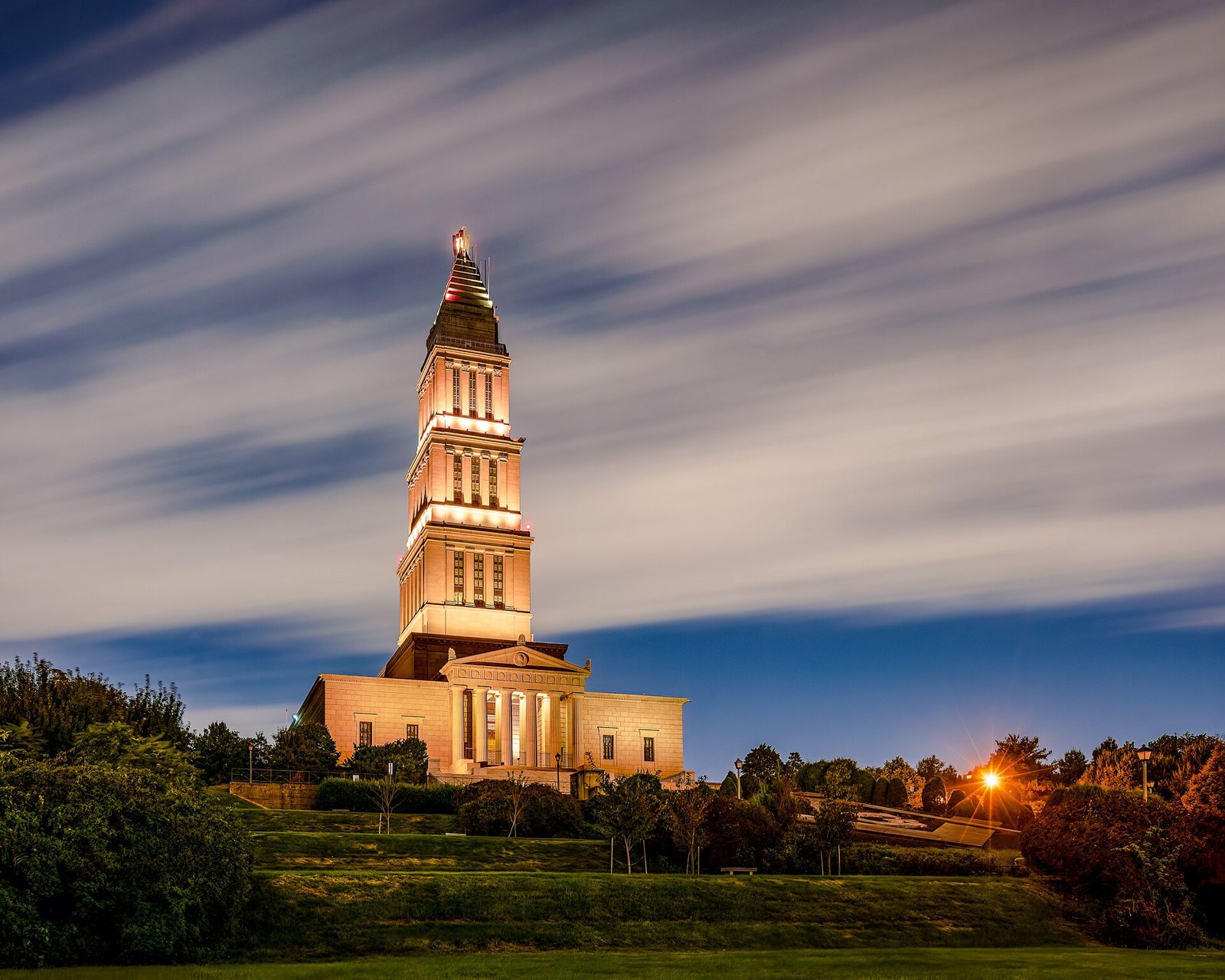
Featured image: George Washington Masonic Memorial at Night, by Daniel M Horowitz. CC BY-SA 4.0, via Wikimedia Commons. See all image credits.