

Secret Societies: This entry is one of many in our Secret Societies section. Each one separates what is documented from what is myth, and every claim is labeled and sourced.
“The Illuminati” is shorthand today for a hidden group that secretly runs the world. The original was a real organization with a founding date, a founder, internal letters that survive and a clear end.
A short history
- Founding. Adam Weishaupt, a law professor at the University of Ingolstadt in Bavaria, founded the society on May 1, 1776 with a handful of students. Members first called themselves “Perfectibilists” (LMU Munich; History.com).
- Aims. The order promoted the ideas of the radical Enlightenment and opposed the Church’s control over learning. Its long-term goal was to place its own trained members in key positions of the state (LMU Munich).
- Recruiting. Weishaupt’s surviving letters tell recruiters to seek out people who were capable, wealthy and well connected (German History Intersections). Growth came largely through Masonic lodges, and estimates put membership at a few thousand at its peak (History.com).
- The end. Bavaria’s ruler banned unauthorized societies in 1784 and named the Illuminati specifically in 1785. Raids in 1786 and 1787 seized the order’s papers, which the government published. Weishaupt lost his post and fled (Live Science; History.com).
How the legend grew
In 1797 and 1798, books by John Robison in Scotland and Augustin Barruel in France claimed that the Illuminati had survived and caused the French Revolution. In New England, the Rev. Jedidiah Morse preached in 1798 that agents of the Illuminati were working in America (History Today). The panic faded within a few years, but the story never died.
Claims checked
Claim: The Illuminati were a real secret society.
✅ Confirmed  Factual Lean note: University and archival sources agree on the founding, the ban and the seized papers.
True. The order was founded in 1776 and banned by 1785, and its papers were seized and published by 1787 (LMU Munich; Live Science).
Claim: The Illuminati survived and secretly run the world today.
⚠️ Disputed  Likely Propaganda Lean note: The claim began with partisan pamphlets and sermons during the 1790s fight over the French Revolution.
Not supported. Later groups have used the name, but historians find no continuous line from the Bavarian order. Live Science calls claims of survival “largely unfounded” (Live Science; History Today).
Claim: George Washington wrote about the Illuminati.
✅ Confirmed Factual Lean note: Primary source: Washington’s own letters, published by the National Archives.
True. In 1798 a Maryland minister sent Washington Robison’s book. Washington replied that he did not believe the Masonic lodges in America, as societies, had spread Illuminati teachings, though individuals might have (Founders Online, National Archives).
Bottom line: The real Illuminati were an Enlightenment club that grew fast, quarreled and was shut down by the state within about ten years. The legend comes from the 1790s, when people looked for a hidden hand behind the French Revolution.
Label key
- ✅ Confirmed An official record, or two or more independent outlets, agree.
- ❓ Unconfirmed Reported or claimed, but not yet independently verified.
- ⚠️ Disputed Contradicted by the evidence or by credible sources, or actively contested.
- Factual Straight reporting that holds up across outlets on different sides.
 Leans Left The facts hold, but the coverage tilts left: one-sided, loaded language, missing context or a single anonymous source.
 Leans Right The facts hold, but the coverage tilts right: one-sided, loaded language, missing context or a single anonymous source.
- Likely Propaganda State-run or state-aligned media, a militant press office, a partisan campaign or group, or unverifiable spin.
Each story gets one confidence tag and one source-lean label, plus a one-line Lean note explaining the call. Every side is held to the same standard. More on how we cover the news.
Sources
- LMU Munich, 1776: The Illuminati are founded in Ingolstadt
- History.com, The Secretive Origins of the Illuminati
- German History Intersections, Two Letters from Adam Weishaupt (1776)
- Live Science, What Is the Illuminati?
- History Today, The Illuminati in the United States
- Founders Online (National Archives), G. W. Snyder to George Washington, 22 August 1798, with Washington’s replies
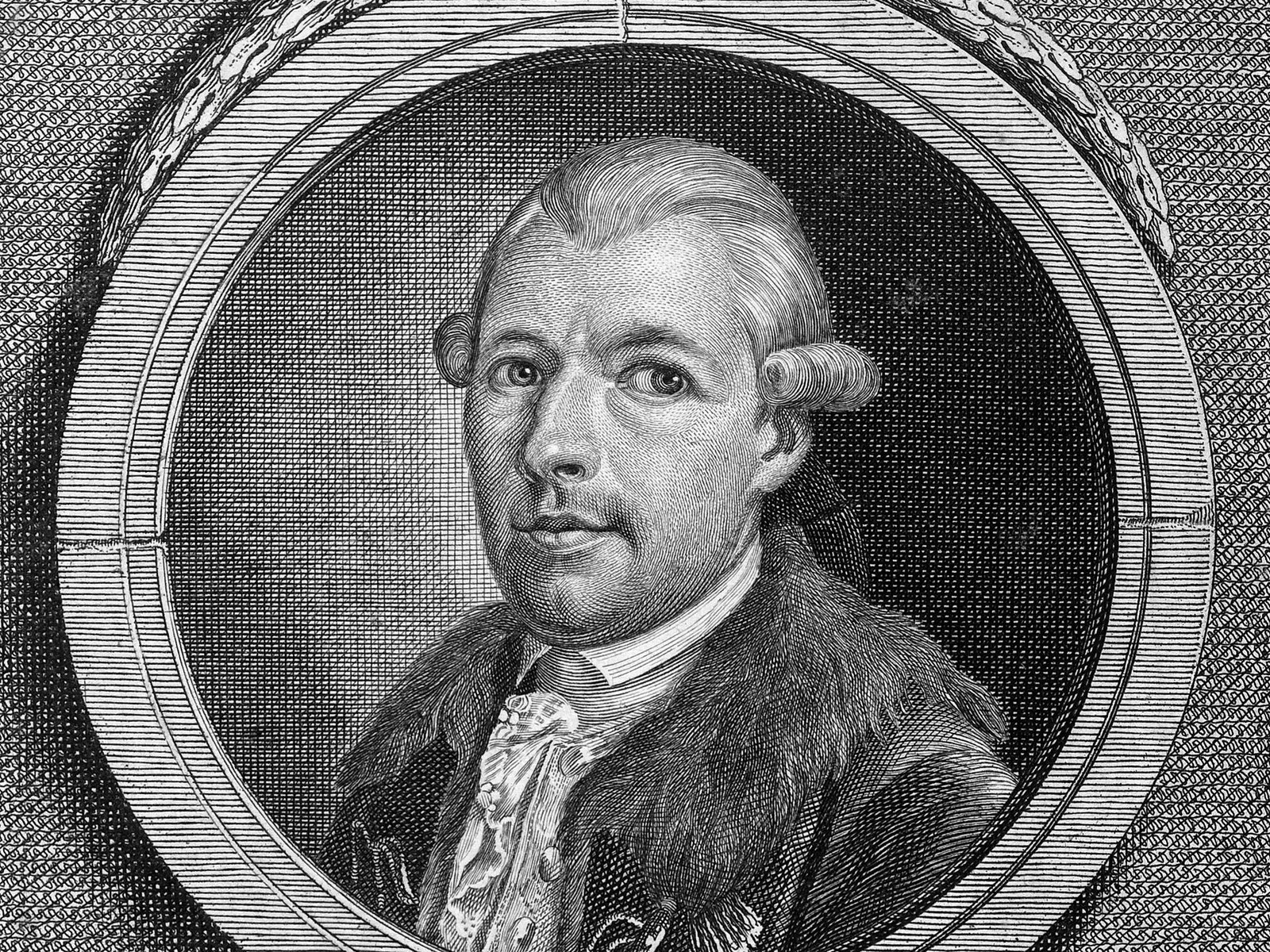
Featured image: Adam Weishaupt, by Christoph Wilhelm Bock. Public domain, via Wikimedia Commons. See all image credits.