

Few questions about Freemasonry cause more friction in families and congregations than this one. Masons say the fraternity supports faith without replacing it. Several churches have concluded otherwise. Here are both positions, quoted from the source documents, so readers can judge for themselves.
What Masonic bodies say
A belief in God is required. The United Grand Lodge of England says candidates “are expected to be able to affirm a belief in a ‘Supreme Being’,” phrased “to be fully inclusive,” with “no requirement to be an active practitioner of any particular religion.”
But Freemasonry says it is not a religion. A statement prepared by the Masonic Information Center and republished by U.S. Grand Lodges reads: “Freemasonry is not a religion, nor is it a substitute for religion.” It adds:
- It “advocates no sectarian faith or practice,” and religion may not be discussed at Masonic meetings.
- God is usually addressed as the “Grand Architect of the Universe” so that men of different faiths can pray together.
- An open “Volume of the Sacred Law” is required at every meeting: the Bible for Christians and Jews, or the book held holy by members of other faiths.
- It “has no dogma or theology,” “offers no sacraments” and “does not claim to lead to salvation by works, by secret knowledge, or by any other means.”
- The traditional “penalties” in Masonic oaths are described as “symbolic, not literal.”
Why some churches object
The Catholic Church explained its reasoning in a 1985 article published alongside the 1983 declaration. Other Christian critics have raised similar concerns:
- Relativism: the Vatican’s 1985 article argued that, even if relativism is not taught as dogma, the lodge treats the various religions as “simple institutionalizations of a broader and elusive truth.” It also said a Catholic “cannot cultivate relations of two types with God.”
- Secrecy and oaths: the same article warned that the “rigid rule of secrecy” carries “the risk of becoming an instrument of strategies unknown to them.” Masons answer that the secrets are modes of recognition and that the penalties are symbolic.
- A rival worldview: the concern that moral teaching through ritual and symbols works as a kind of natural religion, whatever its members intend.
The Catholic Church
The Catholic position has been consistent for nearly three centuries. Pope Clement XII first condemned Freemasonry in 1738, and Leo XIII’s 1884 encyclical Humanum Genus was one of the strongest condemnations. When the 1983 Code of Canon Law dropped the explicit mention of Masons, many asked whether the ban had ended. The Vatican answered the same year:
Therefore the Church’s negative judgment in regard to Masonic association remains unchanged since their principles have always been considered irreconcilable with the doctrine of the Church and therefore membership in them remains forbidden. The faithful who enrol in Masonic associations are in a state of grave sin and may not receive Holy Communion.
Congregation for the Doctrine of the Faith, Declaration on Masonic Associations, Nov. 26, 1983, signed by Cardinal Joseph Ratzinger
Confirmed On Nov. 13, 2023, with Pope Francis’s approval, the Dicastery for the Doctrine of the Faith reaffirmed that “active membership in Freemasonry by a member of the faithful is forbidden because of the irreconcilability between Catholic doctrine and Freemasonry,” and that this applies to clergy as well.
Southern Baptists: a matter of conscience
In 1993 the Southern Baptist Convention approved a report on Freemasonry. According to Baptist Press, it listed eight Masonic “tenets and teachings” it found “incompatible with Christianity” and also noted areas of compatibility. Its conclusion recommended that “membership in a Masonic Order be a matter of personal conscience,” and urged Southern Baptists to evaluate Freemasonry “in light of the Lordship of Christ” and the teachings of Scripture.
Where it stands
| Body | Position |
|---|---|
| Masonic Grand Lodges (UGLE, U.S. Grand Lodges) | Belief in a Supreme Being required. Not a religion or a substitute for one. Members keep their own faith. |
| Catholic Church | Membership forbidden. Reaffirmed in 1983 and 2023. |
| Southern Baptist Convention (1993) | Eight teachings judged incompatible, others compatible. Membership left to personal conscience. |
| Many other Protestant churches | Positions vary by denomination and over time. Check the current statement of the church in question. |
Evidence vs. interpretation
- Documented: the Masonic statements and church rulings quoted above.
- Disputed: whether a fraternity that requires belief in God, uses prayer and Scripture, and teaches morality through ritual is functionally a religion. Masons say no, and their critics say it works like one whatever its intent. Both sides argue in good faith.
- Myth: that Masons worship Lucifer or a secret god. That claim traces back to Léo Taxil’s confessed hoax, covered in the conspiracy-theories post.
Our view: This is a real disagreement between serious people, not a conspiracy. A Catholic who takes the Church’s ruling seriously has a clear answer. A Protestant will find that his denomination’s guidance varies. Anyone considering a lodge should read both the Masonic statement and his own church’s position first.
Freemasonry series: 1. Origins · 2. The American founding · 3. Service and charity · 4. Conspiracy theories · 5. Religion · Part of Secret Societies
Sources
- United Grand Lodge of England, Frequently Asked Questions
- Grand Lodge of South Carolina, Frequently Asked Questions (text from the Masonic Service Association of North America and Masonic Information Center)
- Holy See, Congregation for the Doctrine of the Faith, Declaration on Masonic Associations (Nov. 26, 1983)
- Holy See, Dicastery for the Doctrine of the Faith, note on membership in Freemasonry (Nov. 13, 2023)
- Holy See, CDF, “Irreconcilability between Christian faith and Freemasonry” (L’Osservatore Romano, March 11, 1985)
- Holy See, Leo XIII, Humanum Genus (1884)
- Christianity Today, “Southern Baptists: Freemasonry Vote Scheduled for Convention” (May 1993)
- Baptist Press, “New publication on Freemasonry available from SBC’s North American Mission Board” (quotes the 1993 report)
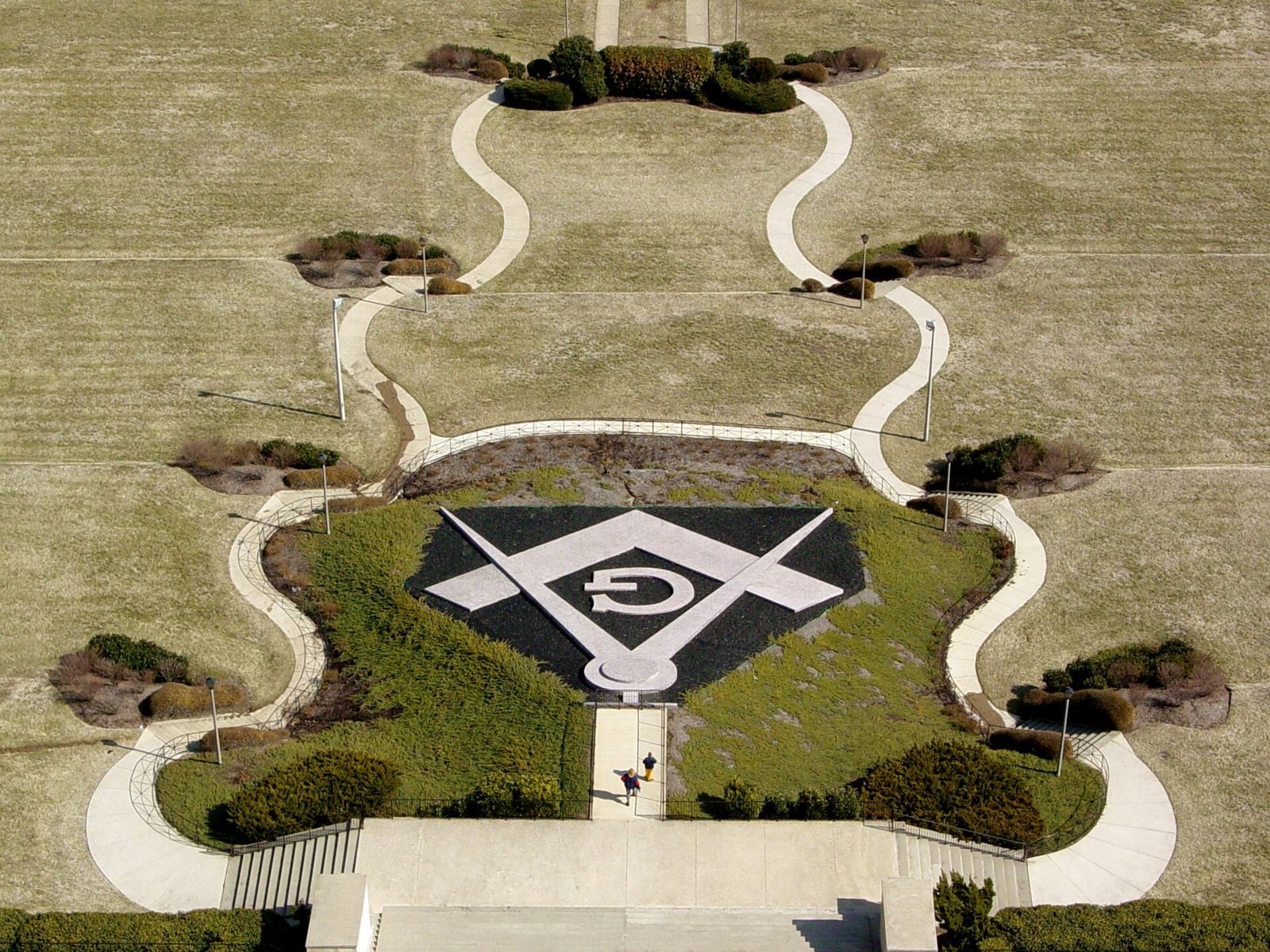
Featured image: Square and Compasses at Masonic Memorial, by Ben Schumin. CC BY-SA 2.5, via Wikimedia Commons. See all image credits.