

← Back to the timeline Middle Ages & Reformation1307
Secret Societies: This entry is one of many in our Secret Societies section. Each one separates what is documented from what is myth, and every claim is labeled and sourced.
The Knights Templar were a medieval military religious order: men who took monastic vows and also fought. Seven centuries after the order was shut down, they are still the most popular subject in secret-society lore. The real record is dramatic enough on its own.
A short history
- Origins. The order was founded in the early 1100s in Jerusalem, then under Crusader control, to defend the Crusader kingdom and protect pilgrims. Its name came from its headquarters on the Temple Mount (English Heritage).
- Wealth. Donors across Europe gave the Templars money and land, managed through local houses called preceptories. The order’s round churches, such as the Temple Church in London (completed in 1185), still stand.
- The fall. On Friday, October 13, 1307, agents of King Philip IV of France arrested hundreds of Templars across France in a coordinated surprise raid. Many were tortured into confessing to heresy, idol worship and other charges (Library of Congress).
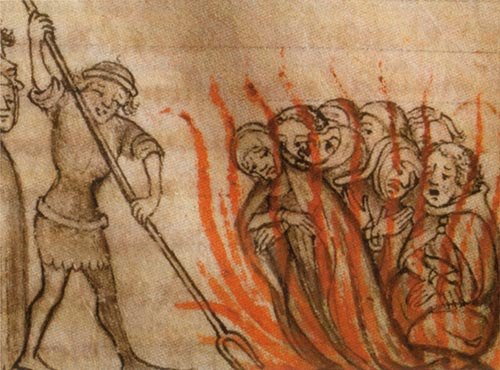
- The end. Pope Clement V formally dissolved the order in 1312. The last Grand Master, Jacques de Molay, was burned at the stake in Paris in March 1314, and Philip took the order’s property in his kingdom.
Documented vs. myth
The documented core is the founding, the order’s wealth and military role, the arrests, the trials and the dissolution. Almost everything about Templar “survival,” hidden treasure or secret knowledge rests on later legends, novels and films rather than on records from the period.
Claims checked
Claim: The Templars were arrested on Friday the 13th.
✅ Confirmed  Factual Lean note: Library of Congress legal historians and the surviving trial records agree on the date and the king’s role.
True as a date. Philip IV’s agents carried out the arrests on Friday, October 13, 1307 (Library of Congress).
Claim: The arrests are the origin of the Friday the 13th superstition.
⚠️ Disputed Factual Lean note: National Geographic and the Library of Congress folklife center both trace the link to modern fiction, not to the Middle Ages.
Not supported. Separate beliefs about unlucky Fridays and the number 13 are much older, and a specific Friday the 13th superstition shows up only in modern times. National Geographic notes that The Da Vinci Code helped spread the Templar link (National Geographic; Library of Congress).
Claim: The pope privately absolved the Templar leaders before they were executed.
✅ Confirmed Factual Lean note: A Vatican archive document described by the Library of Congress and in a peer-reviewed medieval history journal.
Documented. The Chinon Parchment, found in the Vatican archives in 2001, records that papal envoys heard the leaders, including de Molay, in August 1308 and absolved them. That was years before Philip had them burned (Library of Congress; Journal of Medieval History).
Claim: The Templars survived in secret and passed on hidden treasure or secret knowledge.
❓ Unconfirmed
No record supports it. The order was dissolved in 1312 and its leaders were executed (Library of Congress). Tales of hidden treasure, secret knowledge or a surviving order come from much later writers and novels. National Geographic calls the Templars a favored subject of superstition (National Geographic).
Bottom line: The Templars were real, powerful and brought down by a king who wanted their wealth. The best-documented “secret” is a Vatican record showing that the Church had absolved their leaders. The rest is mostly later legend.
Label key
- ✅ Confirmed An official record, or two or more independent outlets, agree.
- ❓ Unconfirmed Reported or claimed, but not yet independently verified.
- ⚠️ Disputed Contradicted by the evidence or by credible sources, or actively contested.
- Factual Straight reporting that holds up across outlets on different sides.
 Leans Left The facts hold, but the coverage tilts left: one-sided, loaded language, missing context or a single anonymous source.
 Leans Right The facts hold, but the coverage tilts right: one-sided, loaded language, missing context or a single anonymous source.
 Likely Propaganda State-run or state-aligned media, a militant press office, a partisan campaign or group, or unverifiable spin.
Each story gets one confidence tag and one source-lean label, plus a one-line Lean note explaining the call. Every side is held to the same standard. More on how we cover the news.
Sources
- English Heritage, History of Temple Church, Bristol
- Library of Congress, In Custodia Legis: Templar Secrets at the Law Library of Congress?
- Barber, M., “The Chinon chart,” Journal of Medieval History 30:2
- National Geographic, Busting the Myth of Friday the 13th and the Knights Templar
- Library of Congress, Folklife Today: On the Possible Origins of Friday the Thirteenth
Featured image: Templars on Stake, by AnonymousUnknown author. Public domain, via Wikimedia Commons. See all image credits.