

Secret Societies: This entry is one of many in our Secret Societies section. Each one separates what is documented from what is myth, and every claim is labeled and sourced.
Opus Dei (“Work of God”) is an institution of the Catholic Church. It is often called a secret society, mostly because of a bestselling novel. It publishes its own history, its leaders are appointed under Church law, and the Vatican’s rulings on it are public.
A short history
- Founding. Josemaría Escrivá, a Spanish priest, founded Opus Dei in 1928 in Spain. It teaches that ordinary work and family life can be a path to holiness (Opus Dei).
- Church status. In 1982 Pope John Paul II made Opus Dei a personal prelature, a legal structure in Church law (Opus Dei). Escrivá was canonized a saint in 2002 (Vatican).
- 2022 changes. Pope Francis moved oversight of Opus Dei from the Vatican office for bishops to the office for clergy. He also ruled that its leader, the prelate, can no longer be made a bishop (Vatican News; Ad charisma tuendum).
- Size. According to its own account, Opus Dei is established in 66 countries (Opus Dei).
Documented vs. myth
Opus Dei’s structure and history are public. The serious questions about it concern how it treats some members. The cartoon version from fiction is a different matter.
Claims checked
Claim: Opus Dei is a secret society with killer monks, as in The Da Vinci Code.
⚠️ Disputed  Factual Lean note: Opus Dei’s own statements and public Vatican documents agree that it is a Church institution and has no monks.
False. The novel’s monk is fiction, and Opus Dei has no monks. Its legal status and its leaders are set by public Vatican documents (Opus Dei; Vatican News).
Claim: Some members practice physical penance.
✅ Confirmed
True, in a limited form. Opus Dei says some celibate members use a cilice or a discipline (a small whip) briefly, and that these cause discomfort, not injury (Opus Dei).
Claim: Opus Dei exploited women who worked as unpaid domestic staff.
❓ Unconfirmed Factual Lean note: Reported by the Associated Press with responses from both the women and Opus Dei. The case has not been decided.
Unconfirmed, and under investigation. In 2021, dozens of former members from Argentina and Paraguay filed a complaint with the Vatican alleging unpaid labor and abuse of conscience. In 2024, Argentine federal prosecutors asked a judge to question four priests who had held leadership posts in the region on trafficking and labor charges. Opus Dei denies the allegations (AP News; AP News; Argentina Public Prosecutor’s Office).
Bottom line: Opus Dei is a public Church institution, not a secret order, and the novel’s portrait is fiction. The former members’ allegations are serious and still unresolved. They deserve the same scrutiny as any institution’s.
Label key
- ✅ Confirmed An official record, or two or more independent outlets, agree.
- ❓ Unconfirmed Reported or claimed, but not yet independently verified.
- ⚠️ Disputed Contradicted by the evidence or by credible sources, or actively contested.
- Factual Straight reporting that holds up across outlets on different sides.
 Leans Left The facts hold, but the coverage tilts left: one-sided, loaded language, missing context or a single anonymous source.
 Leans Right The facts hold, but the coverage tilts right: one-sided, loaded language, missing context or a single anonymous source.
 Likely Propaganda State-run or state-aligned media, a militant press office, a partisan campaign or group, or unverifiable spin.
Each story gets one confidence tag and one source-lean label, plus a one-line Lean note explaining the call. Every side is held to the same standard. More on how we cover the news.
Sources
- Opus Dei, Historical Overview
- Vatican, Canonization of Josemaría Escrivá (2002)
- Vatican News, Motu Proprio on Opus Dei (2022)
- Vatican, Apostolic Letter Ad charisma tuendum (2022)
- Opus Dei, The Da Vinci Code, the Catholic Church and Opus Dei
- Opus Dei, Opus Dei and corporal mortification
- AP News, Women in Argentina claim labor exploitation by Opus Dei
- AP News, Argentine prosecutors accuse Opus Dei leaders in South America (2024)
- Ministerio Público Fiscal (Argentina), request to question four Opus Dei priests (Spanish)
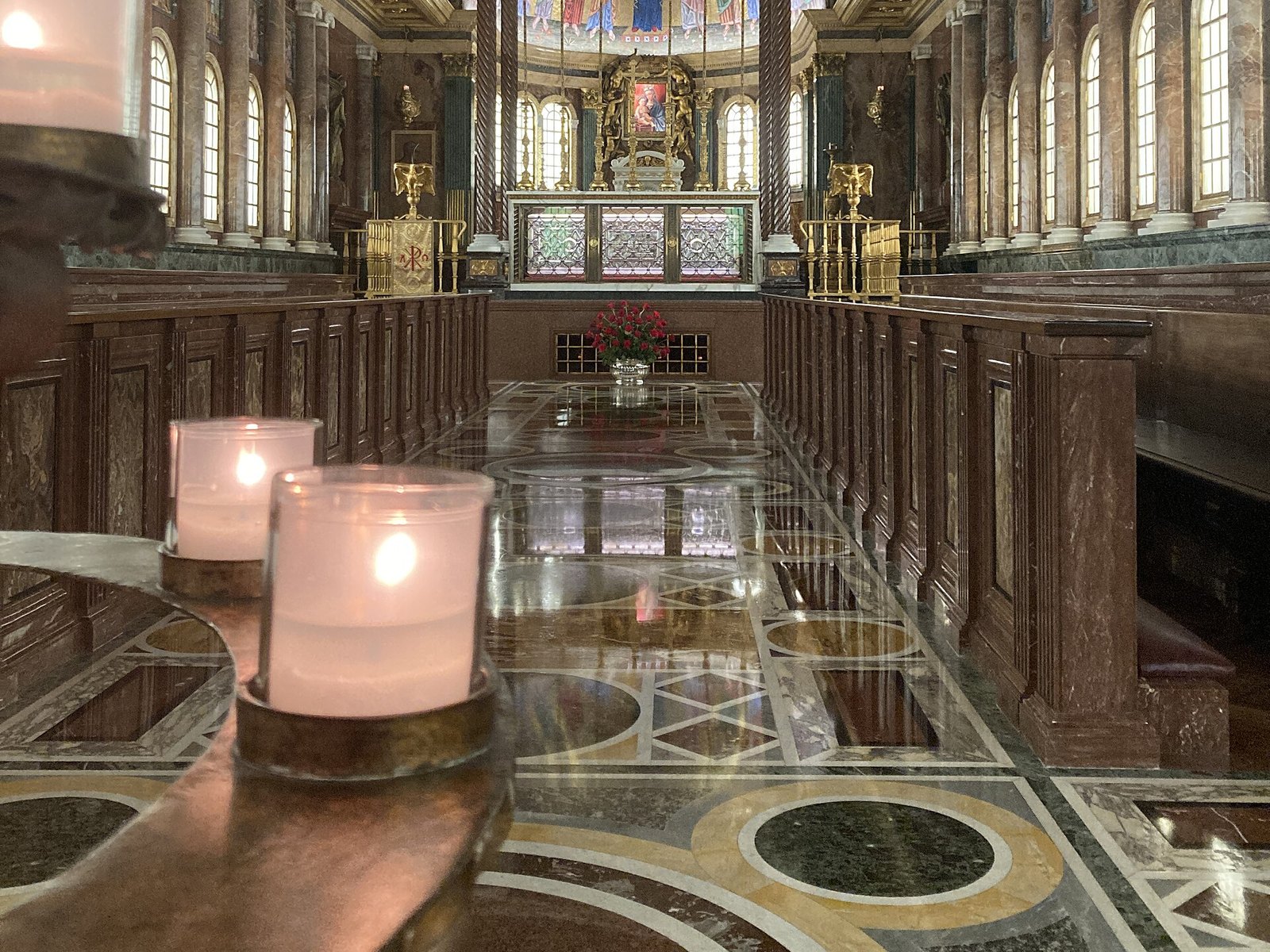
Featured image: Iglesia Prelaticia de Santa Maria de la Paz 01, by Jumanji2001. CC BY 4.0, via Wikimedia Commons. See all image credits.