

Secret Societies: This entry is one of many in our Secret Societies section. Each one separates what is documented from what is myth, and every claim is labeled and sourced.
The Hermetic Order of the Golden Dawn was a magical society founded in London in the late 1880s. It was small, short-lived in its original form and heavily documented, because so many of its members wrote about it.
A short history
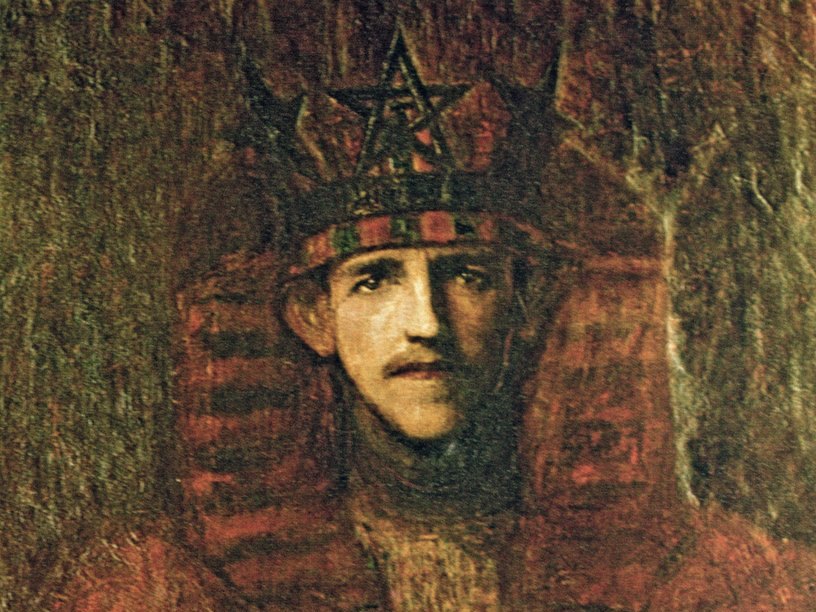
- Founders. Its founders were Freemasons, among them Samuel Liddell MacGregor Mathers (pictured), and its grades and initiations followed Masonic models. It taught ceremonial magic, astrology, tarot and Kabbalah in a series of grades (Yale University Press).
- Members. The poet W. B. Yeats joined in 1890 and remained active for decades (Poetry Foundation). Aleister Crowley joined in 1898 and later broke with the London members (Oxford Academic).
- Split. Feuds over leadership broke the order apart around 1900, and successor groups carried on its teachings.
- Influence. Scholars trace much of modern Western occultism, including parts of Wicca, to the Golden Dawn’s published rituals (Yale University Press).
Documented vs. myth
The order’s existence, members, rituals and feuds are well documented. The weak point is its own origin story.
Claims checked
Claim: W. B. Yeats was a member.
✅ Confirmed  Factual Lean note: Biographical sources agree on his membership.
True. Yeats joined in 1890 and stayed active for 32 years (Poetry Foundation).
Claim: The order was authorized by a German adept named Anna Sprengel.
⚠️ Disputed Factual Lean note: Peer-reviewed scholarship, and the reasoning is laid out in public.
Disputed by historians. The founders said a “Fräulein Sprengel” in Germany had given her approval by letter. Scholars regard the letters as invented, and a 2011 study found them written in language that undercuts the founders’ own account (Aries (Brill); Heterodoxology).
Claim: The Golden Dawn was a powerful secret society with political influence.
⚠️ Disputed
No evidence supports it. It was a small society of writers, artists and occult students. Its influence was cultural and religious, not political (Yale University Press).
Bottom line: The Golden Dawn was real and influential in the history of modern occultism, and it counted Yeats among its members. Its claim to authority from a secret German adept does not hold up.
Label key
- ✅ Confirmed An official record, or two or more independent outlets, agree.
- ❓ Unconfirmed Reported or claimed, but not yet independently verified.
- ⚠️ Disputed Contradicted by the evidence or by credible sources, or actively contested.
- Factual Straight reporting that holds up across outlets on different sides.
 Leans Left The facts hold, but the coverage tilts left: one-sided, loaded language, missing context or a single anonymous source.
 Leans Right The facts hold, but the coverage tilts right: one-sided, loaded language, missing context or a single anonymous source.
 Likely Propaganda State-run or state-aligned media, a militant press office, a partisan campaign or group, or unverifiable spin.
Each story gets one confidence tag and one source-lean label, plus a one-line Lean note explaining the call. Every side is held to the same standard. More on how we cover the news.
Sources
- Yale University Press, The Hermetic Order of the Golden Dawn and the Origins of Wicca
- Poetry Foundation, William Butler Yeats
- Oxford Academic, Aleister Crowley and the Left-Hand Path
- Aries (Brill), “‘Fräulein Sprengel’ and the Origins of the Golden Dawn: A Surprising Discovery” (2011)
- Heterodoxology, Who was Fräulein Sprengel? New evidence on the origin of the Golden Dawn
Featured image: Samuel Liddell MacGregor Mathers (1854-1918), by Moina Mathers. Public domain, via Wikimedia Commons. See all image credits.