

Secret Societies: This entry is one of many in our Secret Societies section. Each one separates what is documented from what is myth, and every claim is labeled and sourced.
The Sons of Liberty were not a single organization with a headquarters and membership rolls. The name was used by local groups in several colonies that organized resistance to British taxes, beginning with the Stamp Act of 1765.
A short history
- The Stamp Act. When news of the act reached the colonies in 1765, local groups formed to stop it taking effect on November 1. They adopted names including “Sons of Liberty” and pressured the stamp distributors in each colony to resign (Massachusetts Historical Society).
- Boston. A group called the “Loyal Nine,” forerunners of Boston’s Sons of Liberty, recruited crowds that ransacked the home and office of stamp distributor Andrew Oliver in August 1765. In December the Sons made him repeat his resignation in public under the Liberty Tree (Massachusetts Historical Society).
- Press. The Sons used newspapers skillfully to rally colonists (Massachusetts Historical Society).
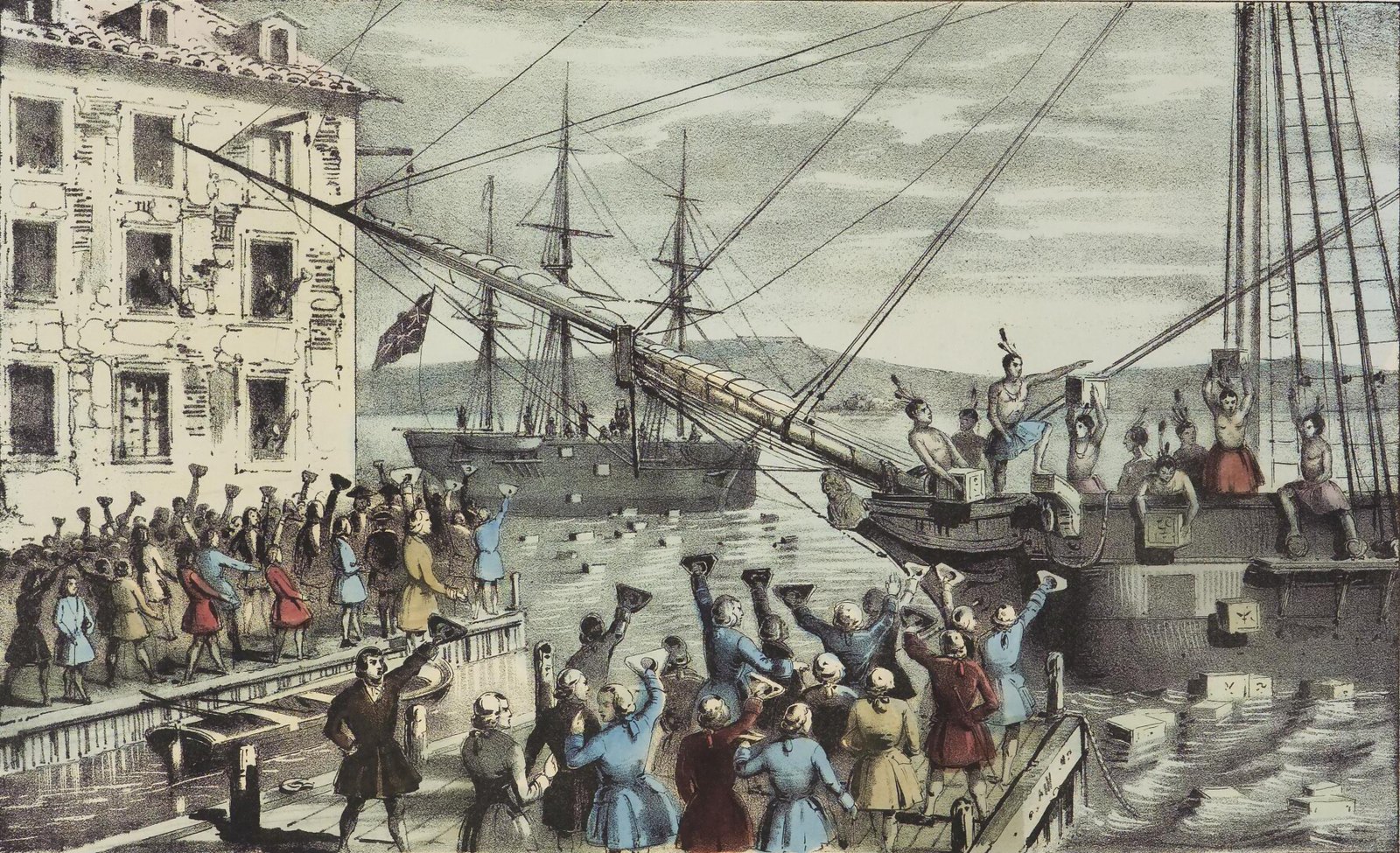
- Tea. On December 16, 1773, disguised men destroyed 342 chests of East India Company tea in Boston Harbor (National Park Service; Massachusetts Historical Society).
Documented vs. myth
This is one of the few secret networks on this list that clearly changed history. The documents also show that it used intimidation and mob violence against officials. Both facts belong in the story.
Claims checked
Claim: The Sons of Liberty used mobs to force officials to resign.
✅ Confirmed  Factual Lean note: Primary documents held by the Massachusetts Historical Society.
True. The August 1765 attack on Andrew Oliver’s property is well documented (Massachusetts Historical Society).
Claim: Samuel Adams personally planned the Boston Tea Party.
❓ Unconfirmed
Unconfirmed. Adams led the public meetings that opposed the tea shipments, and he praised the destruction afterward. The participants wore disguises and kept their names quiet, and his exact role that night is not documented (National Park Service; National Park Service).
Claim: The Sons of Liberty were one unified secret order.
⚠️ Disputed
Not accurate. The name covered many local committees in different colonies that coordinated loosely (Massachusetts Historical Society).
Bottom line: The Sons of Liberty were a loose network of local patriots who mixed print, protest and pressure, sometimes violent pressure. They helped start the American Revolution.
Label key
- ✅ Confirmed An official record, or two or more independent outlets, agree.
- ❓ Unconfirmed Reported or claimed, but not yet independently verified.
- ⚠️ Disputed Contradicted by the evidence or by credible sources, or actively contested.
- Factual Straight reporting that holds up across outlets on different sides.
 Leans Left The facts hold, but the coverage tilts left: one-sided, loaded language, missing context or a single anonymous source.
 Leans Right The facts hold, but the coverage tilts right: one-sided, loaded language, missing context or a single anonymous source.
 Likely Propaganda State-run or state-aligned media, a militant press office, a partisan campaign or group, or unverifiable spin.
Each story gets one confidence tag and one source-lean label, plus a one-line Lean note explaining the call. Every side is held to the same standard. More on how we cover the news.
Sources
- Massachusetts Historical Society, The Formation of the Sons of Liberty
- Massachusetts Historical Society, Collections Relating to the Boston Tea Party
- National Park Service, Boston Tea Party Timeline
- National Park Service, Samuel Adams
Featured image: Boston Tea Party Currier colored, by Nathaniel Currier. Public domain, via Wikimedia Commons. See all image credits.