

Opinion & Discussion. This piece covers one of the most divisive subjects of our time. The first sections lay out the record, with each key claim labeled for how solid it is and how it has been told. Our own view comes at the end, under Our Take (Opinion), and is clearly marked as opinion. Part of Controversial Topics.
Few subjects split families, churches and friendships like COVID-19. Some people lost loved ones and believe the vaccines saved many more. Others lost jobs, businesses, school years or trust, and believe the response did more harm than good. Many people hold pieces of both views. This piece tries to treat everyone fairly: what is documented, what is claimed, what is still argued, and what we should learn so we are better prepared next time.
In this piece: Timeline · Who was at risk · Is it really a vaccine? · Treatments · Monoclonal antibodies · Trust: Fauci, the WHO and the CDC · Censorship and deplatforming · Why no real retrospective? · Lessons for preppers · Our Take
A vetted timeline
- Late 2019: A cluster of pneumonia cases appears in Wuhan, China. China reports it to the World Health Organization on December 31, 2019.
- January 14, 2020: The WHO posts that Chinese authorities had found “no clear evidence of human-to-human transmission.” That proved wrong within days.
- February 2020: Scientists hold a private teleconference with Anthony Fauci and Francis Collins on the virus’s origin. The resulting “Proximal Origin” paper, published in Nature Medicine in March 2020, argues the virus was not a lab construct (see the trust section).
- March 2020: The WHO declares a pandemic on March 11. The White House issues “15 Days to Slow the Spread” on March 16, and states close schools and businesses. Lockdowns stretch into months in many places.
- May 15, 2020: Operation Warp Speed is announced, a joint HHS and Defense Department push to develop and make vaccines and treatments. GAO put its potential value for six vaccine candidates at $18 billion or more.
- October 4, 2020: The Great Barrington Declaration calls for “focused protection” of the vulnerable instead of broad lockdowns.
- December 2020: FDA issues emergency use authorizations for the Pfizer-BioNTech (December 11) and Moderna (December 18) vaccines. Rollout starts with health workers and nursing homes.
- August 23, 2021: FDA grants full approval to Pfizer’s vaccine (Comirnaty) for people 16 and older.
- September 2021: The administration announces vaccine requirements for federal workers, health-care workers and large employers. Booster shots are authorized for older and high-risk adults, then for all adults in November.
- January 13, 2022: The Supreme Court blocks the large-employer (OSHA) requirement in NFIB v. OSHA but allows the health-care worker requirement in Biden v. Missouri.
- 2022: Updated (bivalent) boosters are authorized in late August. Omicron variants make several antibody treatments ineffective (see the monoclonal section).
- May 11, 2023: The federal public health emergency ends.
- 2025: The CIA says, with low confidence, that a lab origin is more likely (January). The WHO’s origins panel says the weight of evidence favors a natural spillover but a lab accident cannot be ruled out (June). FDA limits updated COVID vaccines to people 65 and older and younger people at higher risk (August).
- January 22, 2026: The United States completes its withdrawal from the WHO.
Where did it come from? The origin debate
❓ Unconfirmed  Factual Lean note: Every major review leaves the question open. U.S. intelligence agencies are split, the WHO’s panel leans natural, and China has not released the key data.
Two main explanations remain on the table. Natural spillover holds that the virus jumped from animals to people, likely through the wildlife trade at Wuhan’s Huanan market. A lab-related accident holds that it escaped from research at the Wuhan Institute of Virology, which studied bat coronaviruses.
- The FBI (moderate confidence), the Energy Department (low confidence) and, since January 2025, the CIA (low confidence) lean toward a lab origin. Other intelligence bodies lean natural or remain undecided. Germany’s intelligence service reportedly estimated an 80% to 90% chance of a lab accident in 2020, German newspapers revealed in 2025.
- The WHO’s Scientific Advisory Group (SAGO) said in June 2025 that “the weight of available evidence” suggests a natural spillover, but that a lab accident “can not be ruled out” because China never provided lab records, staff health data or early case sequences.
- A declassified 2023 U.S. intelligence report found that most agencies agree the virus was not genetically engineered as a weapon.
- The House Select Subcommittee’s Republican majority concluded in December 2024 that a lab accident was most likely. The Democratic minority said both explanations remain plausible.
For the full origin story, see our Conspiracies entry, The COVID-19 Lab-Leak Theory: What We Know Six Years On.
Who was actually at risk: mortality by age and health
Risk rose steeply with age
✅ Confirmed Factual Lean note: A peer-reviewed meta-analysis and CDC data. These rates are from before vaccines and before later variants, which changed the numbers.
A 2020 meta-analysis in the European Journal of Epidemiology (Levin and colleagues) estimated the infection fatality rate, the share of everyone infected who died, rose exponentially with age before vaccines were available:
- Age 10: about 0.002% (2 in 100,000)
- Age 25: about 0.01% (1 in 10,000)
- Age 55: about 0.4%
- Age 65: about 1.4%
- Age 75: about 4.6%
- Age 85: about 15%
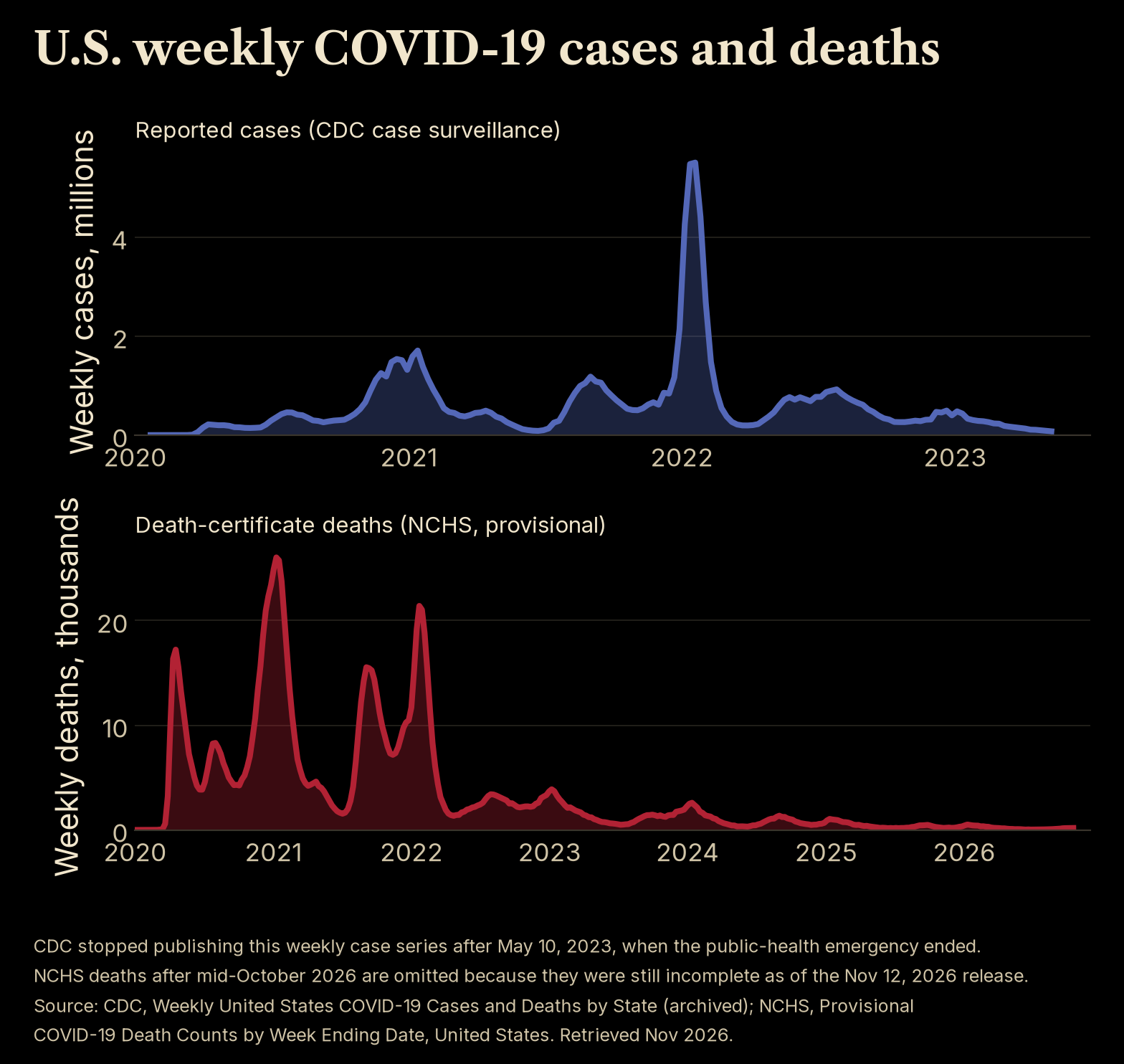
More than 1.2 million Americans have died of COVID-19, and more than 81% of U.S. COVID deaths were among people 65 and older, according to CDC. Obesity, diabetes and other chronic conditions raised the risk at any age, and risk climbed with each added condition.
Hospitalized vs. not hospitalized
✅ Confirmed Factual Lean note: CDC’s modeled burden estimates and peer-reviewed hospital studies agree on the broad pattern.
Most infections never led to a hospital stay. CDC estimated that from February 2020 through September 2021 there were about 146.6 million infections, 7.5 million hospitalizations and 921,000 deaths in the U.S. That works out to roughly 5% of infections hospitalized and about 0.6% fatal on average, with the deaths concentrated among older and sicker people.
Once someone was sick enough to be admitted, the danger was much higher. In a study of 592 U.S. hospitals in April and May 2020, 20.3% of COVID inpatients died in the hospital. As treatment improved, in-hospital death rates fell, to about 11% by August 2020 in one large study. Among vaccinated people, severe outcomes were rare: in a CDC study of 1.2 million vaccinated adults in 2021, 0.0033% died of COVID, and 78% of those who died had four or more risk factors.
“Died with COVID” vs. “died from COVID”
⚠️ Disputed  Leans Right Lean note: The “only 6% really died of COVID” claim misreads CDC death-certificate data; the underlying data are real and are reported fairly here.
A 2020 CDC table showed that only about 6% of COVID death certificates listed COVID alone; the rest also listed other conditions, an average of 2.6 more. That is real. But many of those added entries, like pneumonia or respiratory failure, are how COVID kills, and a CDC review found COVID was the underlying cause on about 92% of certificates that mentioned it. Both things are true: people with chronic conditions were at far higher risk, and COVID was usually what killed them.
“Is it really a vaccine?”
How mRNA shots work
✅ Confirmed Factual Lean note: FDA, CDC and published trial data. This section explains the mechanism, not whether any one person should take it.
Traditional vaccines deliver a weakened or killed germ, or a piece of one. The Pfizer and Moderna shots instead deliver messenger RNA (mRNA) wrapped in a fat bubble. Cells read the instructions, make a copy of the virus’s spike protein, and the immune system learns to recognize it. The mRNA breaks down and does not change a person’s DNA. Johnson & Johnson’s shot used a harmless carrier virus to deliver similar instructions. FDA regulates all of them as vaccines.
The CDC definition change
✅ Confirmed Factual Lean note: CDC’s own archived pages show the wording change. CDC said it was clarifying; critics say it moved the goalposts. Both accounts are reported here.
In September 2021, CDC changed its website definition of a vaccine from “a product that stimulates a person’s immune system to produce immunity to a specific disease” to “a preparation that is used to stimulate the body’s immune response against diseases.” “Vaccination” changed from producing “immunity” to producing “protection.” Merriam-Webster made a similar change earlier in 2021.
CDC’s explanation: the old wording could be read to mean vaccines were 100% effective, which has never been true of any vaccine, flu shots included. Critics’ view: the change came just as it became clear the shots did not stop infection or spread for long, and it looked like redefining a word to fit the product. What the data show: protection against infection faded within months and against new variants, while protection against severe disease and death held up better, especially in older people.
Lives saved, and side effects
✅ Confirmed Factual Lean note: Peer-reviewed estimates from authors with different outlooks, plus CDC safety monitoring. The size of the benefit is debated; the existence of rare side effects is not.
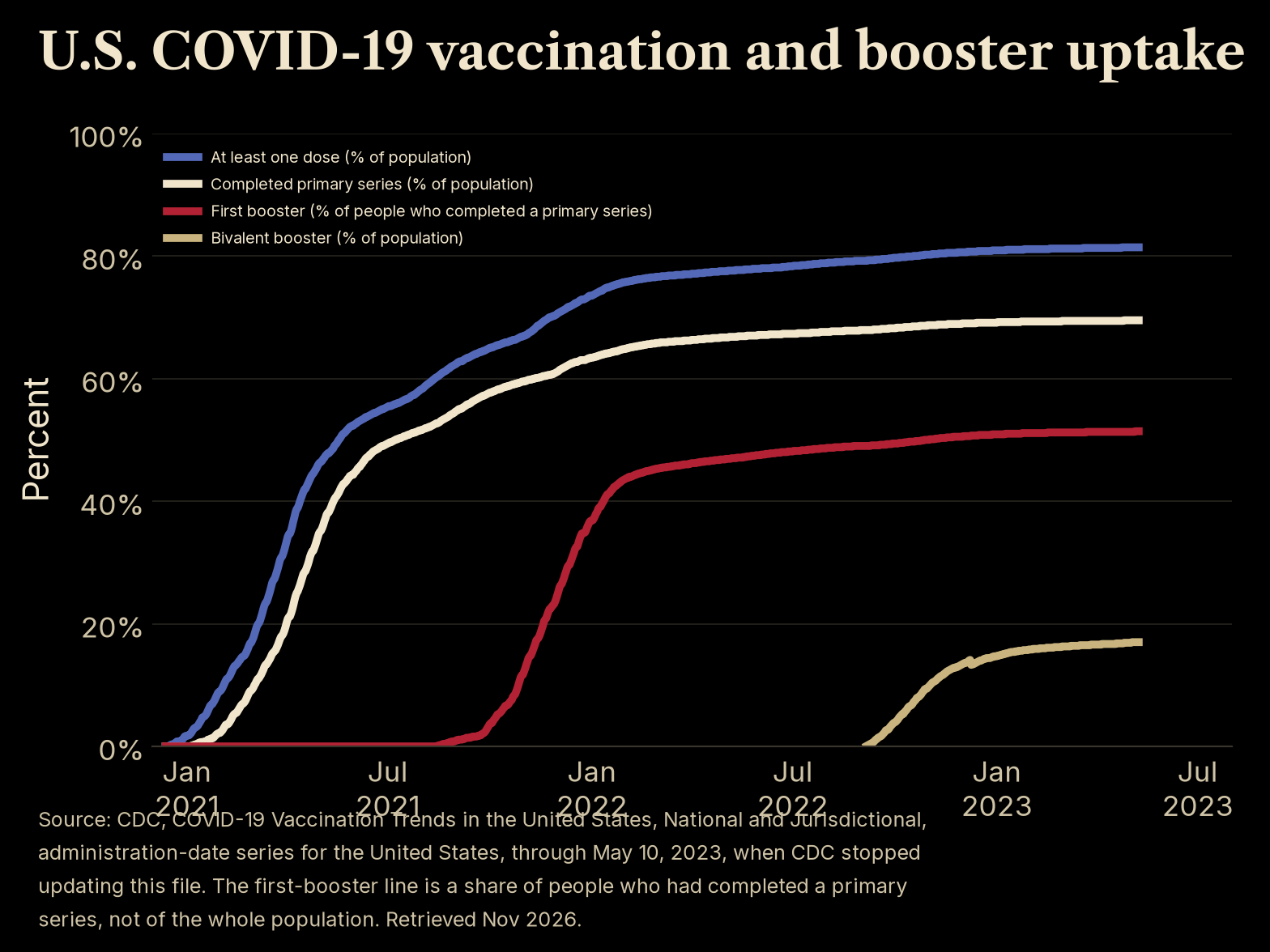
A 2022 Lancet Infectious Diseases model estimated vaccines prevented 14.4 million deaths worldwide in their first year. A 2025 study in JAMA Health Forum led by Stanford’s John Ioannidis, a frequent critic of pandemic policy, estimated about 2.5 million deaths averted from 2020 to 2024, with about 90% of the benefit among people 60 and older. Both find real benefit; they differ by a factor of several on how much, and the benefit for young, healthy people was small.
Side effects are real too. CDC confirmed a rare risk of myocarditis (heart inflammation), mostly in young males after the second mRNA dose; reports to the federal VAERS system ran about 40 per million second doses among males 12 to 29 in 2021. Most cases resolved, but the risk weighed most heavily for the group that needed the shot least.
Treatments: what the trials showed and what is still argued
Remdesivir
⚠️ Disputed Factual Lean note: Two large trials disagree on how much it helps. FDA approved it; the WHO’s big trial found no clear survival benefit.
Remdesivir became the first FDA-approved COVID drug in October 2020. The NIH’s ACTT-1 trial found hospitalized patients recovered faster, a median of 10 days versus 15. But the WHO’s Solidarity trial, with more than 8,000 patients, found no significant overall effect on death: 14.5% died with remdesivir versus 15.6% without. Critics also point to its cost and to kidney and liver side effects. Supporters note modest benefits in some patients not yet on ventilators.
Hospital protocols and payment incentives
✅ Confirmed Factual Lean note: The 20% Medicare add-on is in the CARES Act and CMS guidance. Fact-checkers note payments were tied to diagnosis and treatment, not to deaths.
The CARES Act raised Medicare’s hospital payment by 20% for COVID inpatient stays during the emergency, and stays requiring a ventilator paid more, as they do for any illness. That is documented. The claim that hospitals were paid to let patients die is not supported: payments were tied to diagnosis and care, not outcomes. Still, many families and some doctors felt treatment was boxed in by rigid protocols, especially early on, when patients were put on ventilators quickly and families could not visit.
What clearly worked in hospitals: the RECOVERY trial in Britain found the cheap steroid dexamethasone cut deaths by about one-third among ventilated patients. Early treatment for high-risk outpatients improved when Pfizer’s pill Paxlovid arrived in late 2021; its main trial found an 89% drop in hospitalization or death among unvaccinated high-risk patients treated early.
Ivermectin
⚠️ Disputed Factual Lean note: Several large randomized trials found no meaningful benefit. Supporters point to earlier smaller studies and doses; the debate continues among a minority of physicians.
Ivermectin is a cheap, widely used anti-parasite drug, and its discoverers won the 2015 Nobel Prize. Early lab and small clinical studies raised hopes, and some doctors prescribed it widely. Three large randomized trials then found no clinically meaningful benefit for preventing hospitalization or death: TOGETHER (NEJM, 2022), ACTIV-6 (JAMA, 2022) and Britain’s PRINCIPLE (which found recovery about two days faster, judged not meaningful). One widely cited early study was withdrawn over data problems. Supporters argue some trials used doses or timing that were too low or too late.
The fight over ivermectin was also about tone. FDA’s “You are not a horse” posts mocked people who used the human form prescribed by doctors. In March 2024, FDA settled a lawsuit brought by three physicians and agreed to remove those posts, without admitting wrongdoing.
Hydroxychloroquine (HCQ)
⚠️ Disputed Factual Lean note: Large randomized trials found no benefit in hospitalized patients. Supporters argue early outpatient use with zinc was never properly tested at scale.
FDA authorized HCQ for emergency use in March 2020 and revoked that on June 15, 2020, citing a lack of benefit and heart-rhythm risks. The RECOVERY trial found no reduction in deaths among hospitalized patients. Supporters argue the drug was tested too late in the illness and that early outpatient use, often with zinc, never got a fair large trial. That remains a minority view.
Monoclonal antibodies: an effective treatment, then gone
They worked well against earlier variants
✅ Confirmed Factual Lean note: Peer-reviewed trials in the New England Journal of Medicine.
Monoclonal antibodies are lab-made antibodies given by IV or injection soon after symptoms start. Against the variants of 2020 and 2021, they worked: Regeneron’s REGEN-COV cut hospitalization or death by about 70% in its main trial, Lilly’s bamlanivimab plus etesevimab by 70% to 87% depending on dose, and GSK’s sotrovimab by about 79% to 85%. They were authorized for emergency use starting in November 2020.
Florida and Texas went all in, then HHS took over distribution
✅ Confirmed Factual Lean note: HHS’s stated reasons are on the record via CNN and Politico; Florida and Texas officials’ objections are on the record too.
During the Delta wave in summer 2021, Florida opened state-run infusion sites around the state, and Texas set up regional infusion centers. In mid-September 2021, HHS took over distribution, allocating doses to states weekly instead of letting sites order directly.
HHS’s rationale: seven states, including Florida and Texas, accounted for 70% of orders, and HHS said it had to keep “these life-saving therapies” available “for all states and territories, not just some.” Critics’ view: Florida Gov. Ron DeSantis said the change sharply cut supply to the states with the most demand and the most sick patients. In late December 2021 and January 2022, Texas health officials said infusion centers had run out of sotrovimab, and Gov. Greg Abbott asked Washington for more doses.
Omicron and the January 2022 shutdown
✅ Confirmed Factual Lean note: FDA’s own statement and contemporaneous reporting. Whether the decision was wise is disputed; the reasons given are documented.
Regeneron itself said in December 2021 that its antibodies had diminished potency against Omicron, and federal officials paused shipments of the Lilly and Regeneron products. On January 24, 2022, FDA said the two treatments were “highly unlikely to be active against the omicron variant,” which CDC estimated caused more than 99% of U.S. cases, and that they were therefore not authorized for use anywhere in the country. FDA said this avoided side effects from drugs not expected to help, and pointed to sotrovimab, Paxlovid, remdesivir and molnupiravir instead.
Florida closed all its state monoclonal sites that night, canceling more than 2,000 appointments for the next day alone. DeSantis said the administration had “forced trained medical professionals to choose between treating their patients or breaking the law.” Some doctors argued patients should have been allowed to try the drugs, since not every case was confirmed as Omicron and testing for variants was not routine.
What came after
✅ Confirmed Factual Lean note: FDA authorization notices. Each was pulled as new variants escaped it.
The replacements did not last either. FDA stopped authorizing sotrovimab on April 5, 2022, as the BA.2 subvariant spread; bebtelovimab on November 30, 2022; and Evusheld, a preventive antibody for people with weak immune systems, on January 26, 2023. Paxlovid, an oral antiviral pill, became the main early treatment for high-risk patients because it targets a part of the virus that changes less.
Trust: Fauci, the WHO and the CDC
Trust in public health fell sharply during the pandemic. Some of that came from honest mistakes in a fast-moving crisis. Some came from statements that later proved misleading. We separate documented facts from claims below.
Gain-of-function and the Senate exchange
✅ Confirmed Factual Lean note: Documented in Senate testimony, NIH’s own 2021 letter and the House subcommittee record. Whether the work met the legal definition of gain-of-function is disputed.
In May 2021, Sen. Rand Paul pressed Fauci on whether NIH had funded gain-of-function research in Wuhan. Fauci said NIH “has not ever and does not now fund gain-of-function research in the Wuhan Institute of Virology.” In October 2021, NIH told Congress that an experiment it funded through EcoHealth Alliance had produced an “unexpected result”: modified bat coronaviruses made infected mice sicker. NIH said those viruses could not have become SARS-CoV-2. In 2024, then-NIH Principal Deputy Director Lawrence Tabak told the House that the work counted as gain-of-function in a generic sense, though not under the government’s narrower regulatory definition. HHS formally debarred EcoHealth and its president, Peter Daszak, from federal funding on January 17, 2025.
The “Proximal Origin” messages
✅ Confirmed Factual Lean note: The messages were released by Congress in 2023. Their meaning is disputed: critics see a cover-up, the authors say they changed their minds as they studied the data.
Private Slack messages and emails released in 2023 showed that in February 2020, some authors of the “Proximal Origin” paper privately took a lab origin seriously; lead author Kristian Andersen wrote that a lab escape was “so friggin’ likely.” Weeks later the paper argued against any lab scenario, and it was widely cited to dismiss the idea as a conspiracy theory. The authors say their views changed as they analyzed the genome. Critics, including the House subcommittee’s majority, say the paper was shaped to fit a preferred conclusion after a call with Fauci and Collins.
Shifting guidance
✅ Confirmed Factual Lean note: Documented in official statements and the January 2024 congressional transcript of Fauci’s interview.
- Masks: In February 2020, officials told the public not to buy masks. In April 2020, CDC recommended cloth face coverings. Later guidance shifted to higher-grade masks. A 2023 Cochrane review found masking in the community “probably makes little or no difference” to flu-like illness in trials, a finding its own editors said should not be read as proof that masks do not work.
- Six feet: Fauci told House investigators in January 2024 that the six-foot rule “sort of just appeared” and that he did not recall studies supporting that exact distance.
- Natural immunity: Prior infection gave substantial protection, but mandates generally did not count it, which many people saw as ignoring evidence.
- WHO: Its January 2020 post about no clear human-to-human spread, and its early deference to China, damaged its standing. The United States left the WHO in January 2026.
- Pardon: On January 20, 2025, President Biden issued Fauci a preemptive pardon, saying it was meant to protect him from politically motivated prosecution. Supporters saw protection from retaliation; critics saw it as shielding him from accountability.
Censorship and deplatforming
This is where the anger runs deepest. Below are the main dissenting doctors, their credentials and arguments, and the mainstream response, presented with equal respect.
The Great Barrington Declaration authors
✅ Confirmed Factual Lean note: Credentials and the Collins email are documented. Whether focused protection would have worked is still debated.
In October 2020, three epidemiologists, Dr. Jay Bhattacharya (Stanford), Dr. Martin Kulldorff (then at Harvard) and Dr. Sunetra Gupta (Oxford), published the Great Barrington Declaration. It argued for “focused protection” of the elderly and vulnerable while letting lower-risk people live more normally. Days later, NIH Director Francis Collins emailed Fauci calling them “three fringe epidemiologists” and asking for “a quick and devastating published take down.” The Twitter Files later showed Bhattacharya had been placed on a “Trends Blacklist” that limited the reach of his posts.
Mainstream rebuttal: Many scientists, in the John Snow Memorandum and elsewhere, argued that the vulnerable could not be walled off when they live with and are cared for by younger people, and that letting the virus spread would overwhelm hospitals. The UK’s official COVID Inquiry concluded in 2025 that its lockdown was justified and should have come a week earlier. What happened next: Bhattacharya became director of the National Institutes of Health in April 2025. Kulldorff, who lost his Harvard-affiliated hospital post after refusing the vaccine, chaired the CDC’s vaccine advisory committee in 2025 before moving to a senior HHS role.
Dr. Robert Malone
⚠️ Disputed Factual Lean note: His early mRNA research is documented; his claim to be the inventor of mRNA vaccines is disputed, and many of his COVID claims were rejected by mainstream bodies.
Malone, a physician and researcher, did early work on delivering RNA into cells at the Salk Institute in the late 1980s. He became a leading critic of the COVID vaccines and of mandates, particularly for young people. Twitter permanently suspended his account in December 2021. Mainstream scientists said his warnings about vaccine harms were overstated and that mRNA vaccines were the work of many researchers over decades. He was named to the CDC’s vaccine advisory committee in 2025 and resigned in March 2026.
Dr. Peter McCullough
⚠️ Disputed Factual Lean note: Credentials documented; the American Board of Internal Medicine found his claims about vaccine harms scientifically inaccurate. He disputes that finding.
McCullough is a cardiologist and internist, formerly a vice chief of internal medicine at Baylor University Medical Center, with a long record of published research. He advocated early outpatient treatment with combinations of existing drugs and has argued the vaccines caused widespread harm. The American Board of Internal Medicine revoked his board certifications, saying his public statements were false or misleading. He and his supporters call that punishment for dissent.
Dr. Pierre Kory
⚠️ Disputed Factual Lean note: Credentials documented; large trials did not support his ivermectin claims. ABIM revoked his certifications in 2024.
Kory is a lung and critical-care physician and a co-founder of the Front Line COVID-19 Critical Care Alliance, which promoted ivermectin and other repurposed drugs. He testified before a Senate committee in December 2020 urging their use. The large trials described above did not find the benefit he predicted, and ABIM revoked his certifications in August 2024. He maintains the evidence was misread and the drug was unfairly dismissed.
The Twitter Files, Murthy v. Missouri, and what the platforms admitted
✅ Confirmed Factual Lean note: Platform documents, a Supreme Court ruling, and letters from the companies’ own leaders. The Court did not rule on whether the First Amendment was violated.
Internal Twitter documents released from December 2022 showed the company quietly limited the reach of some accounts, including Bhattacharya’s. In Murthy v. Missouri, states and individuals sued federal officials for pressuring platforms to remove COVID and election posts. On June 26, 2024, the Supreme Court ruled 6-3 that the plaintiffs lacked standing, without deciding whether the government had crossed a constitutional line.
Afterward, the companies spoke for themselves. Meta’s Mark Zuckerberg wrote Congress in August 2024 that senior Biden administration officials “repeatedly pressured” Meta to censor COVID content, including humor and satire, and said that was wrong and that he regretted not pushing back more. In September 2025, YouTube’s parent company Alphabet told Congress it had faced similar pressure, called it unacceptable, and said it would let banned creators return. The other side: officials argued they were flagging false health claims during an emergency, not ordering removals, and that platforms made their own decisions.
Why was there never a real retrospective?
✅ Confirmed Factual Lean note: Congressional records and the UK Inquiry’s published reports.
After 9/11, Congress created an independent commission. After COVID, it did not. A bipartisan 9/11-style task force was included in the PREVENT Pandemics Act by Sens. Patty Murray and Richard Burr, but it was dropped when the rest of the bill passed in the December 2022 spending package. Investigations since then have largely split along party lines.
- House Select Subcommittee on the Coronavirus Pandemic (December 2024): a roughly 520-page final report from the Republican majority concluding a lab origin was most likely, the six-foot rule was arbitrary, and school closures and mandates did lasting harm. Democrats issued their own report rejecting many of those conclusions.
- UK COVID-19 Inquiry: a statutory public inquiry with sworn testimony. Its November 2025 report found the response was “too little, too late” and that an earlier lockdown could have prevented about 23,000 deaths in England’s first wave.
- WHO’s SAGO origins report (June 2025): inconclusive, because China withheld data.
A shared, nonpartisan accounting would help everyone: those who believe the response saved lives and those who believe it caused needless harm. Without one, each side keeps its own version.
Lessons learned, especially for preppers
- Know your own risk. Age and chronic conditions drove outcomes more than anything else. Improve what you can: weight, blood sugar, blood pressure, fitness.
- Have a plan for early treatment. Talk with your own doctor before you get sick about what you would want and how to get it fast. Several of the treatments that worked best were time-sensitive and were available one month and gone the next.
- Keep basic medical supplies. A thermometer, a pulse oximeter, fever reducers, fluids and electrolytes, and a two-week supply of your regular prescriptions.
- Stock for two weeks at home. Shortages of toilet paper, cleaning supplies and some foods hit early. A pantry and water supply, like those in our 72-hour kit and home food storage guides, let you stay home without panic buying.
- Plan for caregivers and visits. Many families could not be with loved ones in hospitals or nursing homes. Put health-care powers of attorney and advance directives in place now.
- Keep income and community resilient. Lockdowns hit hourly workers and small businesses hardest. Savings, skills and a local network matter as much as supplies.
- Read the primary sources and keep your own records. Guidance changed often. Save what officials said and when, read the actual studies, and ask your doctor about anything you are told to take or refuse.
Our Take (Opinion)
This section is opinion. It is our editorial view, not a statement of fact. The facts it draws on are sourced above.
We the people were asked to give up a great deal during COVID, and we deserve an honest accounting of what it bought us. Here is where we come down.
We chose not to get the vaccine. That was a personal decision, made with our own health in mind, and we respect people who made the other choice for theirs. Nobody should be shamed either way.
The numbers, as we read them, did not show high mortality except among those sick enough to be hospitalized, and among the elderly and chronically ill who made up most of them. For most healthy people, the risk was low. A response built around protecting the vulnerable and treating people early would, in our view, have done more good and less harm than one built around closing everything for everyone.
We believe the boosters were excessive, especially repeated doses pushed on young, healthy people whose risk from the virus was small and who carried most of the rare heart-inflammation risk.
Fauci and the WHO lost our trust. Misleading statements about gain-of-function funding, a rush to call the lab-leak question a conspiracy theory, and guidance that shifted without honest explanation all took a toll. Trust is earned by admitting uncertainty, and too often it was not.
The response was handled badly. Sound advice from doctors at the top of their fields, like the authors of the Great Barrington Declaration, was dismissed as fringe and shadow-banned, while remdesivir and rigid hospital protocols were pushed as the standard of care. Some of those dissenters now lead the agencies that once dismissed them, which says something.
The monoclonal antibody shutdown still stings. Many families who sought this treatment for a loved one found it suddenly unavailable, first rationed, then pulled. Officials had reasons, and Omicron did weaken those drugs. But to the families turned away, it felt like an effective option was taken from them with little warning and no say.
None of this means the people on the other side acted in bad faith. Many doctors, nurses and officials worked themselves to exhaustion trying to save lives. But a free people should be able to question their government, their experts and each other without being silenced. That is the lesson we most want remembered.
Common ground
- Protect the most vulnerable first: the elderly, nursing-home residents and the chronically ill.
- Make early treatment fast and easy to get, and tell the public plainly when a treatment stops working and why.
- Be honest about uncertainty. “We don’t know yet” builds more trust than false confidence.
- Settle the origin question with full access to the data, whatever the answer turns out to be.
- Let doctors and scientists disagree in public. Debate with evidence, not deplatforming.
- Hold a real, nonpartisan review so the next response learns from this one.
Talk it over
Questions worth discussing: Which pandemic decisions do you think were right, and which were wrong? What would have changed your mind at the time? Who do you trust for health information now, and why? Ground rules: Many people on every side of this lost someone or something. Argue the evidence, not the person, and no mocking or name-calling. Reader comments are not open on Candid Dragon yet, so share this piece and talk it over with people you trust, including someone who sees it differently.
Who is behind the sources
- Factual FDA, CDC, NIH, HHS, GAO, the WHO and the UK COVID-19 Inquiry: official bodies. Their data are the best available; their press statements can carry the framing of whoever is in charge.
- Factual Peer-reviewed journals (NEJM, The Lancet, JAMA, Cochrane): the strongest evidence, though individual studies can be wrong and authors have views.
- Factual AP, Reuters, BBC, SCOTUSblog, PolitiFact, FactCheck.org: news and fact-checking generally rated Center; fact-checkers have been criticized from the right for some COVID calls.
 Leans Left CNN, The Washington Post, Politico, The Atlantic, NBC News: rated Lean Left by AllSides. We use them for documented events and quotes.
- Leans Right House Select Subcommittee majority report: written by the Republican majority.
- Leans Left House Select Subcommittee minority report: written by the Democratic minority.
- U.S. Right to Know (not rated): an investigative group that has pressed the lab-leak question through records requests; we cite it only for its timeline of published documents.
Label key
- ✅ Confirmed An official record, or two or more independent outlets, agree.
- ❓ Unconfirmed Reported or claimed, but not yet independently verified.
- ⚠️ Disputed Contradicted by the evidence or by credible sources, or actively contested.
- Factual Straight reporting that holds up across outlets on different sides.
- Leans Left The facts hold, but the coverage tilts left: one-sided, loaded language, missing context or a single anonymous source.
- Leans Right The facts hold, but the coverage tilts right: one-sided, loaded language, missing context or a single anonymous source.
 Likely Propaganda State-run or state-aligned media, a militant press office, a partisan campaign or group, or unverifiable spin.
Each story gets one confidence tag and one source-lean label, plus a one-line Lean note explaining the call. Every side is held to the same standard. More on how we cover the news.
Sources
- WHO, “WHO Scientific advisory group issues report on origins of COVID-19” (June 27, 2025)
- WHO SAGO, Independent assessment of the origins of SARS-CoV-2 (full report)
- NBC News, “CIA shifts assessment on Covid origins” (Jan. 25, 2025)
- BBC, “German spy agency ‘believed Covid likely started in lab’” (2025)
- FactCheck.org, “Trump Administration Incorrectly Claims Certainty About Origin of Coronavirus” (May 2025)
- GAO-21-319, Operation Warp Speed: Accelerated COVID-19 Vaccine Development Status
- FDA, Emergency Use Authorization for the first COVID-19 vaccine (Dec. 11, 2020)
- Reuters, “US FDA narrows under-65 COVID vaccine eligibility” (Aug. 27, 2025)
- HHS, “United States Completes WHO Withdrawal”
- Levin et al., “Assessing the age specificity of infection fatality rates for COVID-19,” European Journal of Epidemiology (2020)
- CDC, People with Certain Medical Conditions and COVID-19 Risk Factors
- ABC News, “5 years ago, the WHO declared COVID a pandemic. Here’s a look at the disease by the numbers”
- CDC (archived), Estimated COVID-19 Burden
- Rosenthal et al., “Risk Factors Associated With In-Hospital Mortality in a US National Sample of Patients With COVID-19,” JAMA Network Open (2020)
- “Hospitalization and mortality trends among patients with confirmed COVID-19 in the United States, April through August 2020”
- CNN fact check on CDC study of severe outcomes among vaccinated people (Jan. 12, 2022)
- CDC MMWR, Death Certificate–Based ICD-10 Diagnosis Codes for COVID-19 Mortality Surveillance, 2020
- PolitiFact, on the “6% of deaths” claim (Sept. 3, 2020)
- CDC Immunization Basics (archived September 2021)
- WTOL/VERIFY, “Yes, the CDC changed its definition of vaccine”
- Watson et al., “Global impact of the first year of COVID-19 vaccination,” Lancet Infectious Diseases (2022)
- Ioannidis et al., “Global Estimates of Lives and Life-Years Saved by COVID-19 Vaccination During 2020-2024,” JAMA Health Forum (2025)
- CDC MMWR, Use of mRNA COVID-19 Vaccine After Reports of Myocarditis (July 2021)
- Beigel et al., “Remdesivir for the Treatment of Covid-19 — Final Report” (ACTT-1), NEJM
- WHO Solidarity Trial Consortium, final results, The Lancet (2022)
- CMS, New COVID-19 Policies for IPPS Hospitals due to the CARES Act (SE20015)
- AP fact check, “Hospital COVID payments tied to patient treatment, not deaths”
- RECOVERY Collaborative Group, “Dexamethasone in Hospitalized Patients with Covid-19,” NEJM
- Hammond et al., “Oral Nirmatrelvir for High-Risk, Nonhospitalized Adults with Covid-19” (EPIC-HR), NEJM
- Reis et al., “Effect of Early Treatment with Ivermectin among Patients with Covid-19” (TOGETHER), NEJM (2022)
- Naggie et al., ivermectin vs placebo (ACTIV-6), JAMA (2022)
- PRINCIPLE Trial, “Examining the Evidence: Ivermectin and COVID-19”
- CNN, “FDA settles lawsuit over ivermectin content” (Mar. 27, 2024)
- FDA, revocation of emergency use authorization for chloroquine and hydroxychloroquine (June 15, 2020)
- RECOVERY Collaborative Group, “Effect of Hydroxychloroquine in Hospitalized Patients with Covid-19,” NEJM
- Weinreich et al., “REGEN-COV Antibody Combination and Outcomes in Outpatients with Covid-19,” NEJM
- Dougan et al., “Bamlanivimab plus Etesevimab in Mild or Moderate Covid-19,” NEJM
- Gupta et al., “Early Treatment for Covid-19 with SARS-CoV-2 Neutralizing Antibody Sotrovimab,” NEJM
- CNN, “Biden administration moves to avoid shortages of Covid-19 monoclonal antibody treatments” (Sept. 15, 2021)
- Politico, “DeSantis opens new war with Biden over Covid treatments” (Sept. 16, 2021)
- Office of the Texas Governor, request for increased monoclonal antibody allocations (Dec. 2021)
- Axios Austin, “Austin remains without effective antibody treatment” (Jan. 4, 2022)
- FDA, “FDA Limits Use of Certain Monoclonal Antibodies to Treat COVID-19 Due to the Omicron Variant” (Jan. 24, 2022)
- CNN, “Florida shuts down all monoclonal antibody treatment sites” (Jan. 25, 2022)
- Texas Tribune, “Texas is running out of only antibody treatment effective against omicron” (Dec. 27, 2021)
- Reuters, “FDA pulls U.S. authorization for Eli Lilly’s COVID drug bebtelovimab” (Nov. 30, 2022)
- FDA, “Evusheld not currently authorized in U.S.” (Jan. 26, 2023)
- HHS, Monoclonal Antibody COVID-19 Infusion (authorization status)
- House Oversight Committee, COVID Select Subcommittee final report release (Dec. 2, 2024)
- House Oversight Democrats, Select Subcommittee Democrats’ final report
- House Oversight Committee, memo and transcript of Dr. Fauci’s transcribed interview (2024)
- PolitiFact, “Did Fauci say he ‘made up’ COVID-19 rules?” (June 6, 2024)
- U.S. Right to Know, visual timeline of “Proximal Origin”
- House Oversight Committee, HHS debarment of EcoHealth Alliance and Peter Daszak (Jan. 17, 2025)
- AP, “Biden pardons Fauci, Milley, and members of the Jan. 6 committee” (Jan. 20, 2025)
- Prepared statement of Dr. Jay Bhattacharya to the House Energy and Commerce Committee (2023), including the Collins email
- NIH, “Jay Bhattacharya Begins Tenure as 18th Director of the National Institutes of Health”
- HHS, Martin Kulldorff appointed to senior HHS role
- BBC, “Twitter Files spark debate about ‘blacklisting’” (Dec. 2022)
- The Atlantic, “Robert Malone: Vaccine Scientist, Vaccine Skeptic” (2021)
- Roll Call, “CDC vaccine adviser Malone steps down” (Mar. 24, 2026)
- Medscape, “ABIM Revokes Certification for COVID Misinformation” (2024)
- Washington Post, “Doctors accused of spreading misinformation lose certifications” (Aug. 13, 2024)
- SCOTUSblog, “Justices side with Biden over government’s influence on social media content moderation” (June 26, 2024)
- Reuters, “Zuckerberg says Biden administration pressured Meta to censor COVID-19 content” (Aug. 27, 2024)
- AP, “YouTube to bring back creators banned for COVID and election misinformation” (Sept. 2025)
- Cochrane, statement on the review of physical interventions to reduce the spread of respiratory viruses (Mar. 2023)
- Axios, “Pandemic prep bill makes it into omnibus, minus 9/11 commission” (Dec. 19, 2022)
- UK Covid-19 Inquiry, Module 2 report and recommendations (Nov. 2025)