

“A well regulated Militia, being necessary to the security of a free State, the right of the people to keep and bear Arms, shall not be infringed.” Those 27 words were ratified with the rest of the Bill of Rights on December 15, 1791. For most of the 20th century, courts and scholars argued over whether they protect an individual right or only a right tied to militia service. Three modern cases answered the question.
District of Columbia v. Heller (2008)
D.C. banned registering handguns and required lawfully owned guns at home to be kept disassembled or trigger-locked. The Supreme Court struck those rules down 5 to 4 in an opinion by Justice Antonin Scalia. As Oyez summarizes it, the Court held that the militia clause is a prefatory clause that does not limit the operative clause, and that the Amendment guarantees an individual right to possess and carry weapons in case of confrontation. Banning handguns, the class of arms most commonly used for protection, in the home, where protection is most needed, violated that right. Justice Stevens and Justice Breyer each wrote dissents.
McDonald v. Chicago (2010)
Did Heller bind the states too? Yes. In another 5 to 4 decision, written by Justice Samuel Alito, the Court held that the Fourteenth Amendment makes the right to keep and bear arms for self-defense apply to state and local governments. The plurality used the Due Process Clause, while Justice Thomas would have used the Privileges or Immunities Clause.
New York State Rifle & Pistol Association v. Bruen (2022)
New York required applicants to show “proper cause” to get a license to carry a handgun in public. The Court struck that requirement down, recognizing that self-defense can take place outside the home. It also set the test courts now use: a gun regulation must be consistent with the Nation’s historical tradition of firearm regulation.
The founding logic
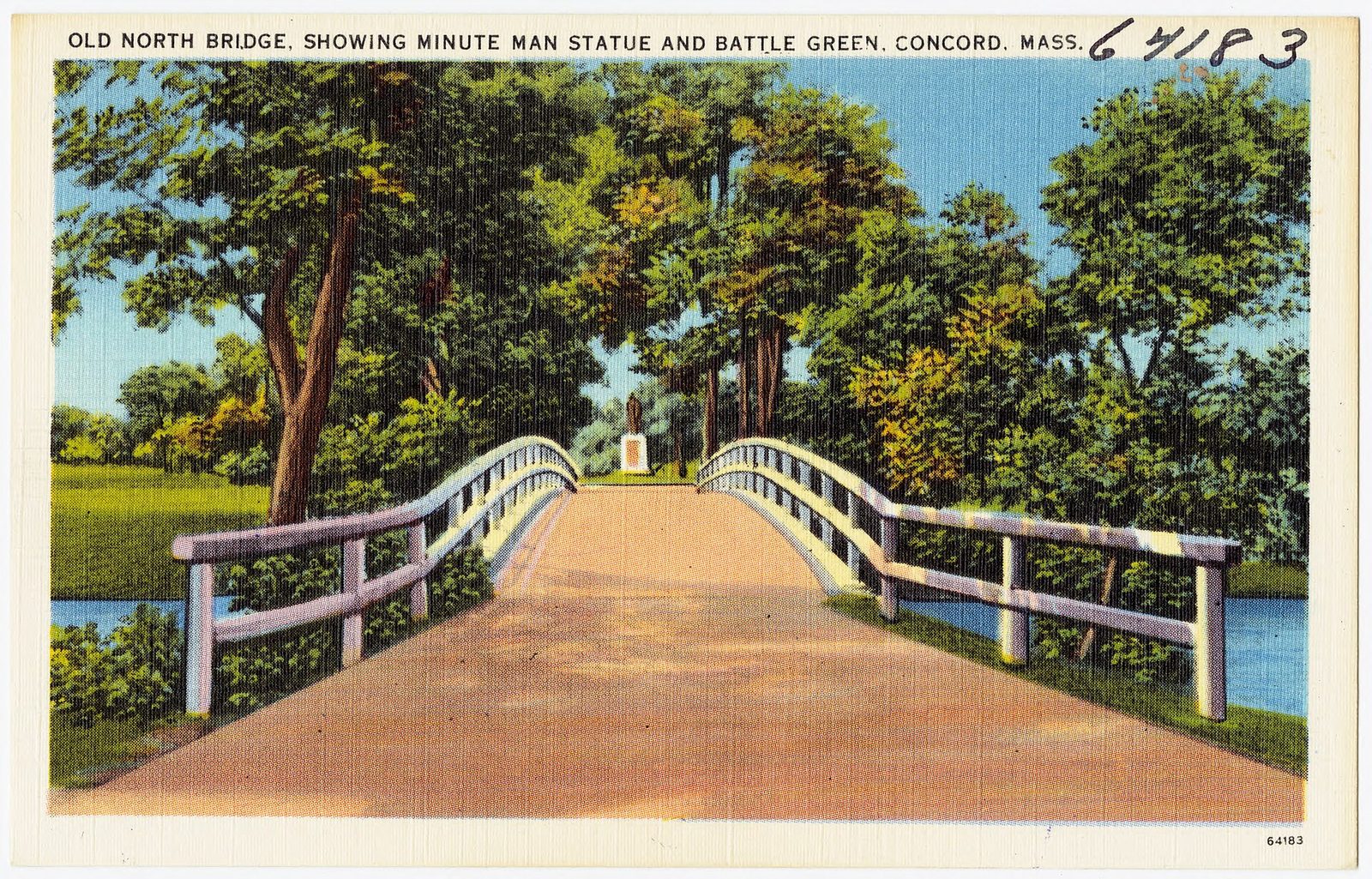
The Founders had just fought a war that began when British troops marched on Lexington and Concord to seize colonial arms and powder. To them, an armed citizenry was a safeguard of a free state, not a hobby.
Our view: The Second Amendment protects every other right on the list. The Court has now said plainly that it is an individual right, it applies everywhere, and it does not stop at your front door.
Sources
- National Archives, The Bill of Rights: A Transcription
- Oyez, District of Columbia v. Heller (2008)
- Cornell LII, District of Columbia v. Heller
- Oyez, McDonald v. Chicago (2010)
- Supreme Court of the United States, N.Y. State Rifle & Pistol Assn. v. Bruen (2022), slip opinion
- National Park Service, Minute Man National Historical Park
Featured image: Old North Bridge, showing Minute Man Statue and Battle Green, Concord, Mass (64183), by Tichnor Bros. Inc., Boston, Mass.. Public domain, via Wikimedia Commons. See all image credits.