

Confirmed Michigan Senator-elect Abdul El-Sayed told NPR he will likely take his oath on a Quran, possibly Thomas Jefferson’s copy or a historic copy held by the University of Michigan. He would be the first U.S. senator to do so.
The announcement has set off a fierce debate online. Some say officials should swear only on the Bible. Here is what the law says, and what history shows.
What the Constitution requires
Article VI says officials “shall be bound by Oath or Affirmation, to support this Constitution; but no religious Test shall ever be required as a Qualification to any Office or public Trust under the United States.” The Constitution requires an oath or an affirmation. It does not require any book. It also bars a religious test for office.
How Congress swears in
Members of the House take the oath together, standing with raised right hands, and no book is required. The individual photo with a Bible, or another text, is a later ceremonial reenactment. The oath binds the member to the Constitution, whatever book is in the photo.
The precedent: Jefferson’s Quran
In 2007, Rep. Keith Ellison, the first Muslim elected to Congress, used Thomas Jefferson’s two-volume copy of George Sale’s English translation of the Quran (1764 printing) for his ceremonial oath, according to the Library of Congress. Jefferson’s library, nearly 6,500 titles, was sold to Congress in 1815 to replace the library the British burned in the War of 1812.
Two things can be true
- Legally, the Constitution is clear. There is no religious test, and the oath is to the Constitution.
- Culturally, many Americans believe the nation’s liberties rest on a Judeo-Christian foundation. Alexis de Tocqueville observed in the 1830s that Americans held religion “to be indispensable to the maintenance of republican institutions.” Citizens are free to say so, and to vote accordingly.
Our view: The “no religious test” clause protects Baptists, Catholics, Jews and evangelicals as much as anyone. Defend it even when you dislike how someone else uses it. Then make your case for faith in public life the American way, by persuasion and at the ballot box.
Sources
- NPR, Abdul El-Sayed interview, Newsmakers (Nov. 12, 2026)
- National Archives, The Constitution: A Transcription (Article VI)
- Library of Congress, “Thomas Jefferson’s Copy of the Koran To Be Used in Congressional Swearing-in Ceremony” (2007)
- Library of Congress Information Bulletin, “Jefferson’s Quran in the News” (2007)
- Library of Congress, Religion and the Founding of the American Republic: Religion and the New Republic
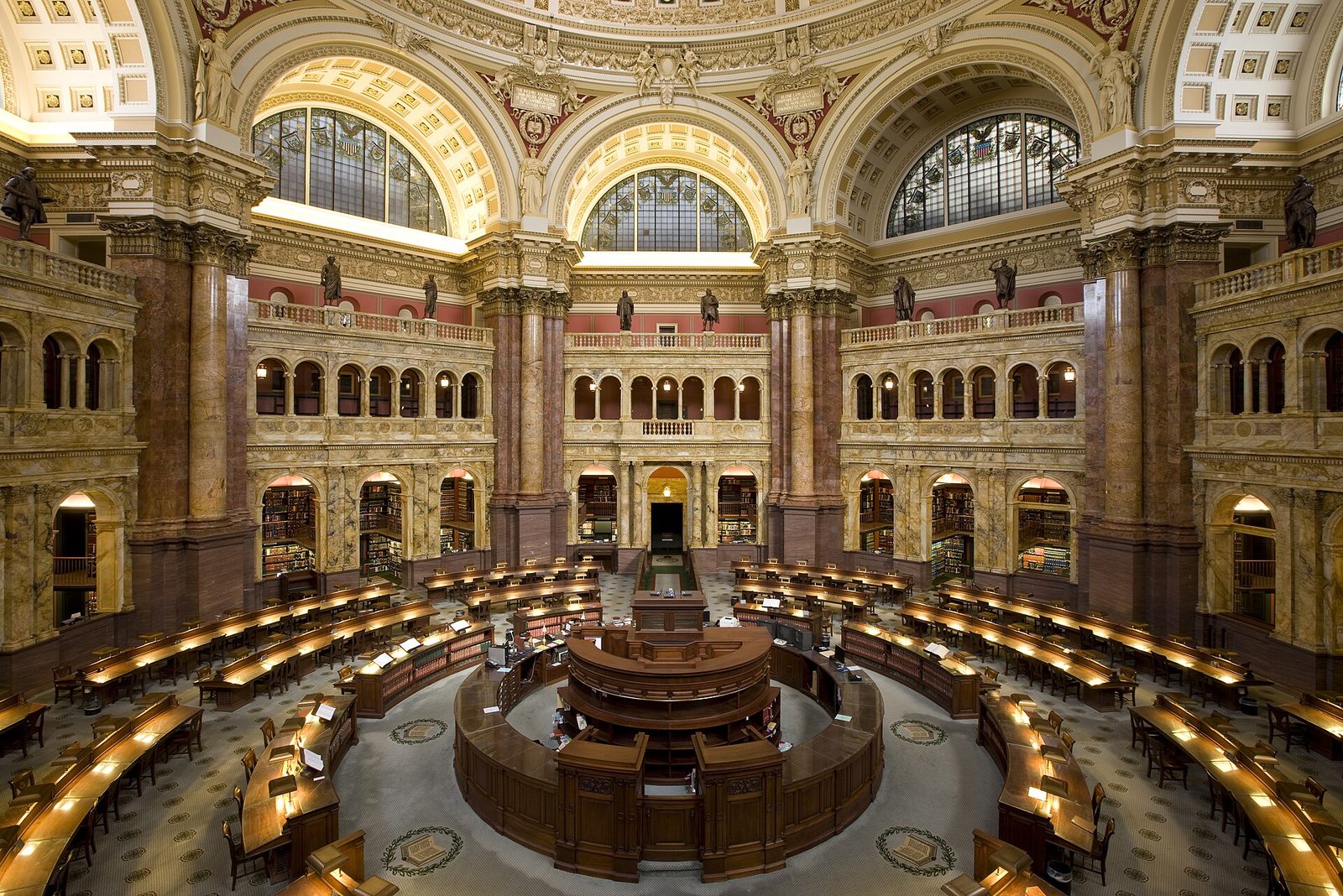
Featured image: LOC Main Reading Room Highsmith, by Carol M. Highsmith. Public domain, via Wikimedia Commons. See all image credits.