

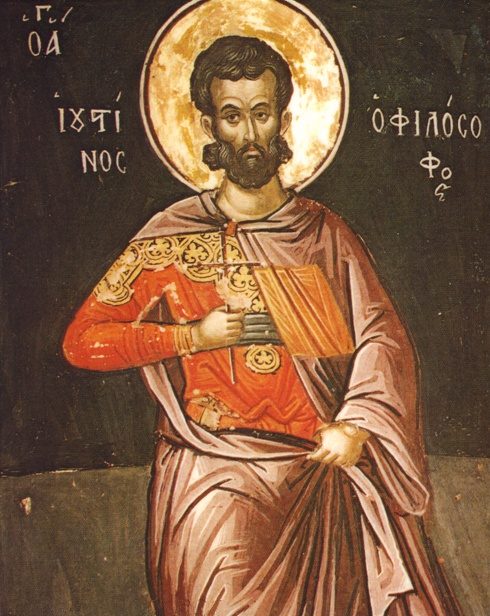
Christianity grew up in a world full of philosophies and religions. Justin Martyr, a second-century philosopher who became a Christian and was later martyred in Rome, gave one of the most influential answers to the question of what Christians should make of truth found outside the church.
What Justin said
In his First Apology, Justin wrote that Christ “is the Word of whom every race of men were partakers; and those who lived reasonably are Christians, even though they have been thought atheists; as, among the Greeks, Socrates and Heraclitus, and men like them.”
In his Second Apology, he explained that each thinker “spoke well in proportion to the share he had of the spermatic word,” the logos spermatikos, or “seed-bearing Word.” And he drew the conclusion: “Whatever things were rightly said among all men, are the property of us Christians.”
What he did not say
Justin did not teach that all religions are equal paths. In the same chapter he says the philosophers who contradicted themselves “appear not to have possessed the heavenly wisdom.” For Justin, partial truths point toward the full truth, and the full truth is Christ, the Logos made flesh (John 1:1, 14).
Later echoes
The idea has had a long life. The Second Vatican Council’s decree Ad Gentes (1965) urged Christians to “gladly and reverently lay bare the seeds of the Word which lie hidden” among the peoples they live with.
Some modern writers go further with a “perennial philosophy,” which holds that one truth runs beneath all traditions, whether Native American, Norse, Buddhist or others. That is a different claim from Justin’s. He placed Christ at the center and judged everything else by Him.
| Idea | Justin Martyr | Perennial philosophy (popular form) |
|---|---|---|
| Truth found outside the church? | Yes, as seeds or fragments | Yes |
| All traditions equally valid? | No | Often yes |
| Center and standard | Christ, the Logos | A shared mystical core |
Why it matters today: You can honor the wisdom in the old stories of your ancestors without giving up the claim that Christ is the truth they were reaching for. That was Justin’s approach, and he died for it.
Sources
- Justin Martyr, First Apology, ch. 46 (New Advent)
- Justin Martyr, Second Apology, ch. 13 (New Advent)
- Second Vatican Council, Ad Gentes (1965), Vatican.va
Featured image: Saint Justin Martyr by Theophanes the Cretan, by Theophanes the Cretan. Public domain, via Wikimedia Commons. See all image credits.