

Secret Societies: This entry is one of many in our Secret Societies section. Each one separates what is documented from what is myth, and every claim is labeled and sourced.
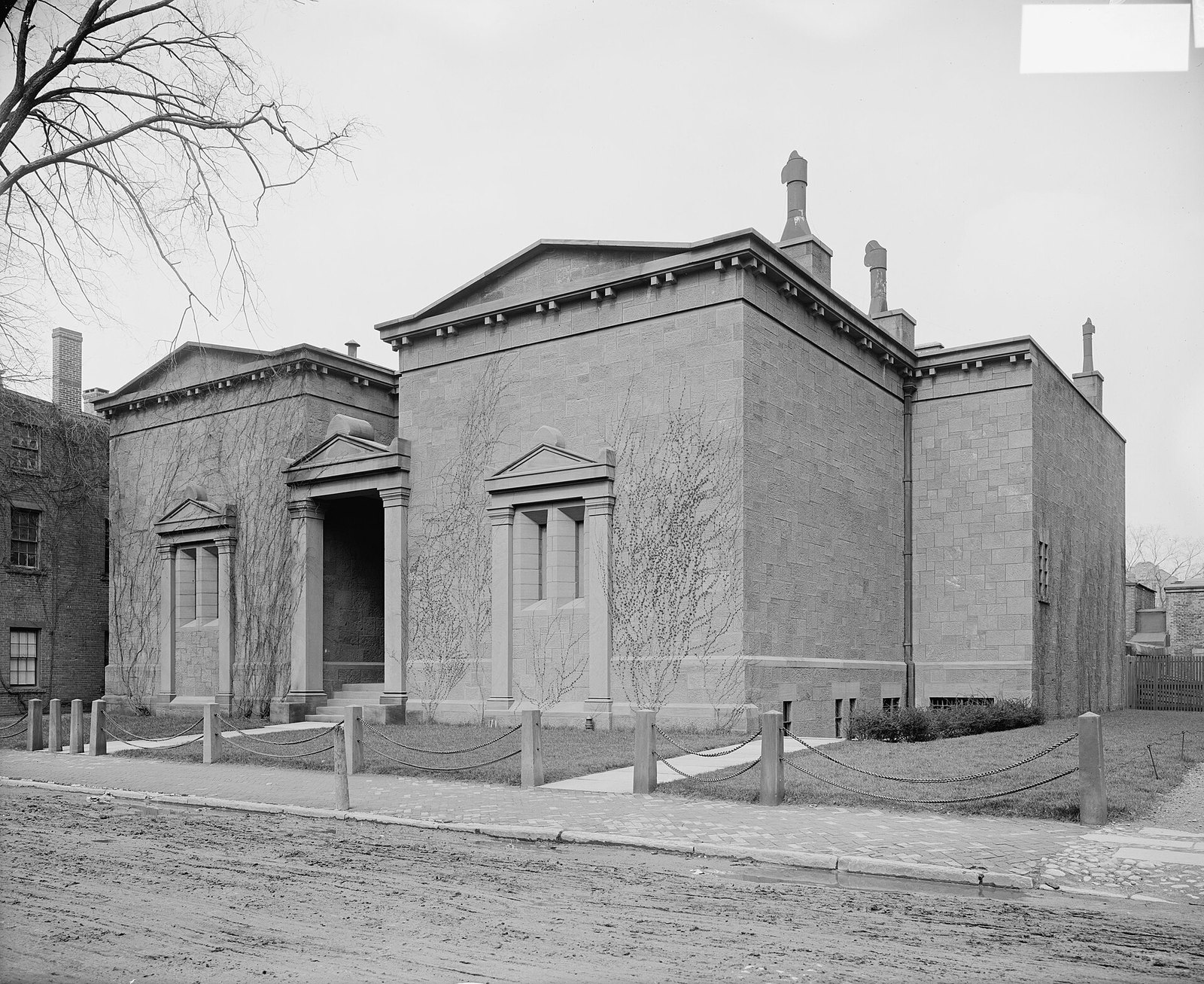
Skull and Bones is a senior society at Yale University in New Haven, Connecticut. Each year it chooses a small class of juniors for membership, and it meets in a windowless building on High Street known as “the Tomb.”
A short history
- Founding. Two members of the class of 1833, William Huntington Russell and Alphonso Taft (father of President William Howard Taft), founded the society in 1832 (Yale Alumni Magazine).
- Symbols. Its badge is a skull and crossbones over the number 322. The meaning of the number has never been officially explained (Yale Alumni Magazine).
- The Tomb. In 1856 alumni incorporated the Russell Trust Association so the society could own its building (Yale Alumni Magazine).
- Secrecy. Meetings and rituals have always been private. According to the Yale Alumni Magazine, the members’ names were not secret for most of its history. The first exposé appeared in 1871.
Notable members
The society’s alumni include President William Howard Taft, President George W. Bush and Senator John Kerry. Bush and Kerry, both Bonesmen, faced each other in the 2004 presidential election (Yale Alumni Magazine).
Claims checked
Claim: Both 2004 presidential nominees were members.
✅ Confirmed  Factual Lean note: Yale’s alumni magazine documents it, and it is not disputed.
True. John Kerry was tapped in 1965 and George W. Bush in 1967 (Yale Alumni Magazine).
Claim: The society holds Geronimo’s skull.
❓ Unconfirmed Factual Lean note: Major outlets reported the 1918 letter and the lawsuit the same way. Whether the skull is real remains unproven.
Unconfirmed. A 1918 letter between members, found by a historian in 2005, says the Apache leader’s skull was taken from his grave at Fort Sill. His descendants sued in 2009. Some Oklahoma historians and anthropologists doubt the story, noting that no independent evidence shows the grave was disturbed (The New York Times; CNN).
Claim: Skull and Bones secretly runs the government.
⚠️ Disputed
No evidence supports it. A small, well-connected alumni network has produced powerful people, as many elite schools and clubs have. No record shows the society directing policy as a group. The Yale Alumni Magazine describes the “cabal” idea as a persistent rumor (Yale Alumni Magazine).
Bottom line: Skull and Bones is a real, exclusive and secretive college society with famous alumni. Whether it holds Geronimo’s skull is still unproven. There is no evidence that it rules anything.
Label key
- ✅ Confirmed An official record, or two or more independent outlets, agree.
- ❓ Unconfirmed Reported or claimed, but not yet independently verified.
- ⚠️ Disputed Contradicted by the evidence or by credible sources, or actively contested.
- Factual Straight reporting that holds up across outlets on different sides.
 Leans Left The facts hold, but the coverage tilts left: one-sided, loaded language, missing context or a single anonymous source.
 Leans Right The facts hold, but the coverage tilts right: one-sided, loaded language, missing context or a single anonymous source.
 Likely Propaganda State-run or state-aligned media, a militant press office, a partisan campaign or group, or unverifiable spin.
Each story gets one confidence tag and one source-lean label, plus a one-line Lean note explaining the call. Every side is held to the same standard. More on how we cover the news.
Sources
- Yale Alumni Magazine, How the Secret Societies Got That Way (Sept./Oct. 2004)
- Yale Alumni Magazine, The origins of the tomb
- The New York Times, Geronimo’s Heirs Sue Secret Yale Society Over His Skull (2009)
- CNN, Descendant sues Skull and Bones over Geronimo’s bones (2009)
Featured image: Skull and Bones tomb, by Detroit Publishing Co.. Public domain, via Wikimedia Commons. See all image credits.
Related on Candid Dragon
- Bohemian Grove: A Private Club’s Summer Camp, and the Stories Told About It
- The Bilderberg Meetings: Private Talks, Public Guest Lists
- The Bavarian Illuminati: A Real Society That Lasted About a Decade
- All secret societies
- The "Deep State": What Is Real and What Is Not (Conspiracies)
- All conspiracy theories, checked