

One joke making the rounds online this week captured a real squeeze: should I prepare for a blackout, a war, or Christmas, when I can’t afford all three? The good news is that the official guidance is built for tight budgets. You can build a solid kit without a big shopping trip.
Start with free steps
Ready.gov lists several preparedness steps that cost little or nothing:
- Learn which disasters are most likely where you live
- Write a family communications plan. Store copies on paper and digitally.
- Keep important phone numbers somewhere besides your phone
- Sign up for local emergency alerts, and get the free FEMA app
- Talk through where your household would go if told to evacuate
- Put documents in resealable plastic bags on a high shelf
- Ask your fire department about programs that provide fire or carbon monoxide detectors
- Look for free or discounted CPR courses
Build the kit a little at a time
- Use what you have. Most homes already have a flashlight, batteries, canned food and first aid supplies. Gather them in one place, in an old backpack or bin.
- One extra item per trip. Ready.gov suggests picking up one extra item you already use each time you shop, especially when it is on sale.
- Shop secondhand. Garage sales and thrift stores have camping gear, tools, cookware and backpacks for a fraction of retail.
- Keep older clothes that still fit for the kit instead of donating them.
- Watch for sales tax holidays on emergency supplies, if your state has one. The Red Cross also suggests buy-one-get-one deals, clearance bins, coupons and discount stores.
A $5-a-week plan
| Week | Add this |
|---|---|
| 1 | A gallon of water per person (or clean, refilled bottles) |
| 2 | Two cans of protein (tuna, chicken, beans) and a manual can opener |
| 3 | Batteries and a flashlight, if you don’t have one |
| 4 | A basic first aid kit from a discount store |
| 5 | Two more gallons of water and peanut butter |
| 6 | Moist towelettes, trash bags and zip ties |
| 7 | A battery or hand-crank radio (watch for sales) |
| 8 | Copies of documents in a waterproof bag, and a little cash |
These are our suggestions, built from the Ready.gov basic kit list. Prices vary.
Make it a gift
A flashlight, a weather radio or a first aid kit makes a practical stocking stuffer. Keeping a family warm and fed through an outage is a gift too.
Bottom line: You do not have to choose between Christmas and being ready. Do the free steps this week, add one item each time you shop, and by spring you will have a kit. Related: Preparedness Checklists.
Sources
- Ready.gov, Low and No Cost Preparedness
- Ready.gov, Build A Kit
- American Red Cross, National Preparedness Month: Get Ready for Emergencies with These Easy, Budget-Friendly Steps (2026)
- Fairfax County Health Department, Emergency Preparedness on a Budget
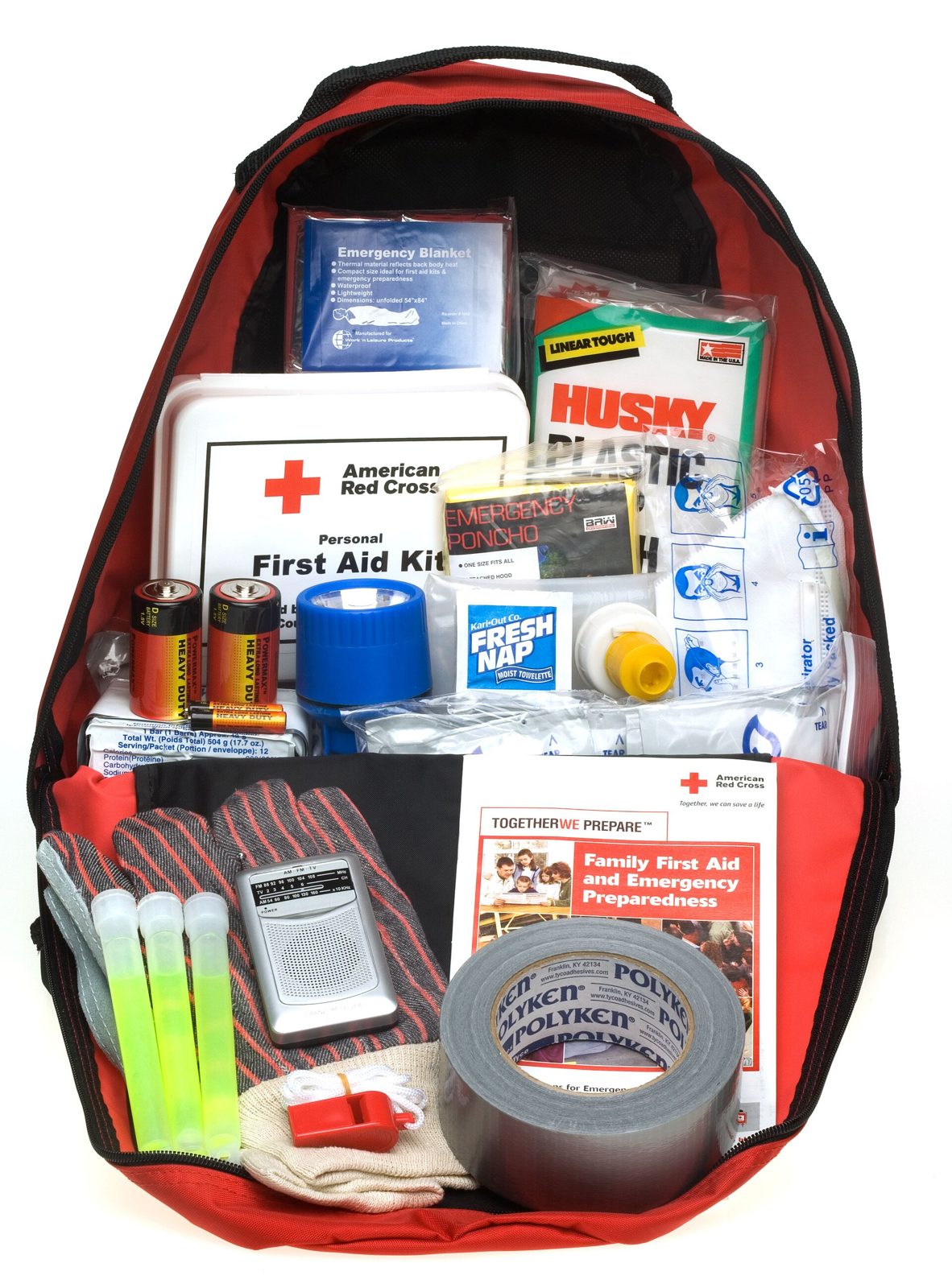
Featured image: FEMA – 37173 – Red Cross “ready to go” preparedness kit, by Red Cross. Public domain, via Wikimedia Commons. See all image credits.