

← Back to the timeline Ancient Worldc. 9500 BC
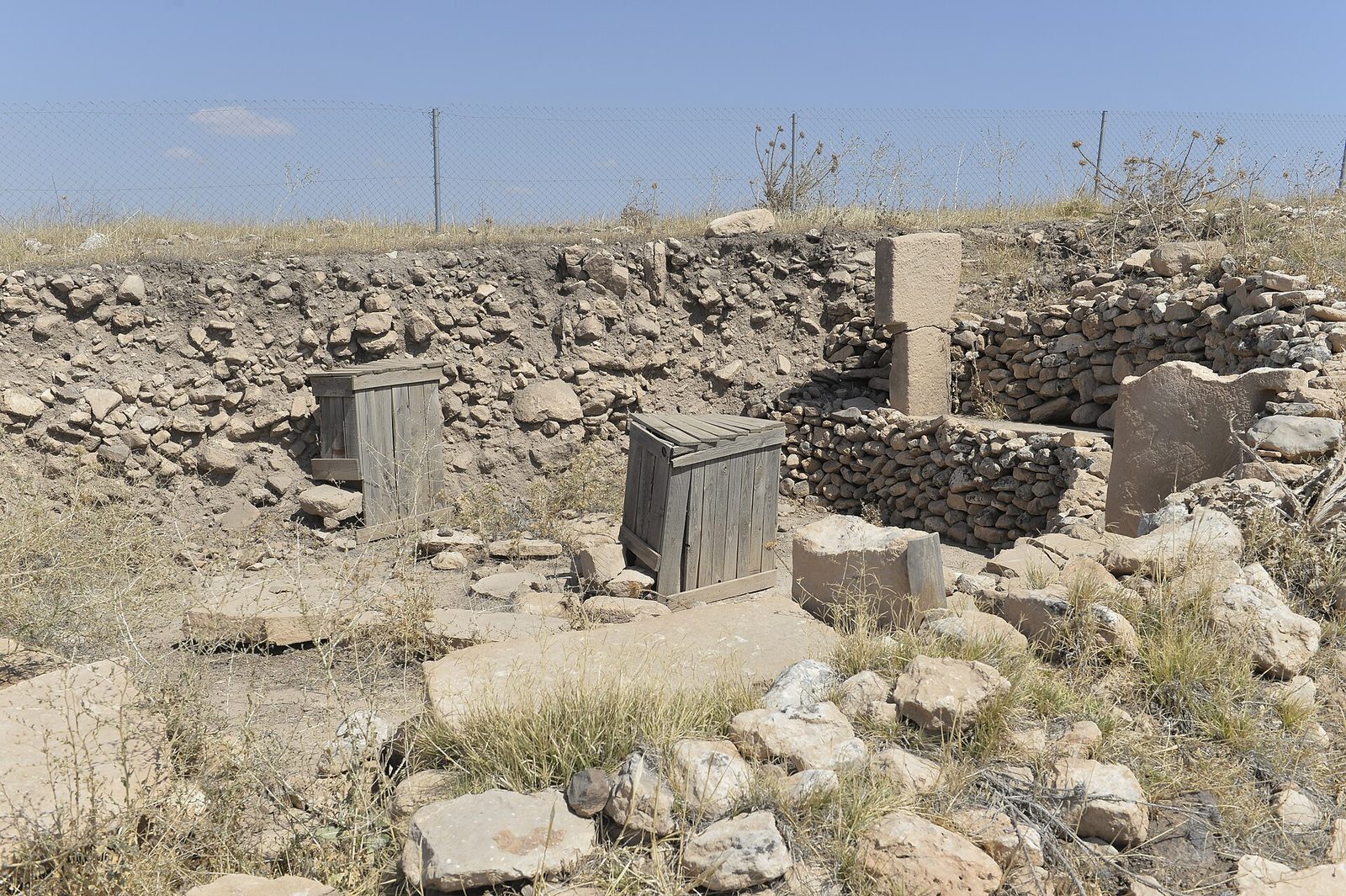
On a limestone ridge in southeastern Turkey stands one of the most important archaeological sites on Earth. Göbekli Tepe forces a rewrite of the old textbook order, which said people first farmed, then settled, and only then built monuments.
What the evidence shows
UNESCO, which inscribed the site on the World Heritage List, describes “monumental round-oval and rectangular megalithic structures erected by hunter-gatherers in the Pre-Pottery Neolithic age between 9,600 and 8,200 BCE.”
- The pillars: distinctive T-shaped limestone pillars, some up to 5.5 meters (about 18 feet) tall, carved from the neighboring plateau.
- The art: high and low reliefs of wild animals. Some pillars are abstract human figures carved with belts and loincloths.
- The purpose: UNESCO says the enclosures were probably used for social events and rituals, likely funerary ones.
- Not only ritual: recent excavations found remains of non-monumental structures that appear to come from domestic buildings.
- Who built it: UNESCO’s listing says the work points to specialized craftsmen, and possibly to more hierarchical societies.
The same imagery turns up at other sites of the same age across Upper Mesopotamia, the region where some of the world’s earliest farming communities later emerged.
Why it matters
Moving and carving multi-ton pillars takes planning, labor and shared belief. Göbekli Tepe suggests that gathering for ritual and community may have come before agriculture, and may even have helped drive it. The site sits at, in UNESCO’s words, “one of the most momentous transitions in human history.”
Evidence vs. speculation
The site’s age has made it a magnet for “lost civilization” theories: advanced Ice Age engineers, records of a comet strike, or survivors of a global catastrophe passing on secret knowledge.
| Claim | What the record supports |
|---|---|
| Built about 11,500 years ago | Yes. UNESCO dates construction to 9,600-8,200 BCE. |
| Built by hunter-gatherers | Yes. That is UNESCO’s description of the builders. |
| Required organization and skilled carvers | Yes. Specialized craftsmen are part of UNESCO’s assessment. |
| Built by an advanced lost civilization with lost technology | No published excavation evidence supports this. |
| The carvings encode a precise astronomical catastrophe record | An interpretation, debated and not established. |
Our take: You do not need aliens or Atlantis to be amazed by Göbekli Tepe. People with stone tools and a common purpose built something that still stands after 11,000 years. That is the story, and it is a good one.
Sources
Featured image: Gobekli Tepe Building F in 2014 3208, by Dosseman. CC BY-SA 4.0, via Wikimedia Commons. See all image credits.