

← Back to the timeline The American Founding1791
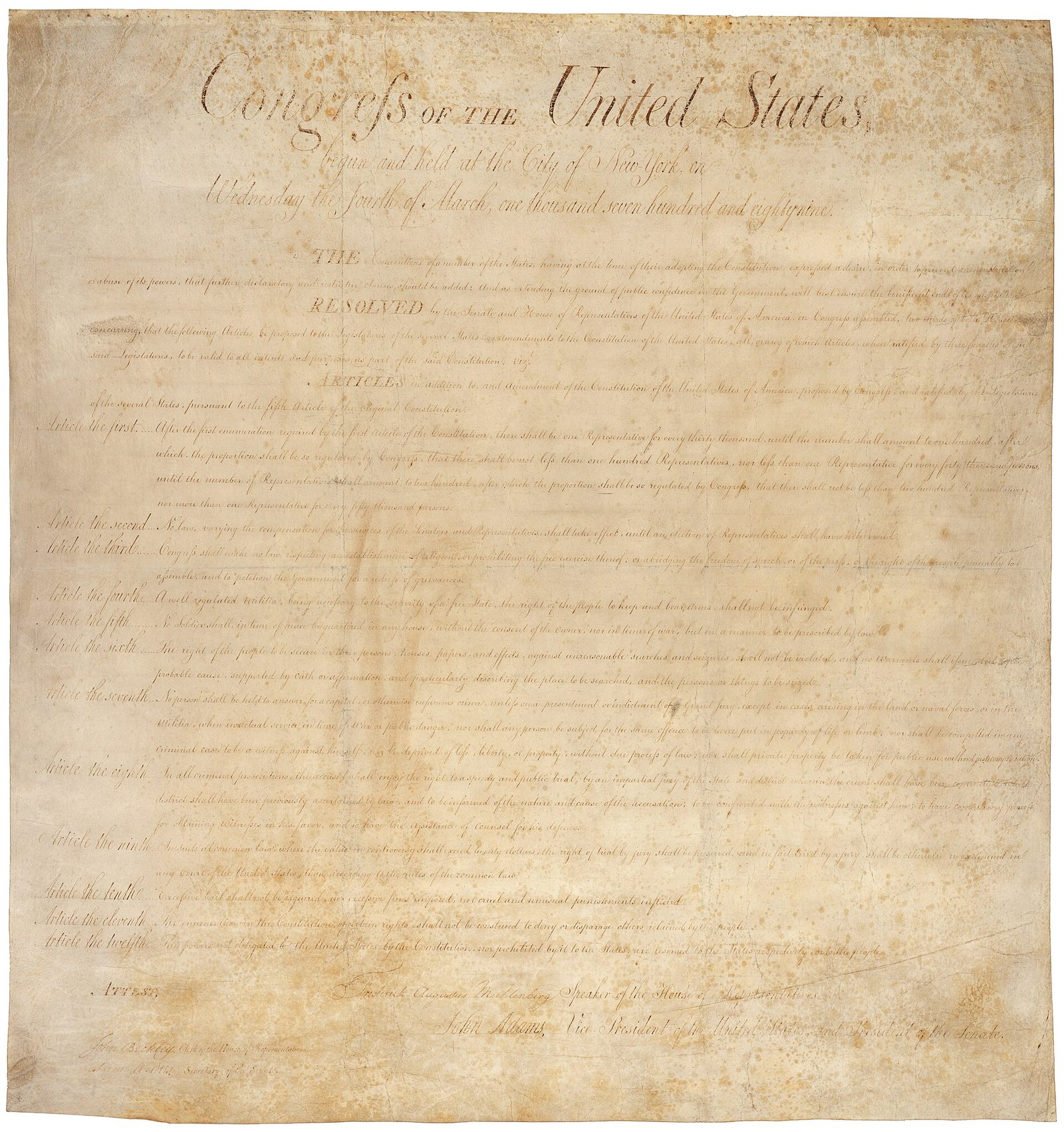
The Constitution created a strong national government. Many Americans would not ratify it without a written guarantee of their rights. The Bill of Rights was that guarantee.
How it happened
According to the National Archives, on September 25, 1789, the First Congress proposed 12 amendments. Ten were ratified by three-fourths of the state legislatures on December 15, 1791. Those became the first ten amendments, the Bill of Rights. One of the other two was finally ratified in 1992, more than 200 years later, as the 27th Amendment. The other was never ratified.
The ten amendments
| Amendment | What it protects |
|---|---|
| I | Freedom of religion (no establishment, free exercise), speech, press, assembly, and petition |
| II | “A well regulated Militia, being necessary to the security of a free State, the right of the people to keep and bear Arms, shall not be infringed.” |
| III | No quartering of soldiers in private homes without consent |
| IV | No unreasonable searches and seizures. Warrants require probable cause. |
| V | Grand jury, no double jeopardy, no compelled self-incrimination, due process, just compensation for takings |
| VI | Speedy and public trial, impartial jury, right to counsel, right to confront witnesses |
| VII | Jury trial in civil cases |
| VIII | No excessive bail or fines, no cruel and unusual punishment |
| IX | Listing some rights does not deny others the people keep |
| X | Powers not delegated to the federal government are reserved to the states or the people |
Why the Ninth and Tenth matter
People often skip the last two, but they are the backstop for the whole design. The federal government has only the powers the Constitution lists. Rights do not come from that list. The people already have them.
Read it yourself: The full text is short. The National Archives transcription takes about five minutes to read, and every citizen should read it once a year.
Sources
- National Archives, The Bill of Rights: A Transcription
- National Archives, The Bill of Rights
- Bill of Rights Institute
Featured image: Bill of Rights – DPLA – a65f6d0b6210c18d17c596908ebcf270 (page 1), by National Archives and Records Administration. Public domain, via Wikimedia Commons. See all image credits.