

← Back to the timeline Middle Ages & Reformation1492
On October 12, 1492, Christopher Columbus, a Genoese sailor working for Ferdinand and Isabella of Spain, landed on an island in the Bahamas. He was looking for a western sea route to Asia. Instead, his voyages began lasting contact between Europe and the Americas.
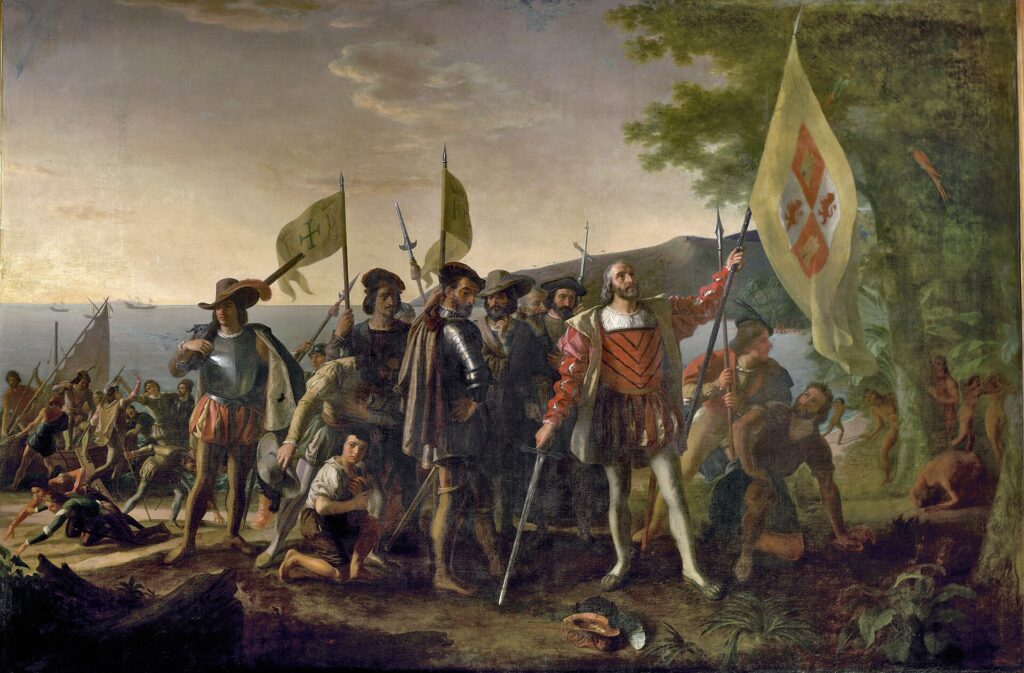
At a glance
| Sailed | August 3, 1492, from Palos de la Frontera, Spain |
|---|---|
| Landfall | October 12, 1492, on an island the Taíno called Guanahaní; Columbus named it San Salvador |
| Ships | Niña, Pinta and Santa María; the Santa María ran aground off Hispaniola on Christmas 1492 |
| Voyages | Four, between 1492 and 1504 |
| Earlier visitors | Norse Vikings lived briefly at L'Anse aux Meadows, Newfoundland; tree-ring evidence shows them there in 1021 |
The story
After the first landing, Columbus sailed on to Cuba and Hispaniola. When the Santa María was wrecked, he left about 39 men behind in a small fort and returned to Spain in March 1493 to a hero's welcome. He made three more voyages, reaching the coasts of South and Central America, and died in Spain in 1506 still insisting he had reached Asia.
His record as governor of Hispaniola was harsh even by the standards of his own time. Spanish authorities removed him in 1500 and sent him home in chains. The native Taíno population collapsed within a few decades from war, forced labor and, above all, European diseases they had no immunity to.
Historians call what followed the "Columbian Exchange." Maize, potatoes and tomatoes went to Europe and changed diets there; horses, cattle, wheat and sugar went to the Americas, along with smallpox and other deadly diseases. Few events changed more lives on both sides of the ocean.