

← Back to the timeline Middle Ages & Reformation1517
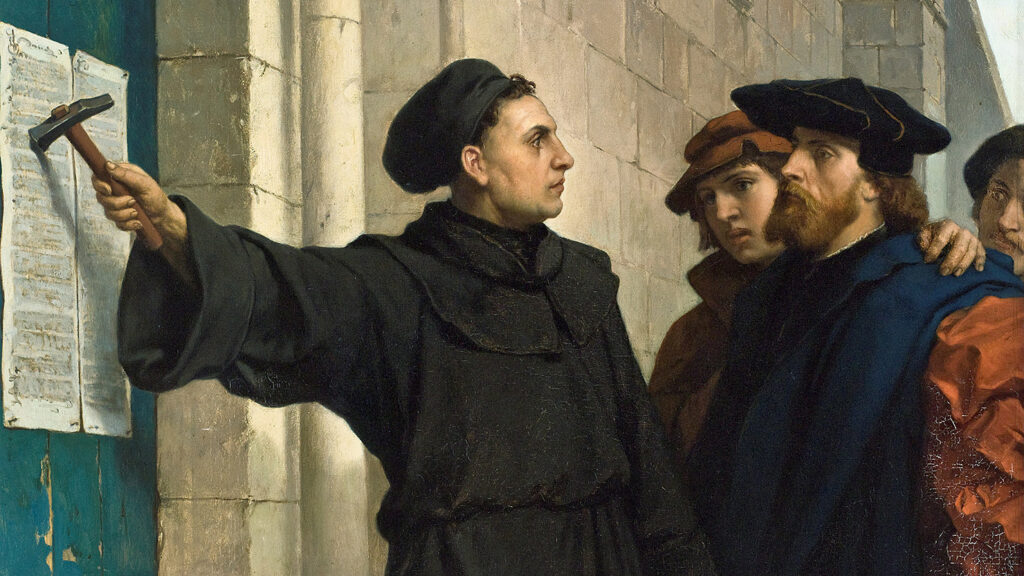
On October 31, 1517, Martin Luther, a monk and Bible professor in Wittenberg, sent 95 short propositions against the sale of indulgences to Archbishop Albert of Mainz. His protest grew into the Protestant Reformation, which split Western Christianity.
At a glance
| Date | October 31, 1517 |
|---|---|
| Where | Wittenberg, Saxony |
| Trigger | Johann Tetzel's indulgence sales, which helped fund the rebuilding of St. Peter's in Rome |
| Excommunicated | January 1521, by Pope Leo X |
| Diet of Worms | April 1521; Luther refuses to recant and is declared an outlaw |
| German New Testament | Published September 1522; the full Bible followed in 1534 |
The story
An indulgence was a grant from the church that reduced punishment for sins. Luther argued that forgiveness came through faith and true repentance, not purchase. Whether he also nailed the theses to the door of Wittenberg's Castle Church is debated: the story first appears after his death, though posting notices on that door was a normal way to invite academic debate.
The printing press made the difference. Within weeks the theses were reprinted across Germany, and Luther's later pamphlets became best-sellers. At the Diet of Worms in 1521, before Emperor Charles V, he refused to take back his writings unless shown wrong by scripture and reason. Friends then hid him at Wartburg Castle, where he translated the New Testament into German.
Other reformers followed, including Ulrich Zwingli in Zurich and John Calvin in Geneva, and England broke with Rome in 1534. The Catholic Church answered with its own reforms at the Council of Trent (1545–1563). The 1555 Peace of Augsburg let each German prince choose his territory's religion, a step toward the modern idea that the state should not dictate belief.