

End-times chatter online this month includes posts naming a modern preacher as the promised Elijah who prepares the way for Christ’s return. The claim rests on a real prophecy. Here is what the Bible says about Elijah’s return, and what Jesus said about it.
The promise
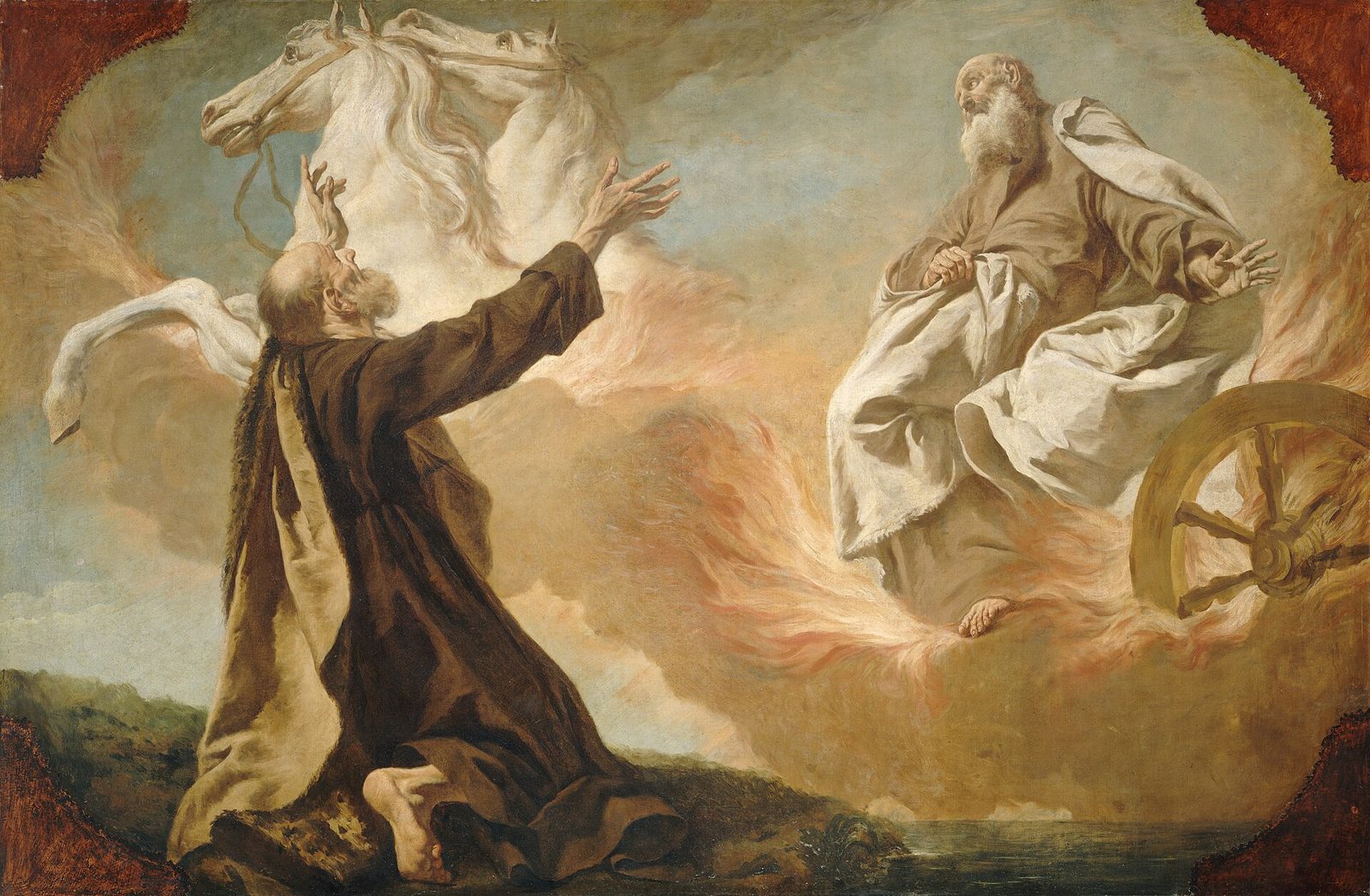
Elijah never died, according to the Old Testament. He “went up by a whirlwind into heaven,” taken by “a chariot of fire, and horses of fire” (2 Kings 2:11). The last prophet of the Old Testament promised he would come again:
Behold, I will send you Elijah the prophet before the coming of the great and dreadful day of the Lord: And he shall turn the heart of the fathers to the children, and the heart of the children to their fathers…
Malachi 4:5-6, KJV
What the New Testament says
| Passage | What it says |
|---|---|
| Luke 1:17 | John the Baptist will go “in the spirit and power of Elias, to turn the hearts of the fathers to the children,” echoing Malachi |
| Matthew 11:14 | Jesus, of John: “if ye will receive it, this is Elias, which was for to come” |
| Matthew 17:11-13 | “Elias truly shall first come, and restore all things. But I say unto you, That Elias is come already, and they knew him not.” The disciples understood he meant John the Baptist. |
| John 1:21 | Asked “Art thou Elias?”, John the Baptist answered, “I am not.” |
| Mark 9:4 | Elijah appears with Moses at the Transfiguration |
| Revelation 11:6 | The two witnesses have power “to shut heaven, that it rain not,” like Elijah in 1 Kings |
Evidence vs. interpretation
- In the text: Malachi promised Elijah before “the day of the Lord.” Jesus said Elijah “is come already” in John the Baptist, and also that Elias “truly shall first come, and restore all things.”
- The puzzle: John denied being Elijah. Many interpreters resolve this by saying John was not Elijah in person, but came “in the spirit and power” of Elijah (Luke 1:17), which is how Jesus could say both things.
- Interpretation: Some Christians expect a further Elijah-like ministry before the Second Coming, often tied to the two witnesses of Revelation 11. Others hold that John the Baptist fulfilled the prophecy.
- Speculation: No passage names a modern individual. Self-declared Elijahs have come and gone for centuries.
Our view: Jesus pointed to John the Baptist, a man who dressed in camel’s hair and pointed away from himself to Christ. Be cautious of any movement that points to a man as the end-times Elijah. Malachi’s actual test is homely and good: turning the hearts of fathers to their children.
Sources
- Bible Gateway, Malachi 4:5-6; Matthew 11:13-14; Matthew 17:10-13; Luke 1:17; John 1:21; Revelation 11:6 (KJV)
- Bible Gateway, 2 Kings 2:11; Mark 9:4 (KJV)
Featured image: Giuseppe Angeli, Elijah Taken Up in a Chariot of Fire, c. 1740-1755, NGA 41685, by Giuseppe Angeli. CC0, via Wikimedia Commons. See all image credits.