

After a bill passes the House, the next headline is often that it “failed in the Senate,” even when most senators support it. That happened with the voter-ID push behind the SAVE America Act. Here is how the Senate’s 60-vote hurdle works and where it came from.
The Constitution leaves it to the Senate
The Constitution says “Each House may determine the Rules of its Proceedings” (Article I, Section 5). The filibuster is not in the Constitution. It is a product of Senate rules and tradition.
The history in four dates
| Year | What changed |
|---|---|
| Before 1917 | No rule existed to end debate and force a vote |
| 1917 | The Senate adopted cloture: two-thirds of senators voting could end a filibuster |
| 1975 | The threshold dropped to three-fifths of all senators “duly chosen and sworn,” which is 60 of 100 |
| 2013 and 2017 | By precedent, majority cloture for all executive and judicial nominations, then for Supreme Court nominations |
Confirmed The Senate Historical Office describes a filibuster as action “designed to prolong debate and delay or prevent a vote.” Cloture is the procedure for ending it.
How cloture works today
- A cloture motion receives a vote after an intervening day of Senate session.
- For most legislation, invoking cloture takes 60 votes.
- For nominations, a simple majority of senators voting can now invoke cloture. On a Supreme Court nomination, up to 30 more hours of consideration is then allowed before the final vote.
The “nuclear option”
On November 21, 2013, the Senate reinterpreted its cloture rule to allow majority cloture on nominations other than the Supreme Court. On April 6, 2017, it extended that precedent to Supreme Court nominations during the Gorsuch nomination. The Congressional Research Service notes these moves were called “the nuclear option” because a simple majority took “unusual and contested floor actions” to limit the minority’s ability to filibuster. The legislative filibuster was left intact.
The argument
- For keeping it: It forces broad agreement, slows sweeping change, and protects whichever party is in the minority. The majority today is the minority tomorrow.
- For ending it: Voters elect majorities to govern. A 41-senator minority can block bills that have majority support.
Our view: The Senate was built to cool the passions of the moment. We the people win when the rules outlast whoever holds power, so anyone frustrated when the filibuster blocks a bill they want should picture the same tool in the other side’s hands. Reform is debatable. Doing away with it in a fit of anger is not wise.
Related: The Texas midterm aftermath and the SAVE America Act.
Sources
- U.S. Senate, About Filibusters and Cloture
- Congressional Research Service, Senate Proceedings Establishing Majority Cloture for Supreme Court Nominations: In Brief (R44819)
- Congressional Research Service, Majority Cloture for Nominations: the “Nuclear” Proceedings of November 21, 2013 (R43331)
- National Archives, The Constitution of the United States: A Transcription
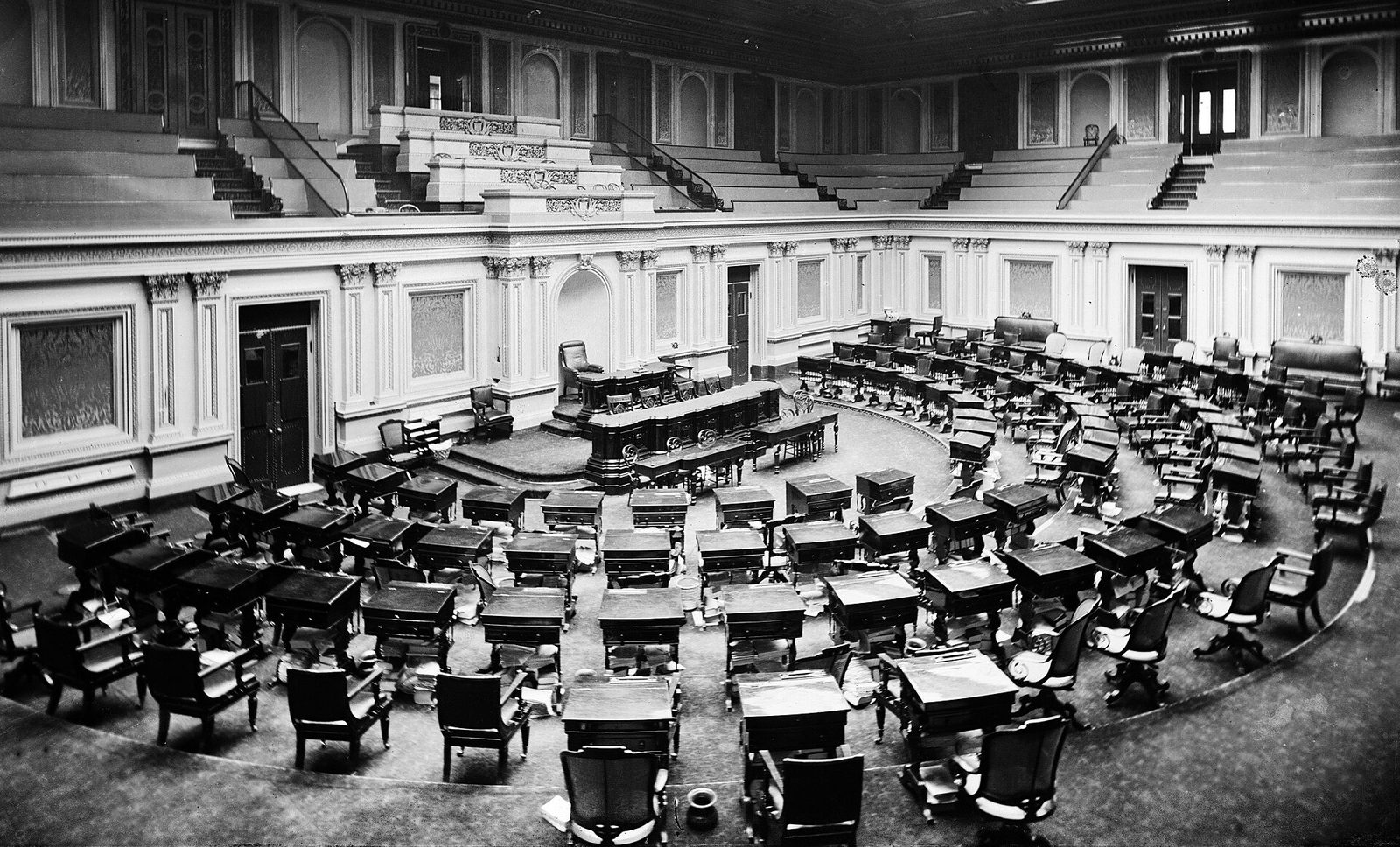
Featured image: US Senate Chamber c1873, by Brady-Handy Photograph Collection (Library of Congress). Public domain, via Wikimedia Commons. See all image credits.