

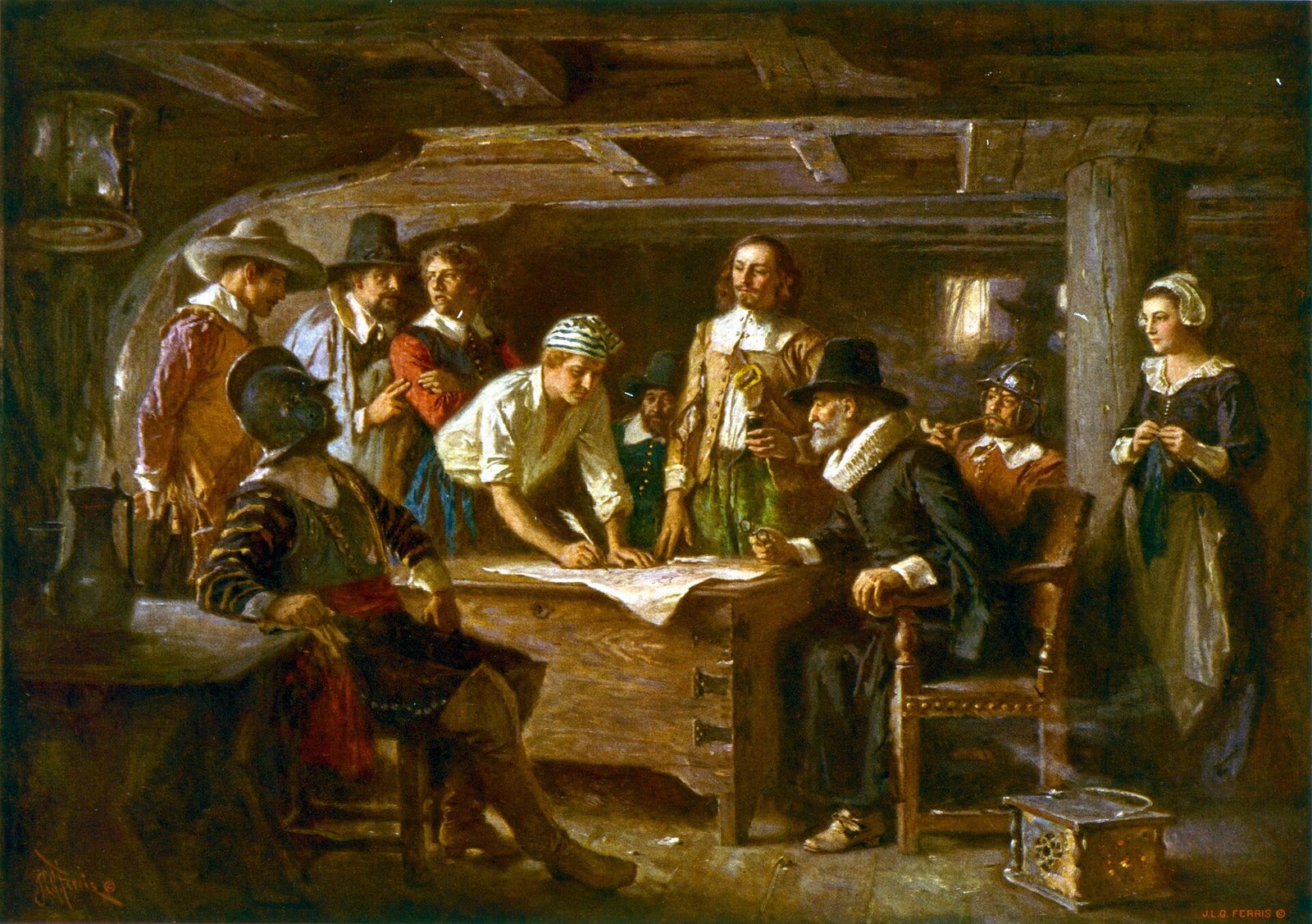
The First Amendment opens with religion: “Congress shall make no law respecting an establishment of religion, or prohibiting the free exercise thereof.” Those clauses came out of more than a century of experience. Pilgrims, Puritans, Baptists, Quakers and Catholics all sought, and sometimes denied, the freedom to worship.
Two clauses, one liberty
- The Establishment Clause bars Congress from setting up a national church. Several states still had established churches when the Bill of Rights was ratified in 1791. The Library of Congress notes that Massachusetts did not end tax support for churches until 1833.
- The Free Exercise Clause protects the right to practice one’s faith, in worship and in daily life.
What Jefferson actually wrote
In 1802 the Danbury Baptist Association of Connecticut, a religious minority in a state with an established church, wrote to President Jefferson. His reply, as sent, reads in part:
Believing with you that religion is a matter which lies solely between Man & his God, that he owes account to none other for his faith or his worship, that the legitimate powers of government reach actions only, & not opinions, I contemplate with sovereign reverence that act of the whole American people which declared that their legislature should “make no law respecting an establishment of religion, or prohibiting the free exercise thereof,” thus building a wall of separation between Church & State.
Thomas Jefferson to the Danbury Baptists, January 1, 1802 (Library of Congress)
Read in context, the “wall” protected the church from the government. Jefferson was reassuring a persecuted minority that the federal government would not interfere with their faith. In the same letter he wrote of “the rights of conscience.”
The founders on faith and freedom
The Library of Congress exhibition Religion and the Founding of the American Republic records the founders’ view that religion was a “necessary spring” of republican government. Tocqueville, visiting in the 1830s, found Americans held religion “indispensable to the maintenance of republican institutions.”
Our view: Religious liberty is the first freedom in the First Amendment for a reason. A government that can tell you how to worship can tell you anything. Protect it for every believer, and for those who don’t believe, because that is how it stays protected for you.
Sources
- National Archives, The Bill of Rights: A Transcription
- Library of Congress, Jefferson’s Letter to the Danbury Baptists: The Final Letter, as Sent
- Library of Congress, Religion and the Founding of the American Republic: Religion and the New Republic
- Library of Congress, Religion and the Founding of the American Republic (exhibition home)
Featured image: The Mayflower Compact 1620 cph.3g07155, by Jean Leon Gerome Ferris. Public domain, via Wikimedia Commons. See all image credits.