

Pick up Bibles from three different churches and you may count three different numbers of books. Here is a quick field guide.
The basic structure
- Old Testament: Law (Genesis to Deuteronomy), History, Wisdom and Poetry (Job, Psalms, Proverbs and more), and the Prophets.
- New Testament: the four Gospels, Acts, the letters of Paul, the general letters (James, Peter, John, Jude), and Revelation, 27 books in all.
How many books?
| Tradition | Old Testament | New Testament | Total |
|---|---|---|---|
| Protestant | 39 | 27 | 66 |
| Roman Catholic | 46 | 27 | 73 |
| Ethiopian Orthodox Tewahedo | 46 | 35 | 81 |
The Catholic Old Testament includes books Catholics call deuterocanonical: Tobit, Judith, Wisdom, Sirach, Baruch, 1 and 2 Maccabees, and additions to Esther and Daniel. You can see them in the U.S. Conference of Catholic Bishops’ online Bible. Protestants generally call these books the Apocrypha. They value them as history and devotional reading, but not as Scripture.
The Ethiopian Orthodox Tewahedo Church, by its own account, has 46 Old Testament and 35 New Testament books. Its Old Testament includes Enoch, Baruch, and 3 and 4 Esdras.
The early lists
The New Testament as we know it appears in Athanasius of Alexandria’s Festal Letter of 367. He lists exactly the 27 books found in Bibles today, and he warns against “apocryphal” writings. Interestingly, he puts Wisdom, Sirach, Esther, Judith and Tobit in a middle category: books “appointed by the Fathers to be read” by new believers, though not in the canon.
Words to know
- Canon: from a Greek word for a measuring rod. It means the list of books a church accepts as Scripture.
- Apocrypha: “hidden” books. In Protestant use, it means the deuterocanonical books.
- Pseudepigrapha: ancient books written in the name of a famous figure, such as 1 Enoch. Only the Ethiopian Church accepts Enoch as canon.
Further reading: See our deep dive on the Book of Enoch, and the original texts linked below.
Sources
- Athanasius, Festal Letter 39 (New Advent)
- United States Conference of Catholic Bishops, Books of the Bible
- Ethiopian Orthodox Tewahedo Church, The Canonical Books
- Bible Gateway, Bible versions
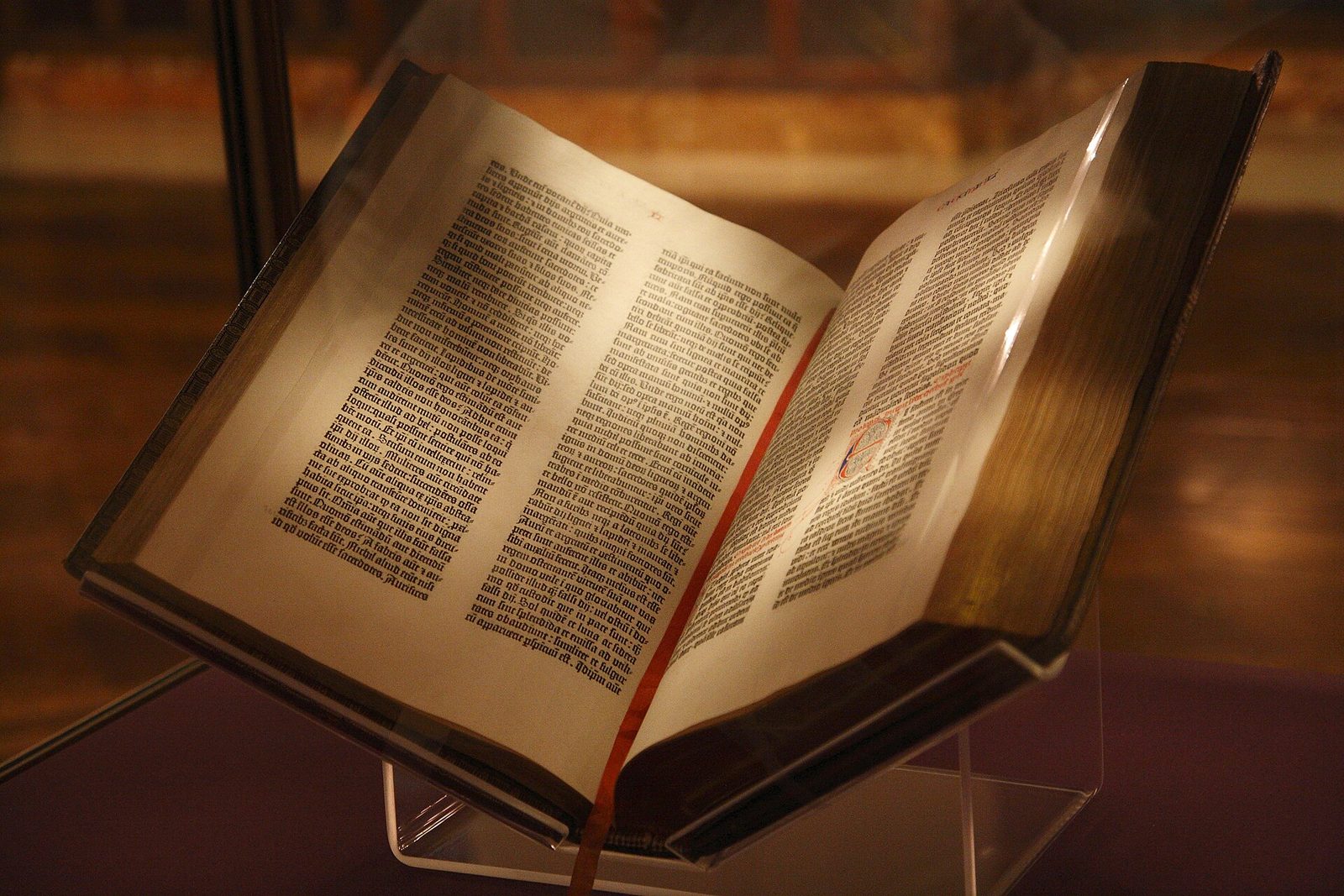
Featured image: Gutenberg Bible, New York Public Library, USA. Pic 01, by Joshua Keller. CC BY 2.0, via Wikimedia Commons. See all image credits.
Related on Candid Dragon
- The Book of Enoch: Quoted in Jude, Found at Qumran, Left Out of Most Bibles
- The Dead Sea Scrolls: What They Are, What They Prove, and What They Don’t
- “Seeds of the Word”: Justin Martyr and Truth Across the Traditions
Further reading: See also our plain-English guide to the Bible and other sacred texts in Books That Shaped Humanity.