


Quick take
- Of 27 former Emerald Equities buildings put up for foreclosure auction in East Harlem this month, 26 drew no outside bids and went back to the lender for $500 each. That $500 figure is a credit bid — a paperwork number used when no bidder meets the bank’s upset price — not an appraisal of what the buildings are worth.
- The only sale was 417 East 114th Street. City Limits reported that it sold for $1,000 above its $826,000 upset price, to a bidder for 135th Place LLC, a group linked to Isaac Badalov. The same article also once stated the sale price as $826,000.
- The people living in these buildings are the ones paying the price. Coverage and tenant lawyers describe more than 2,300 housing-code violations, mold, heat and gas outages, collapsing ceilings, rats, a retaining wall that fell and blocked fire exits, and, in one building, a pigeon graveyard.
- Outlets describe the wider portfolio as 38 or 39 mostly rent-stabilized buildings, with roughly 850 to nearly 900 apartments, and about $250 million in debt. The creditor, Sabal Investment Holdings, rejected city-backed offers of $68 million and $110 million from Spatial Equity, a preservation buyer that planned to steer some of the buildings to a community land trust.
- Landlord groups say New York’s rent-stabilization rules, including 2019 state law changes and this year’s rent freeze, make the buildings uneconomic to fix. Tenant advocates say the last owner neglected the properties, took on too much debt, and bet on raising rents before those 2019 rules closed that path. Both of those accounts are arguments about cause. The no-bid result and the conditions inside the buildings are documented facts.
- Mayor Zohran Mamdani’s administration backed the Spatial Equity bid. He signed the Community Opportunity to Purchase Act on November 10, 2026. That law takes effect November 10, 2027, and did not govern this auction. The record does not establish that his policies caused the buildings to draw no bids.
Our rating: ✅ Confirmed  Factual The auction result, the rejected offers, and the conditions in the buildings are confirmed across multiple outlets. ❓ Unproven as a sole cause that rent regulation, or Mayor Mamdani’s policies, are what made the auction fail.
26 of 27 buildings drew no outside bids and reverted to the lender for $500 each: ✅ Confirmed Factual
417 East 114th Street sold for $1,000 above an $826,000 upset price, to 135th Place LLC: ✅ Confirmed Factual City Limits also once stated the sale price as $826,000 in the same article.
Portfolio size, unit count, and about $250 million in debt: ✅ Confirmed as reported Factual Outlets disagree on whether the portfolio is 38 or 39 buildings, and on whether it holds roughly 850 or nearly 900 apartments.
Sabal rejected Spatial Equity’s $68 million and $110 million offers: ✅ Confirmed as reported Factual Reported by City Limits and Gothamist. Sabal has not commented in the coverage we reviewed.
Tenants are living with severe disrepair and more than 2,300 violations: ✅ Confirmed Factual
Isaac Kassirer was on the city’s worst-landlords list: ✅ Confirmed Factual He was No. 72 on Public Advocate Jumaane Williams’s 2023 list.
Buying and renovating just the five East 103rd Street buildings would cost $35 million to $50 million: ✅ Confirmed as the land trust’s estimate Factual That figure comes from the El Barrio Community Land Trust, as reported by Gothamist. It is not an independent audit, and we found no published repair-cost estimate for the full portfolio.
Rent regulation, or Mayor Mamdani’s policies, caused the auction to fail: ❓ Unproven as a sole cause Factual The no-bid result is confirmed. The causes are disputed, and the purchase law he signed is not yet in effect.
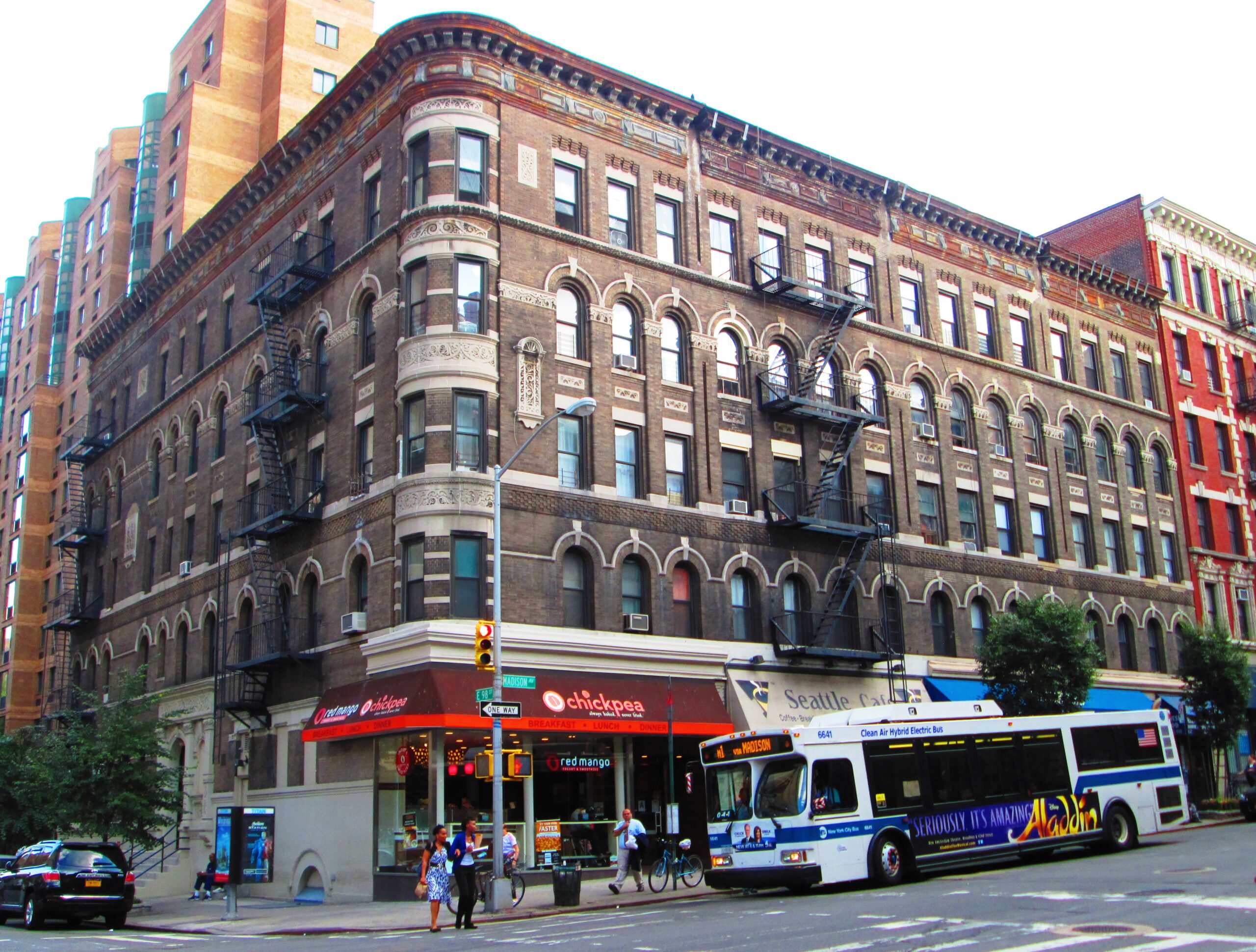
The tenants in these East Harlem buildings have been asking for repairs for years. What they got this month was an auction that almost no one bid in, a lender taking back 26 buildings for $500 apiece, and another stretch of uncertainty about who will fix their homes.
The tenants are still living with the damage
Legal Services NYC, which represents tenants in the former Emerald Equities portfolio, said on November 19 that the buildings are “plagued by more than 2,300 building code violations as of April 2026.” The group described rotting infrastructure, failing boilers and pipes, leaks, mold, rodent and roach infestations, broken electrical systems, gas outages, missing floors, crumbling retaining walls, and, in one building, a pigeon graveyard. [S1] Gothamist, reviewing city data, put the violation count at 2,342 as of April 3. City Limits, writing after the auction, said the portfolio had 2,300 open violations as of this summer. [S2] [S3]
Those numbers match what tenants and reporters have described on the ground. In April, Gothamist visited the 116-year-old buildings on East 103rd Street and found a single boiler serving three buildings, ceilings that tenants said had collapsed repeatedly, and floors so damaged by leaks that rats could come up from the basement. One first-floor tenant had covered a gaping hole in his kitchen with rotting plywood. A rear retaining wall had collapsed earlier this year, prompting a partial vacate order from the Department of Buildings and, according to later coverage, blocking fire exits. [S2] [S4] [S5]
Vic Washington, a tenant on East 103rd Street, told City Limits after the auction that some of her neighbors “don’t have doors,” “don’t have ceilings that are working properly,” “don’t have cooking gas,” and “don’t have heat.” “Let’s get the show on the road. Let’s get these buildings fixed,” she said. “I think we’ve made enough concessions.” [S3]
This did not start this fall. In 2024, tenants in five buildings at 112, 118, 122, 124, and 126 East 103rd Street sued Isaac Kassirer and Emerald Equities over conditions and alleged stolen security deposits. Kassirer was No. 72 on Public Advocate Jumaane Williams’s 2023 Worst Landlord Watchlist. Those five buildings alone had 523 open housing-code violations across 142 units. Tenants described black mold, locked or chained fire exits, no hot water, no heat, and leaks that went on for months. After a 16-month rent strike, they won a 2025 settlement that included $500,000 in rent credits and a promise of repairs. [S6] [S7] [S8] [S9]
What happened at the auction
City Limits reported on November 18 that 27 buildings from the former Emerald Equities portfolio went up for foreclosure sale on consecutive Tuesdays this month, and that 26 attracted no bids. Those 26 were sent back to the bank for $500 each. In a foreclosure auction, a bid has to clear the upset price, which matches the size of the judgment the lender holds. When no one meets that price, the lender can take the property with a credit bid. [S3]
The one building that sold was 417 East 114th Street, a three-story walk-up across from Thomas Jefferson Park. City Limits wrote that it sold for $1,000 above the upset price of $826,000, to a bidder identified in court papers as “Matt,” bidding for 135th Place LLC, a group linked to Isaac Badalov, who, according to the site Who Owns What, owns one other building in Rockaway. The same City Limits article also stated in its opening account that the building “sold for $826,000.” The New York Post, covering an earlier auction day, likewise reported a sale price of $826,000, “just $1,000 above the minimum bid,” and said that was far below the building’s original $1.9 million loan. We are reporting the more precise formulation — $1,000 above an $826,000 upset price — and noting the discrepancy. [S3] [S10]
Legal Services NYC said Sabal Capital had taken ownership of all but one of the 27 auctioned buildings through credit bids. Some auction coverage also named U.S. Bank National Association as the plaintiff on court papers, a common arrangement when a bank acts as trustee for a securitized loan. The Real Deal reported that an affiliate of Kassirer’s Emerald Equity Group had refinanced the buildings with a $189 million loan from Sabal Capital Partners in 2019. Gothamist, writing before the auction, said Emerald took out a $180 million loan on the buildings in December 2018. Banks and other institutions hold roughly $250 million in debt on the properties, according to City Limits and Gothamist, and Gothamist reported that the loans were partially insured by Freddie Mac. Sabal did not respond to requests for comment from The Real Deal or Gothamist. [S1] [S3] [S11] [S4]
Outlets do not fully agree on the size of the portfolio. City Limits described “a nearly 900-unit portfolio of 39 mostly rent-stabilized buildings.” Gothamist, Legal Services NYC, and The Real Deal have described a 38-building portfolio with about 850, or more than 850, mostly rent-stabilized apartments. We are reporting both figures rather than picking one. [S3] [S4] [S1] [S11]
How the buildings got here
Gothamist reported that Emerald Equities acquired the 38 buildings for $350 million in 2016 and began raising rents on stabilized apartments to increase revenue and pay down debt, a strategy then allowed under state law. A previous owner, the British firm Dawnay Day Group, had pursued a similar approach before declaring bankruptcy in 2009. Six months after the 2018 refinancing Gothamist describes, state lawmakers passed the Housing Stability and Tenant Protection Act of 2019, which sharply limited the tools owners had used to raise rents and take apartments out of stabilization. Lenders foreclosed in 2024, and Emerald filed for bankruptcy a year later. An investigation by the New York attorney general’s office and the state’s housing agency found that Emerald had illegally lifted 21 apartments out of rent stabilization. [S4]
Tenant leaders say that history is the point. “These banks overleveraged their hand. They over-lent to a clearly irresponsible landlord who wasn’t able to properly steward these buildings, and now the tenants are facing the brunt of that,” Washington told City Limits. Cami Dominguez of Community Voices Heard called the auction “an unprecedented reckoning for how these buildings have been managed.” [S3]
The value drop is visible in at least one building-level appraisal. The Real Deal, citing Morningstar Credit, reported that 124 East 103rd Street was refinanced in 2018 with a $7.1 million loan against an appraised value of $13.4 million, and that this January the property was valued at $5.8 million, with the loan balance at 112% of that value. [S11]
What it would cost to fix them, and how much of that cost an owner can recover
The only published cost estimate we found is not for the full portfolio. In April, Brian Peters, executive director of the East Harlem/El Barrio Community Land Trust, told Gothamist that engineers and consultants had put the cost of purchasing and renovating the five buildings on East 103rd Street at $35 million to $50 million. He said the land trust would likely need significant public investment, including low-interest city loans and property-tax breaks, and that it did not have the capacity to buy and repair the remaining 33 buildings. [S2]
After the auction, Peters told City Limits that “purchasing or rehabbing rent stabilization is hard. The amount of money in it is really hard.” For a for-profit buyer, he said, “it’s not making sense — 99 percent of people [are] saying this doesn’t make sense to buy at these prices.” Nonprofit owners, he said, still need city support to cover the cost of preserving the housing. [S3]
Any new owner, nonprofit or private, would also face the state’s rules on recovering improvement costs. The 2019 Housing Stability and Tenant Protection Act capped Individual Apartment Improvement (IAI) rent increases at $15,000 over a 15-year period and made those increases temporary. It also cut the annual cap on Major Capital Improvement (MCI) rent increases in New York City from 6% to 2%, stretched the amortization period, made MCI increases temporary for 30 years, barred MCI increases in buildings where 35% or fewer apartments are rent-regulated, and required a building to be free of outstanding hazardous and immediately hazardous violations before an MCI increase can be collected. [S12] [S13]
The IAI cap was later raised. Under a 2024 state law that took effect October 17, 2024, and is summarized in a July 2026 fact sheet from New York’s Division of Homes and Community Renewal, an owner can now recover up to $30,000 of IAI work over 15 years, and that increase is permanent. In a building with more than 35 apartments, the monthly increase is 1/180 of the cost, with a maximum of $166.67. A second tier, limited to certain vacant apartments and subject to prior state certification, allows up to $50,000, with a maximum monthly increase of $320.51 in a large building. Occupied apartments still require the tenant’s written consent. The MCI rules, including the 2% yearly phase-in and the ban on collecting an increase while hazardous violations remain, are still in force. [S14] [S15]
On top of those caps, the city’s Rent Guidelines Board approved a 0% adjustment — a rent freeze — for both one-year and two-year rent-stabilized lease renewals beginning October 1, 2026, and running through September 30, 2027. The same board’s 2026 Price Index of Operating Costs found that operating costs for buildings with rent-stabilized apartments had risen 5.3% in a year, led by an 11.0% increase in fuel and a 10.5% increase in insurance. [S16] [S17]
Kenny Burgos, chief executive of the New York Apartment Association, which represents landlords, told City Limits, “Nobody wants to own these buildings.” His group argues that the 2019 law limited owners’ ability to raise rents to keep pace with expenses and repairs, and that banks have not accepted how far values have fallen. “Policy after policy ignores the underlying math,” he said, and the mayor “will not be able to intervene and scale to every building.” [S3]
The city-backed offers the lender turned down
There was a buyer in the picture, just not at a price the lender accepted. Mayor Mamdani’s administration backed a bid from Spatial Equity, which describes itself as a social-impact or affordable-housing developer. Under that plan, at least the five East 103rd Street buildings would have been spun off to the El Barrio Community Land Trust. [S2] [S3] [S18]
City Limits and Gothamist reported that Sabal rejected Spatial Equity’s offers of $68 million in July and $110 million in October. The $68 million bid was about a quarter of the outstanding debt. Cara Polte, a tenant on East 103rd Street and co-founder of the East Harlem Tenant Union, told Gothamist it had been “difficult to try to negotiate or even hear what would get them to say yes.” Spatial Equity principal Teg Sethi declined to comment. [S3] [S4]
David Lebenstein, an executive managing director at Cushman & Wakefield who specializes in nonprofit purchases, told Gothamist that lenders on rent-stabilized buildings are often willing to write down debt. “If they’re owed $100 million and they get $70 million, that’s a victory,” he said. That, he said, did not appear to be happening with this portfolio. [S4]
Cea Weaver, who heads the Mayor’s Office to Protect Tenants, had argued in July that the buildings “cash flow” and “what they need is rehab.” After the auction, her office said it was “proud to support the tenants of the East Harlem Tenants Union as they organize for better living conditions and more control over the future of their homes.” A court-appointed receiver still manages the buildings. Tenants and Legal Services NYC say they will press Sabal, and the buyer of 417 East 114th Street, for repairs. [S18] [S3] [S1]
The mayor also signed the Community Opportunity to Purchase Act, Local Law 164 of 2026, on November 10, 2026. The law gives qualified nonprofits a first opportunity to bid on certain distressed and affordable multifamily buildings, and, in some cases, a later right to match another buyer’s offer. Official records and contemporaneous legal explainers say it takes effect one year later, on November 10, 2027. It did not apply to this auction. [S19] [S20] [S21]
What the research says about rent regulation and building value
The economic case against tight rent regulation is not invented for this auction. In a 2019 American Economic Review study, Stanford economists Rebecca Diamond and Tim McQuade and co-author Franklin Qian examined San Francisco’s 1994 expansion of rent control. They found that it reduced tenant mobility by about 20% and helped incumbent renters stay in the city, especially racial minorities, in the short run. They also found that landlords reduced the rental housing supply by 15%, by selling to owner-occupants and redeveloping buildings, and concluded that the lost supply “likely drove up market rents in the long run, ultimately undermining the goals of the law.” That study is about San Francisco, not East Harlem, and it is about supply and rents, not a single foreclosure. [S22]
In New York, the NYU Furman Center’s 2021 short-term analysis of the 2019 law found that sales prices per square foot fell after the law passed, with the clearest differential decline in buildings where 26% to 75% of apartments were rent-stabilized. A later Furman Center discussion of the city’s 2025 State of the City report said that the median sales price per square foot for buildings that are 90% or more rent-stabilized had, in inflation-adjusted terms, fallen from a 2018 high back to 2011 levels. Those findings describe a market under pressure. They do not, by themselves, prove that rent regulation was the reason these 26 buildings drew no bids, or that a different owner would have maintained them. [S23] [S24]
Gothamist also reported that the city’s Rent Guidelines Board had earlier this year identified roughly 1,600 buildings with rent-stabilized apartments as financially distressed, meaning expenses outpaced rent revenue. Landlord groups tie that distress to limits on rent increases, including the freeze. Tenant advocates say owners like Emerald took on more debt than the buildings could support and then failed to maintain them. [S4]
What happens now
Most of the auctioned buildings are now with the lender, not with a preservation buyer and not with a well-capitalized landlord lined up to do the work. Washington told City Limits that whoever buys the buildings will “inherit a lot of violations, a lot of work,” and “a whole lot of organizing.” Matthew Latterner, a Legal Services NYC attorney, said before the auction that his office was prepared to sue new owners “on day one” to force repairs. Tenants hope the $110 million offer will look better to the banks after an auction that produced almost no cash bids. Whether Sabal, the bondholders, or the city revives that deal is not yet clear. [S3] [S4] [S1]
Our view (opinion)
The victims are the renters. That is the part of this story that should not get lost in a fight over ideology. People in these buildings have lived with mold, leaks, no heat, no cooking gas, rats, and a collapsed wall that blocked fire exits. A landlord who was already on the city’s worst-landlords list, and lenders who left a heavy debt load in place, put them there.
The auction also showed that almost no private buyer would take these buildings at the prices attached to that debt. Fixing them takes real capital. The only published figure we have is the land trust’s own estimate: $35 million to $50 million to buy and renovate just five of the buildings. The land trust said it could not take on the rest of the portfolio without major public support. After the 2019 law, and under rules still in force, an owner can add only a limited monthly amount for apartment and building improvements, cannot collect a major-capital-improvement increase while hazardous violations remain, and, for the lease year that began October 1, cannot raise stabilized rents at all, even as the city’s own index found operating costs up 5.3%. That is not a theory. It is the rulebook a buyer would have to underwrite against.
Our view is that this is what happens when housing policy tightly controls the price of a privately owned apartment without putting up the money to keep the building standing. The rent is capped. The bills are not. The people inside are the ones who live with the result. Only an owner with the capital to cover the improvement costs — and a realistic way to recover enough of those costs to make the investment possible — can get these buildings repaired. A nonprofit buyer with city subsidies is one way to put that capital in. It does not erase the bill. It moves it onto the public.
It is fair to say that a system like this fails the people it claims to protect. It is not fair, on the record we have, to say Mayor Mamdani personally caused this auction to collapse. The neglect, the debt, and the 2019 law all predate his term, and the purchase law he signed does not take effect until November 2027. The rent freeze his administration celebrated is, however, part of the math any new owner now faces. The tenants should not have to wait for that argument to be settled before someone spends the money to repair their homes.
Sources
- [S1] Legal Services NYC, “Legal Services NYC Stands With East Harlem Tenants as They Prepare to Take on NYC’s Newest Slumlord, Sabal Capital,” November 19, 2026 (Leans Left; advocacy press release)
- [S2] Gothamist, David Brand, “Mamdani administration eyes new effort to steer sale of NYC rent-stabilized apartments,” April 6, 2026 (Leans Left)
- [S3] City Limits, Patrick Spauster, “Rent-Stabilized East Harlem Buildings Fail To Sell at Auction, Leaving Tenants in the Lurch,” November 18, 2026 (Leans Left)
- [S4] Gothamist, David Brand, “Rent-stabilized buildings hit auction block, despite Mamdani’s efforts to intervene,” November 10, 2026 (Leans Left)
- [S5] Rothman Report, M.A. Rothman, “26 of 27 Rent-Stabilized East Harlem Buildings Drew Zero Bids at Auction Under Mamdani’s Rent Freeze,” November 26, 2026 (Leans Right; opinion and reporting, drawing on City Limits)
- [S6] FOX 5 New York, “East Harlem tenants sue landlord over ‘unbearable’ living conditions” (Factual)
- [S7] Amsterdam News, Ariama C. Long, “PA Jumaane Williams, tenants take action against landlord,” March 21, 2024 (Leans Left)
- [S8] City Limits, Patrick Spauster, “These East Harlem Tenants Staged a Rent Strike—And Won,” December 9, 2025 (Leans Left)
- [S9] Legal Services NYC, “East Harlem Tenants Announce New Lawsuit Against One of NYC’s Worst Landlords,” March 14, 2024 (Leans Left; advocacy press release)
- [S10] New York Post, “Mamdani trying to force distressed building owners to sell,” November 12, 2026 (Leans Right)
- [S11] The Real Deal, Lilah Burke, “NY Dirt: Emerald Equity Lender Claims Buildings at Auction,” November 18, 2026 (Factual)
- [S12] New York State Homes and Community Renewal, “Strengthening New York State Rent Regulations” (HSTPA presentation), 2020 (Factual; official)
- [S13] New York State Homes and Community Renewal, “Apartment (IAI) and Building (MCI) Improvements” (Factual; official)
- [S14] New York State Division of Housing and Community Renewal, Fact Sheet #26, “Guide to Rent Increases for Rent Stabilized Apartments,” July 2026 (Factual; official)
- [S15] New York State Homes and Community Renewal, “Changes to NYS Housing Laws Enacted in the FY24 Budget” (Factual; official)
- [S16] NYC Rules, “Rent Guidelines for October 1, 2026 to September 30, 2027” (Factual; official)
- [S17] NYC Rent Guidelines Board, 2026 Price Index of Operating Costs (Factual; official)
- [S18] The Real Deal, Lilah Burke, “Mamdani Supports Spatial Equity Bid on Emerald Portfolio,” July 23, 2026 (Factual)
- [S19] NYC Mayor’s Office, “Mayor Mamdani Signs Landmark COPA Legislation,” November 10, 2026 (Factual; official, administration release)
- [S20] New York City Council, File Int. 0905-2026 / Local Law 2026/164, signed November 10, 2026 (Factual; official)
- [S21] Nixon Peabody, “COPA becomes law,” November 16, 2026 (Factual; law-firm explainer)
- [S22] Rebecca Diamond, Tim McQuade, and Franklin Qian, “The Effects of Rent Control Expansion on Tenants, Landlords, and Inequality: Evidence from San Francisco,” American Economic Review 109, no. 9 (2019) (Factual; peer-reviewed)
- [S23] NYU Furman Center, “Housing Stability and Tenant Protection Act: An Initial Analysis of Short-Term Trends,” 2021 (Factual; academic)
- [S24] NYU Furman Center, State of the City 2025, discussion of buildings that are 90% or more rent-stabilized (Factual; academic)