

On Friday, November 13, the FAA stopped every departure in the country. The cause was not a terrorist or a hacker. Officials say it was a single router.
What happened
Confirmed The FAA issued a nationwide ground stop for all U.S. airports after communication problems hit multiple Air Route Traffic Control Centers.
Confirmed Transportation Secretary Sean Duffy said that during routine work at a remote FAA site, a contractor was moving telecommunications lines from old copper to fiber. A router began flooding other routers with more than 1,000 connection attempts every four to five seconds. That disrupted communications with aircraft and caused problems with radar feeds. He said officials did not believe it was a cyberattack.
Reported Reuters reported the airspace reopened at 8:15 p.m. Eastern, with nearly 10,000 flights canceled. NBC News reported disruptions at 17 of the FAA’s 22 en-route centers.
Unverified Claims online that National Weather Service radar failed nationwide were not supported by the official statements.
The lesson: single points of failure
Modern life runs on networks most of us never see. When one link fails, effects cascade. A traveler or family can not fix the FAA. What you can do is make sure your own plans do not share the same weak point.
If you travel
- Carry a small “stranded kit”: phone battery bank and cable, medications for three extra days, snacks, a refillable water bottle, and a change of clothes in your carry-on
- Keep your airline app and a written backup of the confirmation number, the airline’s phone number and the hotel’s address
- Know a ground route home. Rental cars and trains sell out within hours of a mass cancellation.
- Carry some cash
At home
Ready.gov notes that an extended outage can disrupt communications, water and transportation, and close stores, gas stations, ATMs and banks. Inventory what in your home depends on electricity or internet, and plan a backup for each item: light, heat, medical devices, refrigerated medicines and communication.
Our view: Billions are being spent to modernize air traffic control, and it is overdue. Until that work is done, assume the systems you rely on can fail on an ordinary Friday afternoon, and pack accordingly.
Sources
- FAA, Statement on Nationwide Ground Stop (Nov. 13, 2026)
- U.S. DOT, Secretary Duffy update on restoration of airspace following nationwide ground stop
- Reuters, “US to resume flights after air traffic network failure sparks chaos”
- NBC News, “How a router problem at one FAA site led to a nationwide ground stop”
- Ready.gov, Power Outages
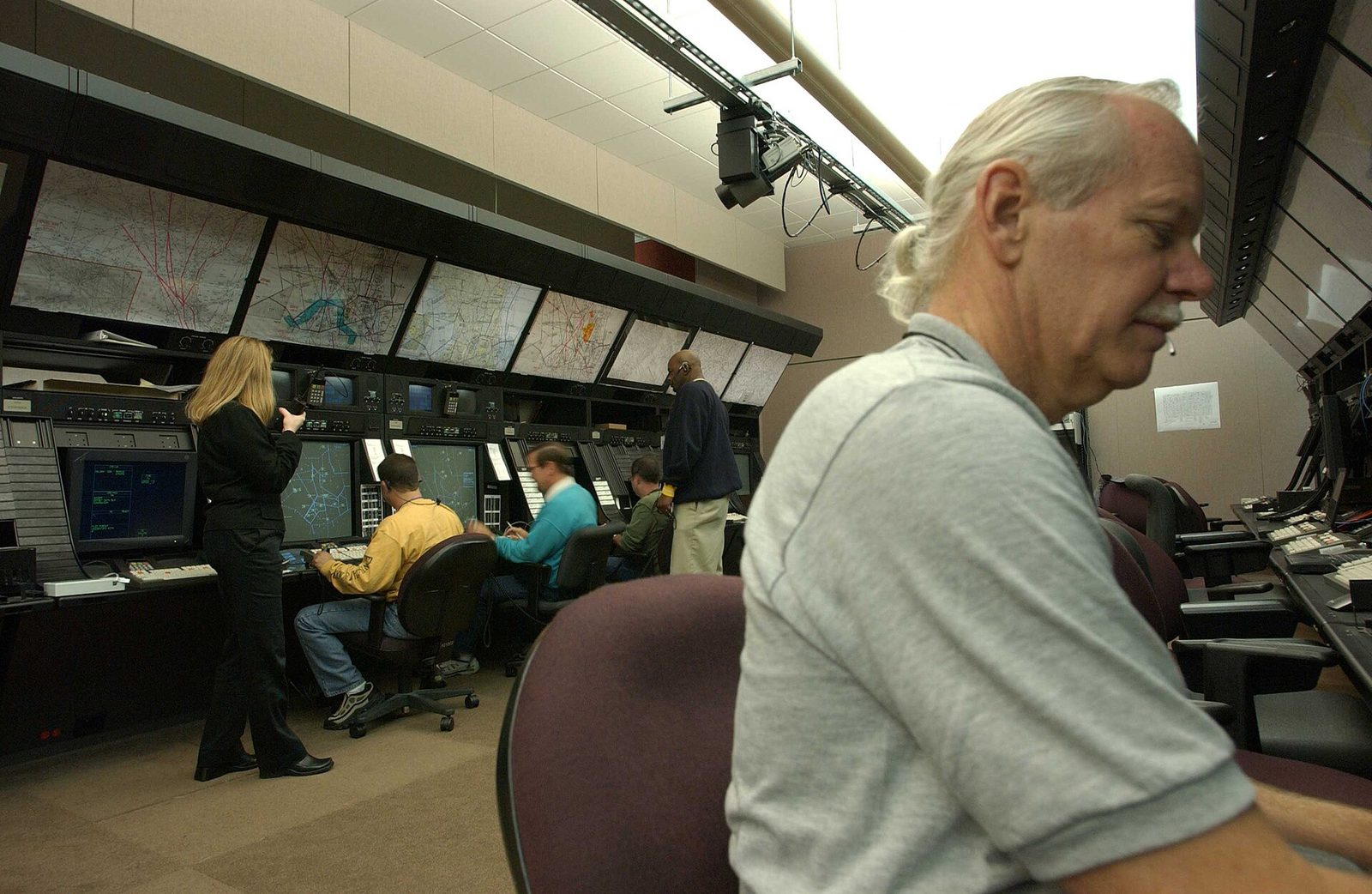
Featured image: AirTraffic-8, by U.S. Federal Aviation Administration. Public domain, via Wikimedia Commons. See all image credits.
Related on Candid Dragon
- Lights Out: A Power-Outage Plan That Also Covers a Solar Storm
- “Black Sky”: What a Nationwide Blackout Would Look Like, and the Lessons From Spain and Britain
- The Nov. 17 Nationwide Alert Test: How America’s Emergency Warnings Actually Work
- The FAA Ground Stop: What First Reports Got Right — and What Officials Have Filled In