

Quick take
- Rome’s Republic died in a chain of civil wars that ended in 31 BC. Julius Caesar and then his adopted son Octavian (Augustus) took power with armies loyal to them, not to the state, and kept it by claiming to restore order and liberty.
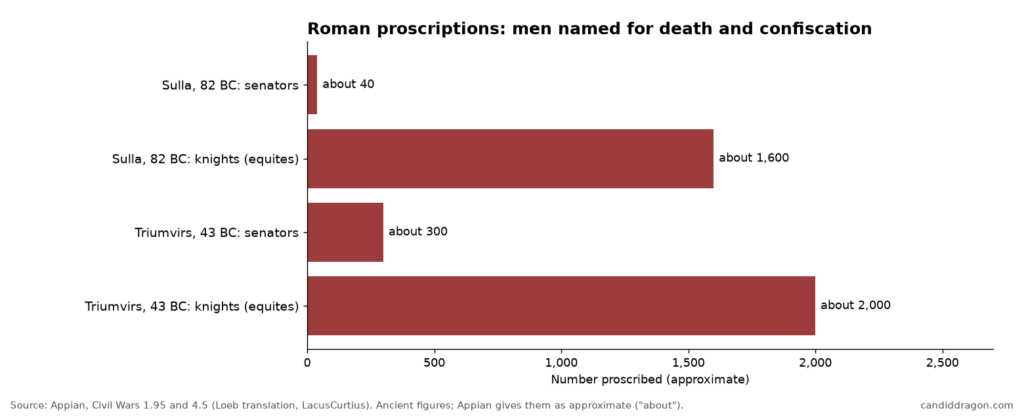
- Kill lists came first: Sulla’s proscriptions named about 40 senators and 1,600 knights in 82 BC; the triumvirs’ list of 43 BC named about 300 senators and 2,000 knights, with cash bounties for their heads (Appian, an ancient source).
- Caesar’s conquest of Gaul killed and enslaved people on a vast scale. Ancient writers claimed 400,000 to more than a million dead and as many enslaved; modern historians think the figures are inflated but the catastrophe real.
Our rating: ✅ Confirmed  Factual
Content warning: this post describes massacres, executions and the display of severed heads in plain terms.
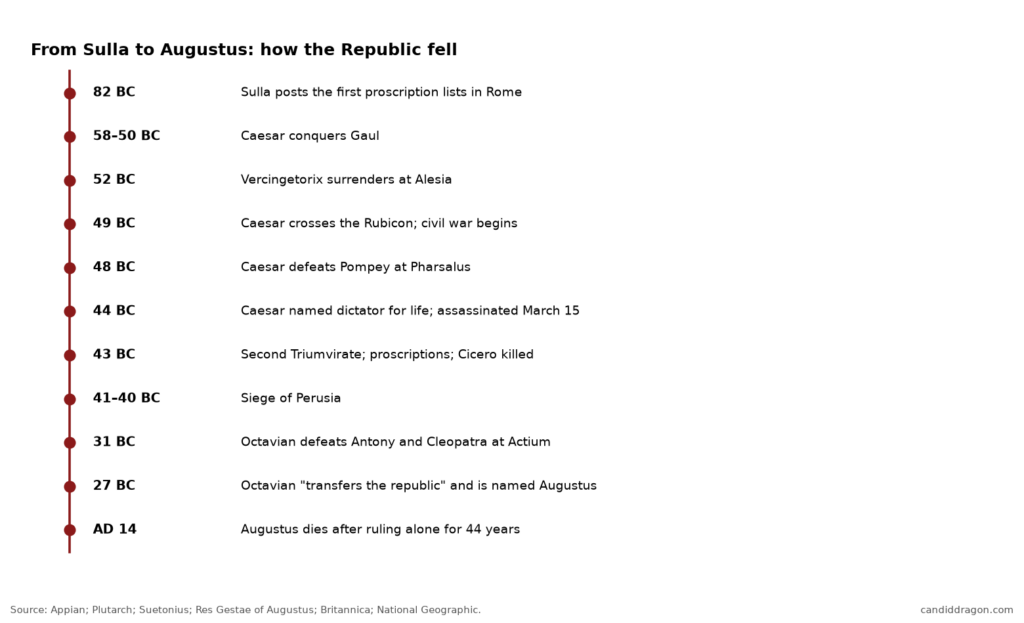
The Roman Republic did not fall in a day. Over two generations, ambitious generals learned that an army loyal to its commander could beat the Senate, that a list of names could clear away enemies, and that the word “liberty” could be painted on a dictatorship. This is how Caesar and Augustus took power and kept it, using the ancient sources and what modern historians make of them.
Sulla writes the first kill list, 82 BC
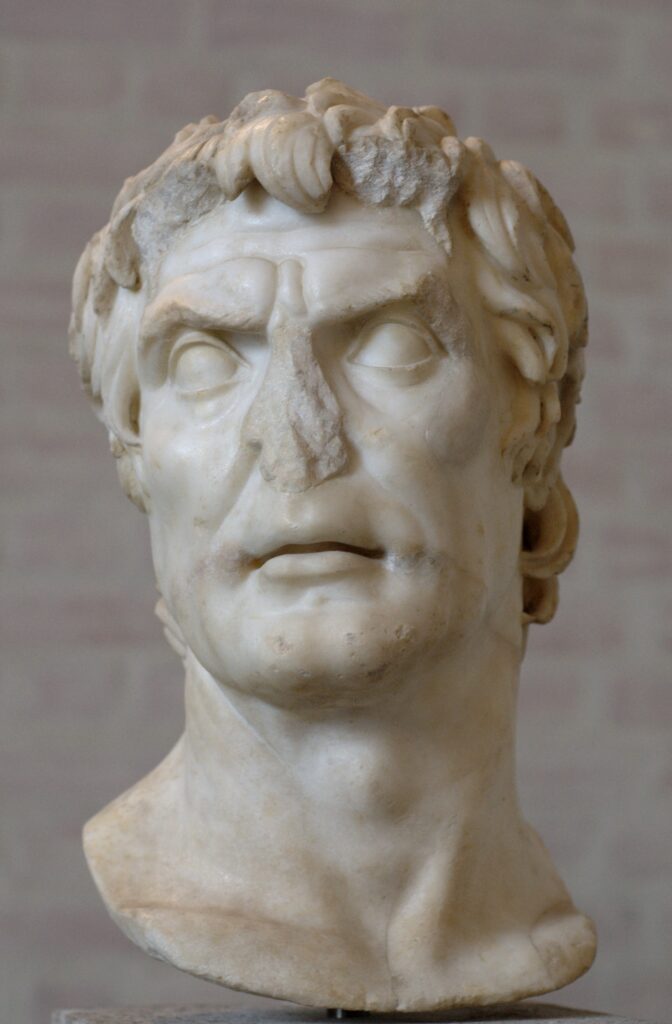
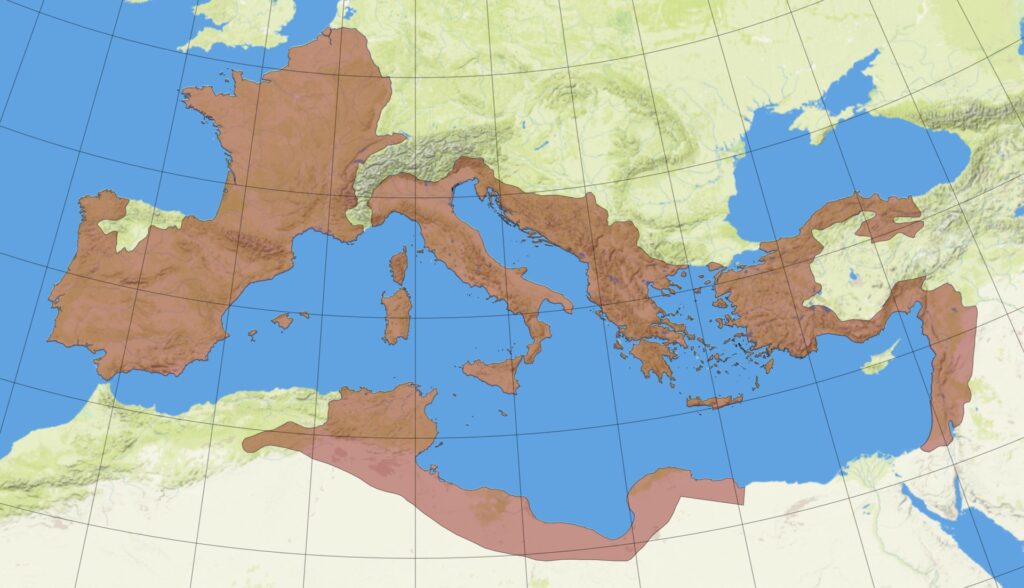
The model was set by Lucius Cornelius Sulla, who marched his army on Rome and won a civil war. After his victory he “forthwith proscribed about forty senators and 1600 knights,” according to the historian Appian. Sulla “seems to have been the first to make a formal list of those whom he punished, to offer prizes to assassins and rewards to informers, and to threaten with punishment those who should conceal the proscribed.” He then freed more than 10,000 slaves of the proscribed and made them citizens bearing his own family name, Cornelii, a private constituency loyal to him (Appian, Civil Wars, Book 1). Appian wrote about two centuries later; his figures are ancient estimates.
Caesar’s conquest of Gaul, 58–50 BC
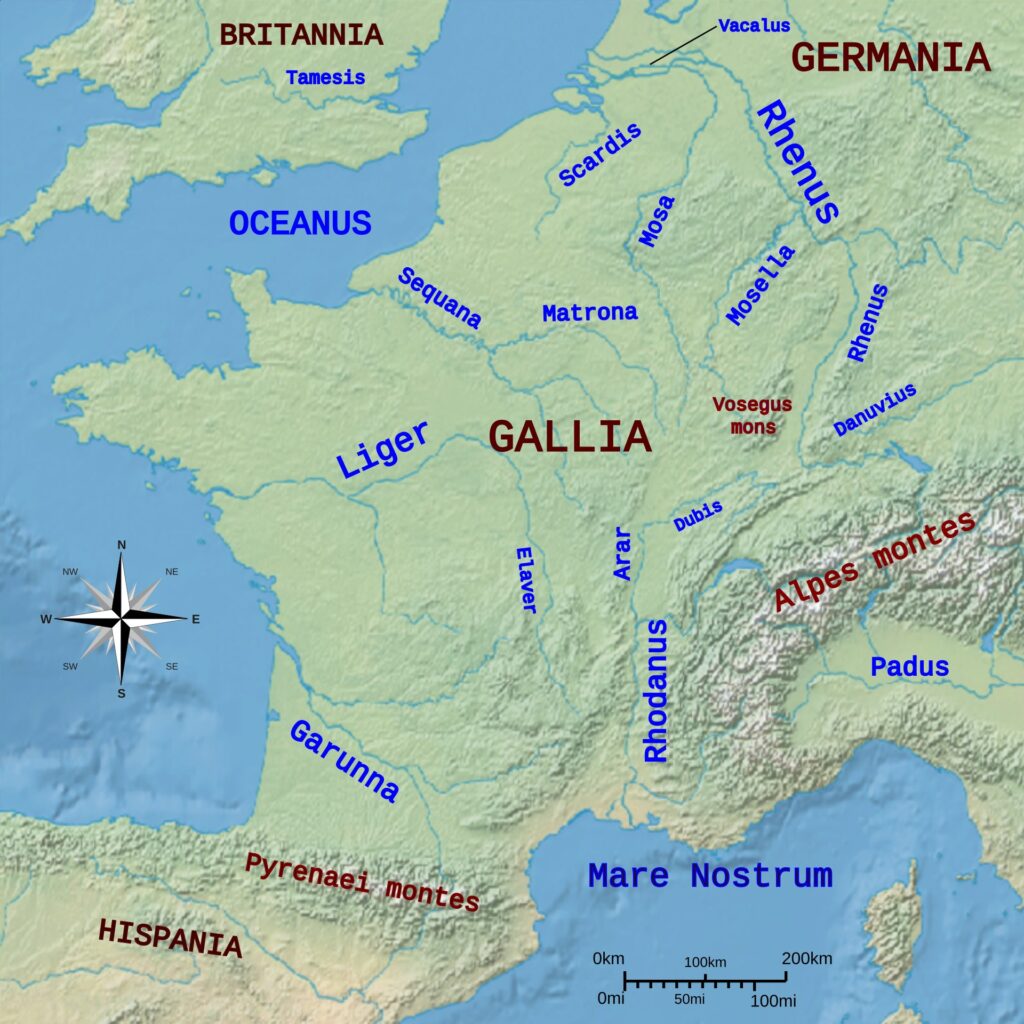
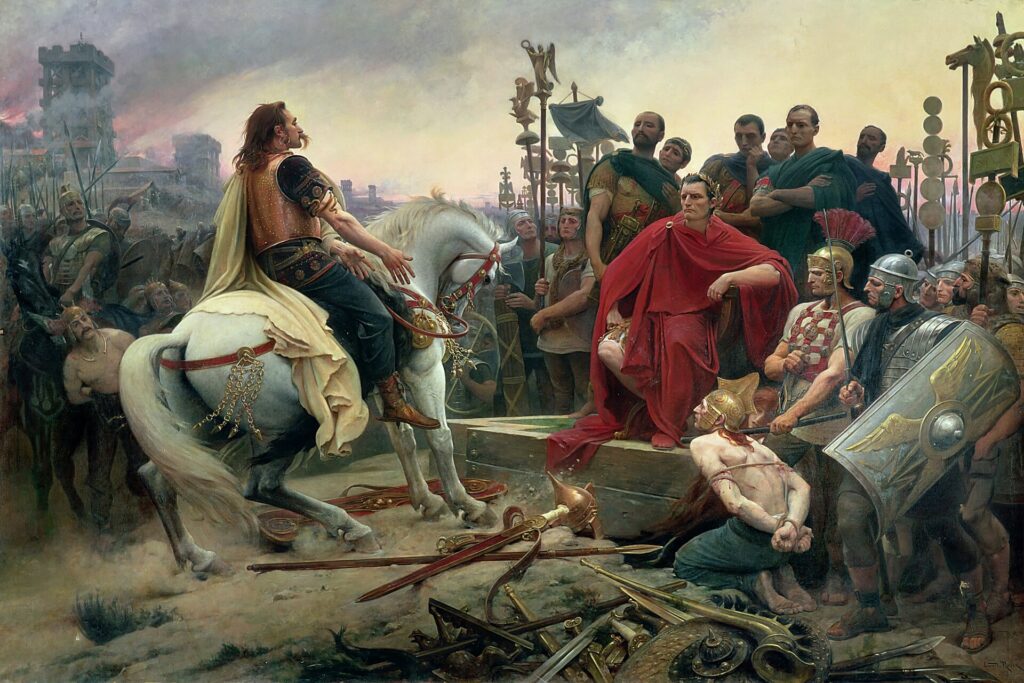
Julius Caesar built his power in Gaul (roughly modern France and Belgium), which he conquered as provincial governor from 58 to 50 BC, crowned by the defeat of the Gallic leader Vercingetorix in 52 BC (Britannica). The war made him rich, gave him a battle-hardened army personally loyal to him, and gave him a story to sell at home: his own Commentaries on the Gallic War, which scholars note are “imbued with personal propaganda” (Theoretical Roman Archaeology Journal).
The toll. Plutarch wrote that in under ten years Caesar “took by storm more than eight hundred cities, subdued three hundred nations, and fought pitched battles at different times with three million men, of whom he slew one million in hand to hand fighting and took as many more prisoners” (Plutarch, Life of Caesar 15). Velleius Paterculus gave more than 400,000 killed; Pliny the Elder recorded 1,192,000 killed in all Caesar’s battles outside the civil wars; added together, the figures in Caesar’s own Commentaries come to about 600,000–700,000 (Historia; Kurt Raaflaub). These are ancient numbers and probably exaggerated, since generals inflated enemy dead for prestige (Nico Roymans). They are contested.
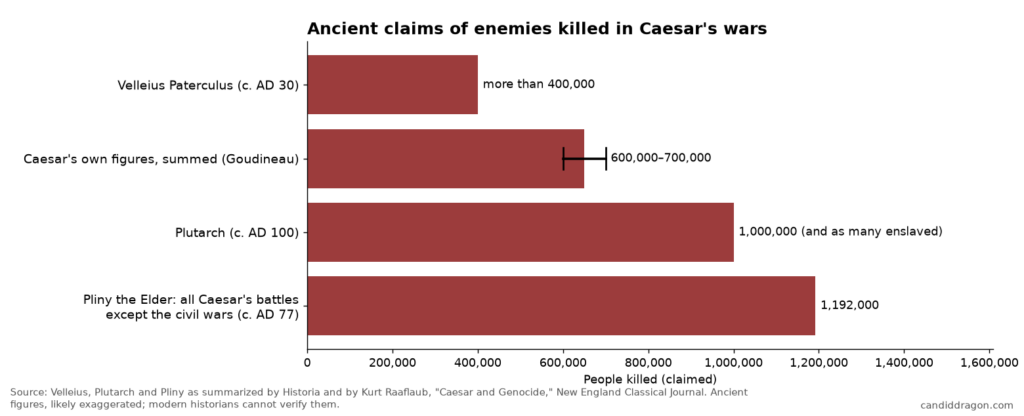
The classicist Kurt Raaflaub notes that modern estimates of Gaul’s population run up to 8–12 million, so the ancient figures would mean 16 to 25 percent of the population. Many more died of hunger and cold: the legions confiscated or burned harvests, burned settlements and drove people out in winter. Raaflaub quotes the historian Ernst Badian: “Requisitions of food and punitive devastations completed a human, economic, and ecological disaster probably unequalled until the conquest of the Americas” (Raaflaub, New England Classical Journal). He concludes that modern definitions of genocide and war crimes are “clearly applicable to several of Caesar’s war atrocities.” That is a historian’s judgment, and others disagree.
The Usipetes and Tencteri, 55 BC. Two Germanic peoples crossed the Rhine into Gaul. By Caesar’s own account, as Plutarch retells it, their cavalry attacked his during a truce; he then held their next envoys and attacked their camp, and Plutarch says 400,000 “were cut to pieces.” Even in Rome this was controversial: according to Plutarch, Cato proposed handing Caesar over to the barbarians to expiate the breach of truce (Plutarch, Life of Caesar 22). Archaeologists have linked weapons and human remains found at Kessel in the Netherlands to the massacre, but the remains cannot confirm the ancient total (Roymans).
Crossing the Rubicon, 49 BC
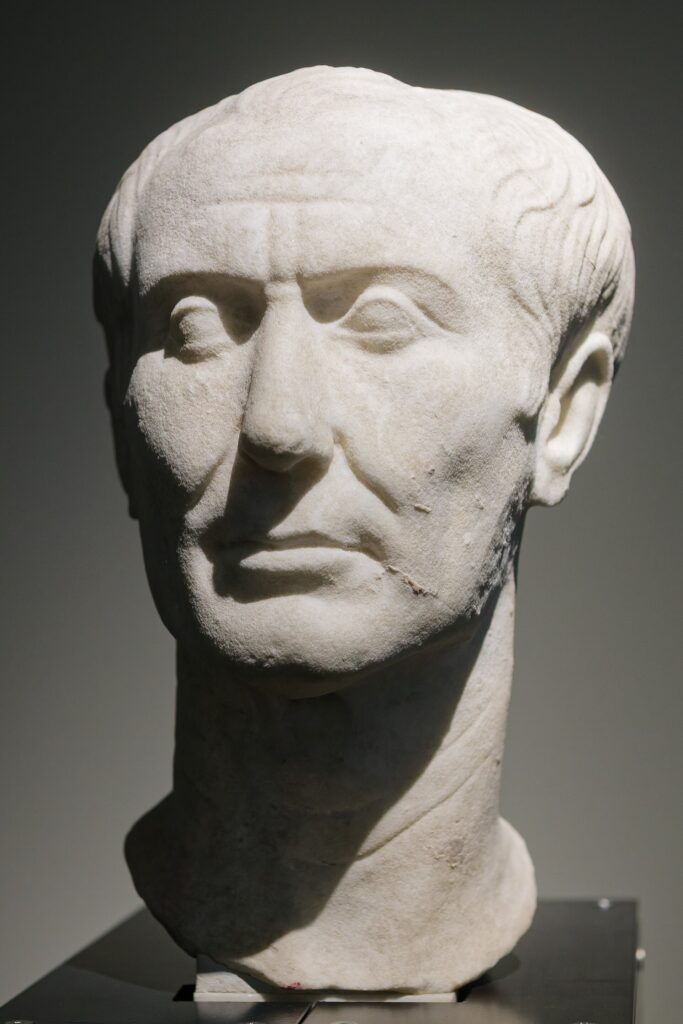
When the Senate ordered Caesar to give up his army, he refused. In January 49 BC he led troops across the Rubicon, the border between his province and Italy, which “violated the law that forbade generals from leading armies out of their assigned territories” and began four years of civil war (Britannica). Suetonius has him say, “The die is cast” (Suetonius, Julius 32). He defeated Pompey at Pharsalus in 48 BC and was named dictator for life in 44 BC (National Geographic; Britannica).
How he sold it. Caesar cultivated the urban poor; Plutarch records that his rival Cato, “fearing above all things a revolutionary movement set on foot by the poorer classes, who were setting the whole multitude on fire with the hopes which they fixed upon Caesar,” pushed through a grain allowance costing 7.5 million drachmas a year just to blunt Caesar’s appeal (Plutarch, Life of Caesar 8).
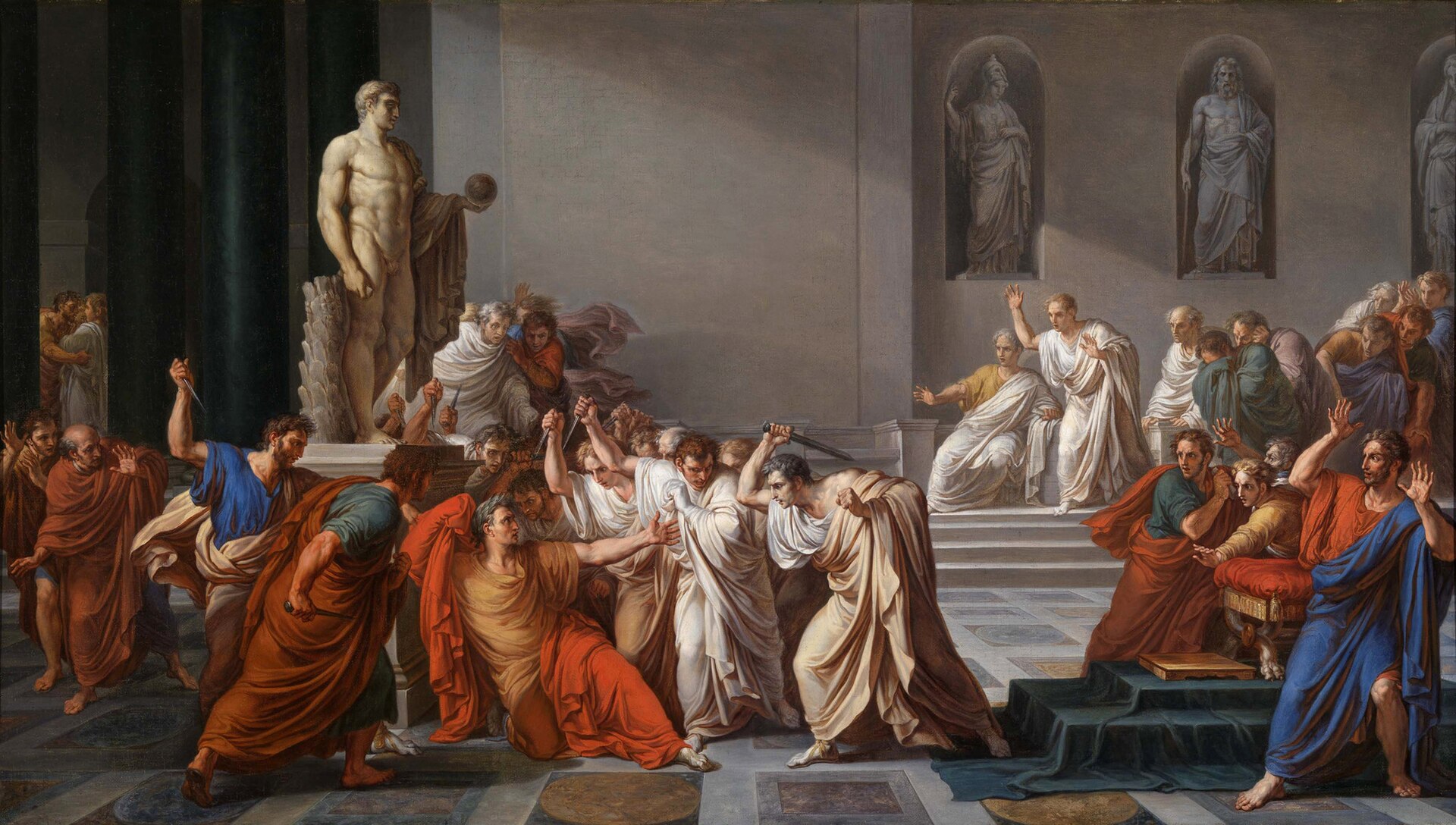
On March 15, 44 BC, a group of senators stabbed him to death in a Senate meeting. Suetonius counts “three and twenty wounds” (Suetonius, Julius 82). The assassins claimed to be saving the Republic. Instead they set off another round of civil wars.
The proscriptions of 43 BC
Caesar’s 19-year-old adopted heir, Octavian, joined Caesar’s lieutenant Mark Antony and Marcus Lepidus in the Second Triumvirate. Their first act was a new kill list. Their edict, as Appian gives it, explained: “seeing that the malice of those who have conspired against us and by whose hands Gaius Caesar suffered, cannot be mollified by kindness, we prefer to anticipate our enemies rather than suffer at their hands” (Appian, Civil Wars, Book 4).
- The bounty: “Let those who kill the proscribed bring us their heads and receive the following rewards: to a free man 25,000 Attic drachmas per head; to a slave his freedom and 10,000 Attic drachmas and his master’s right of citizenship.” Anyone who hid the proscribed faced the same penalty; informers got the same reward (Appian).
- The toll: “The number of senators who were sentenced to death and confiscation was about 300, and of the knights about 2000.” Some were listed simply “because they had handsome villas or city residences” (Appian). Ancient figures.
- Cicero: the orator who had attacked Antony in speeches called the Philippics was hunted down. A centurion, Herennius, “cut off his head, by Antony’s command, and his hands — the hands with which he wrote the Philippics.” Antony ordered them placed on the rostra, the speakers’ platform in the Forum, “a sight that made the Romans shudder” (Plutarch, Life of Cicero 48–49).
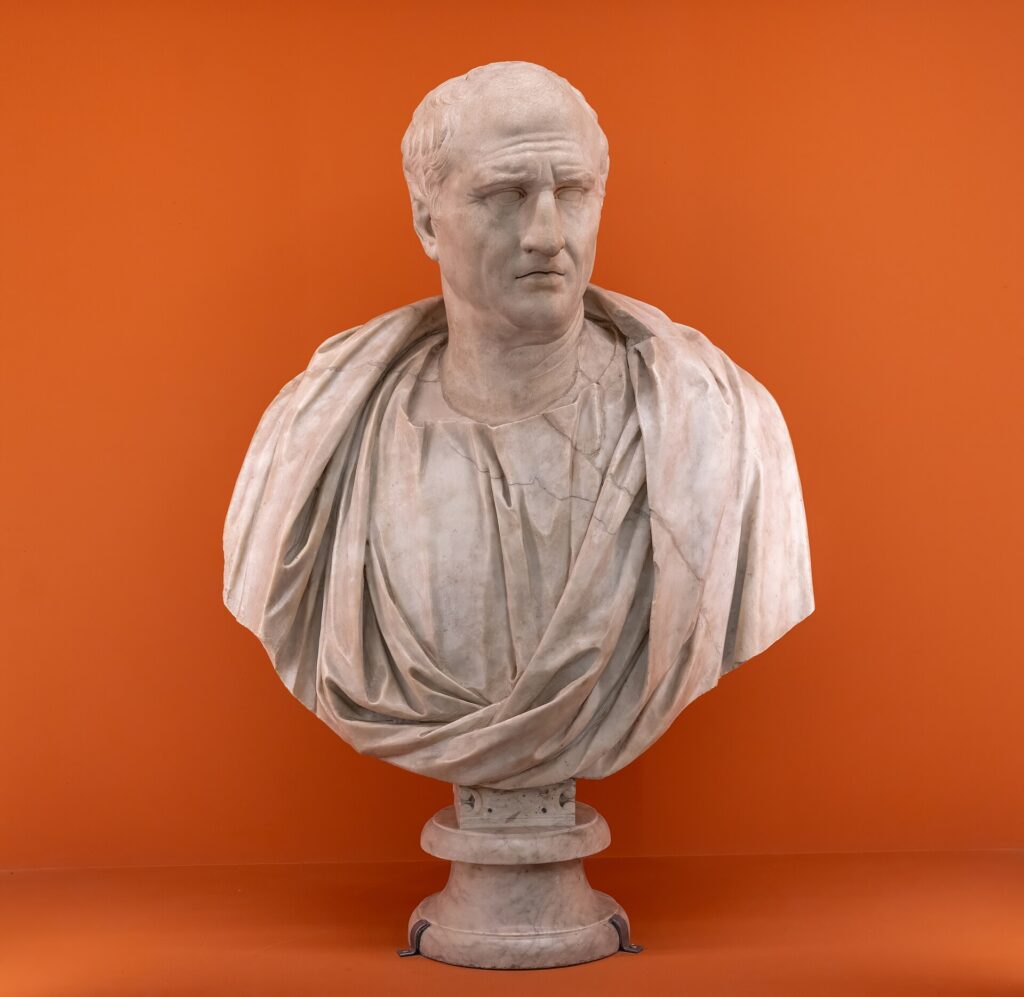
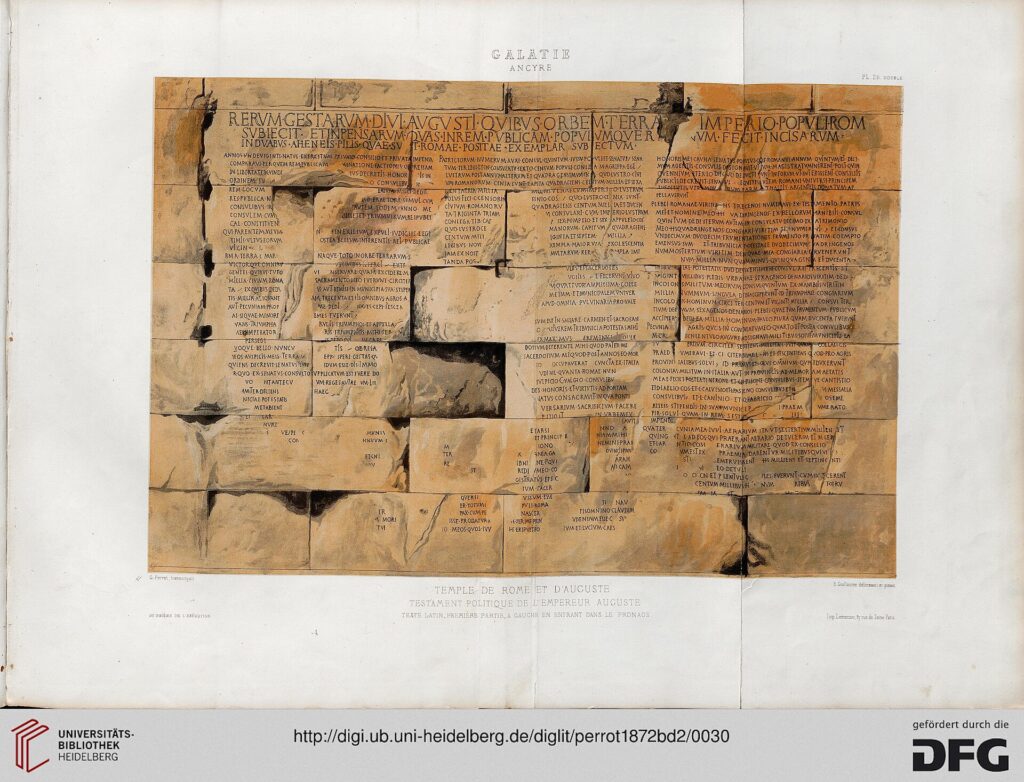
Years later Augustus summed up this period in his own record: “For ten years in succession I was one of the triumvirs for the re-establishment of the constitution” (Res Gestae 7).
Augustus: the dictatorship that called itself a restoration
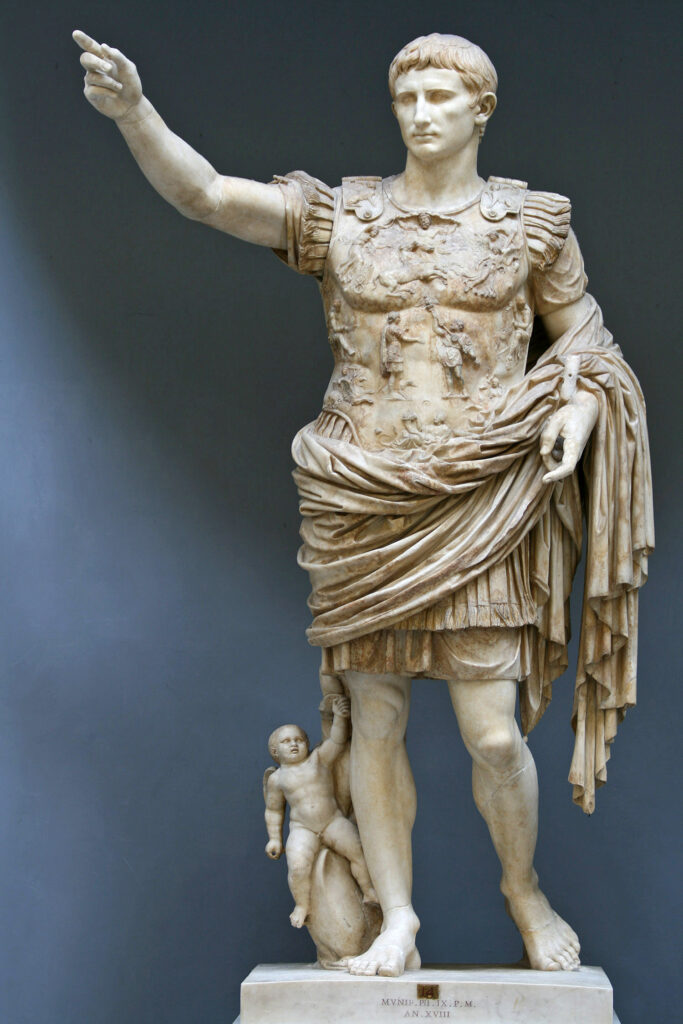
After defeating Caesar’s assassins at Philippi, Octavian crushed a revolt by Antony’s brother at Perusia (modern Perugia), starving the city into surrender. Suetonius says he met every plea for mercy with the reply “You must die,” and adds that “some write that three hundred men of both orders were selected from the prisoners of war and sacrificed on the Ides of March like so many victims at the altar raised to the Deified Julius” (Suetonius, Augustus 14–15). Suetonius reports the mass sacrifice as a claim by others, not as fact. He went on to defeat Sextus Pompey and finally Antony and Cleopatra at Actium in 31 BC.
Then came the masterpiece of legitimacy. In 27 BC, by his own account, “when I had extinguished the flames of civil war, after receiving by universal consent the absolute control of affairs, I transferred the republic from my own control to the will of the senate and the Roman people.” In return the Senate named him Augustus (Res Gestae 34). He went on to rule alone for 44 years (Suetonius, Augustus 8). The first line of his official autobiography, the Res Gestae, inscribed on bronze columns at his tomb (a copy survives on a temple wall in Ankara), claims he raised a private army at nineteen “by means of which I restored liberty to the republic, which had been oppressed by the tyranny of a faction” (Res Gestae 1).
Why it matters
Rome’s republic had elections, courts and a Senate when Caesar was born. By the time Augustus died, all of them still existed in name, and none of them could stop the man who commanded the army. The tools that got him there, a loyal private force, kill lists dressed up as law, a populist appeal against an out-of-touch elite, and a story of restoring liberty, were not unique to Rome.
Patterns to recognize (analysis)
Analysis and opinion. Tactics from the fall of the Roman Republic that later regimes have repeated:
- Armies or militias loyal to a person rather than to the state or the law.
- Lists of enemies, with rewards for informers and penalties for anyone who shelters the accused.
- Seizing property from the people declared enemies, so that persecution pays.
- Violence justified as prevention: striking first because opponents “cannot be mollified by kindness.”
- Keeping the old institutions as a façade while one person holds the real power.
- Claiming to restore liberty or the constitution while ending it.
- Writing your own history: official accounts of wars and achievements that present every act as justified.
These are general warning signs drawn from the history above. They describe tactics, not any modern party or person.
Bottom line: Caesar and Augustus took power with personal armies and kept it with kill lists, confiscations and the language of restoration. The ancient death tolls are uncertain and probably inflated, but the conquest of Gaul and the proscriptions killed on an enormous scale. The Republic’s forms survived; its freedom did not.
The Rise to Power series
How empires and states took power and kept it, told with the same standards for each: propaganda and pretexts, violence, sourced death tolls, and patterns to recognize.
- Rome: Caesar, Augustus and the Fall of the Republic (you are here)
- The Ottoman Empire: Conquest, the Devshirme and the Fratricide Law
- The USSR: Lenin, Stalin, the Terror, the Famine and the Gulag
- The United States: Removal, Slavery, Expansion and Intervention
- Mao’s China: The Great Leap Famine and the Cultural Revolution
Label key
- ✅ Confirmed An official record, or two or more independent outlets, agree.
- ❓ Unconfirmed Reported or claimed, but not yet independently verified.
- ⚠️ Disputed Contradicted by the evidence or by credible sources, or actively contested.
- Factual Straight reporting that holds up across outlets on different sides.
 Leans Left The facts hold, but the coverage tilts left: one-sided, loaded language, missing context or a single anonymous source.
 Leans Right The facts hold, but the coverage tilts right: one-sided, loaded language, missing context or a single anonymous source.
 Likely Propaganda State-run or state-aligned media, a militant press office, a partisan campaign or group, or unverifiable spin.
Each story gets one confidence tag and one source-lean label, plus a one-line Lean note explaining the call. Every side is held to the same standard. More on how we cover the news.
Sources
- Appian, The Civil Wars, Book 1 (Loeb translation, LacusCurtius) (Factual)
- Appian, The Civil Wars, Book 4 (Loeb translation, LacusCurtius) (Factual)
- Plutarch, Life of Caesar (Loeb translation, LacusCurtius) (Factual)
- Plutarch, Life of Cicero (Loeb translation, LacusCurtius) (Factual)
- Suetonius, Life of Julius Caesar (Loeb translation, LacusCurtius) (Factual)
- Suetonius, Life of Augustus (Loeb translation, LacusCurtius) (Factual)
- Res Gestae Divi Augusti, chapters 1–7 (Loeb, LacusCurtius) (Factual)
- Res Gestae Divi Augusti, chapters 34–35 (Loeb, LacusCurtius) (Factual)
- Britannica, Gallic Wars (Factual)
- Kurt A. Raaflaub, “Caesar and Genocide: Confronting the Dark Side of Caesar’s Gallic Wars,” New England Classical Journal (Factual)
- Historia, “Un bilan effroyable, mais impossible à préciser” (French) (Factual)
- Nico Roymans, “A Roman massacre in the far north: Caesar’s annihilation of the Tencteri and Usipetes” (Factual)
- “Caesar in Gaul: New Perspectives on the Archaeology of Mass Violence,” TRAC 2014 (Factual)
- Britannica, Today in History, January 10: An Irreversible Decision (Factual)
- National Geographic, Julius Caesar (Factual)
Featured image: The Death of Caesar, by Vincenzo Camuccini, by Vincenzo Camuccini. Public domain, via Wikimedia Commons. See all image credits.