

Quick take
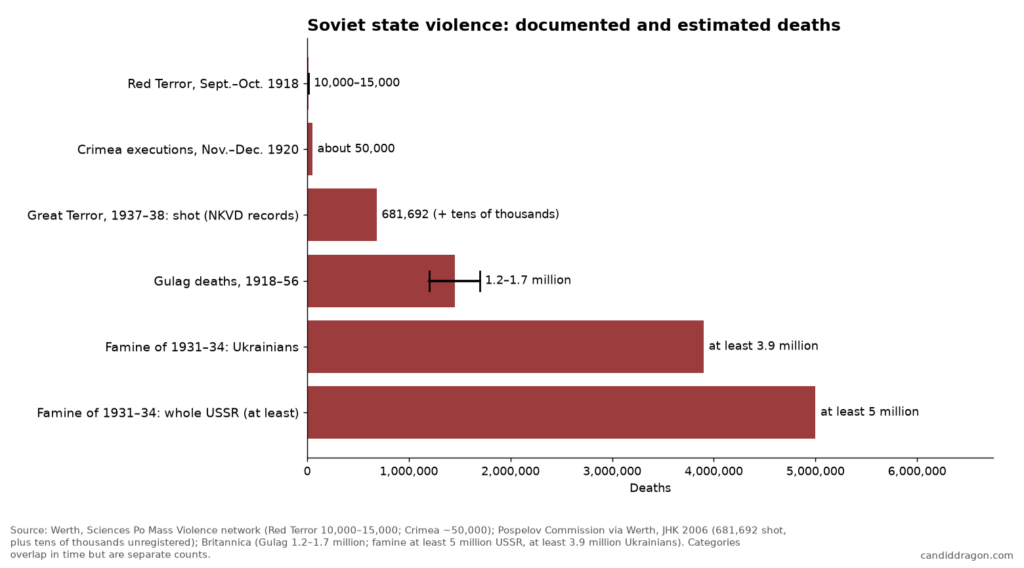
- Lenin’s Bolsheviks seized power in November 1917, dispersed the elected Constituent Assembly they had lost, and launched a “Red Terror” that killed 10,000 to 15,000 people in its first two months alone.
- Under Stalin, the state’s famine policy killed at least 5 million people across the USSR in 1931–34, at least 3.9 million of them Ukrainians; the NKVD recorded 681,692 executions in 1937–38; and the Gulag killed 1.2 to 1.7 million.
- Propaganda held it together: enemies “of the people,” show trials with tortured confessions, denial of the famine, a personality cult, and photographs doctored to erase the purged.
Our rating: ✅ Confirmed  Factual
Content warning: this post describes executions, famine, torture and mass imprisonment in plain terms.
The Soviet Union began as a revolution promising freedom for workers and peasants. Within months its leaders had banned the parliament they lost, set up a secret police with power to shoot on the spot, and declared terror an official policy. Stalin turned those tools into one of the deadliest regimes of the 20th century. This is how it happened, using the Soviet state’s own records where they exist.
Lenin takes power, 1917–18
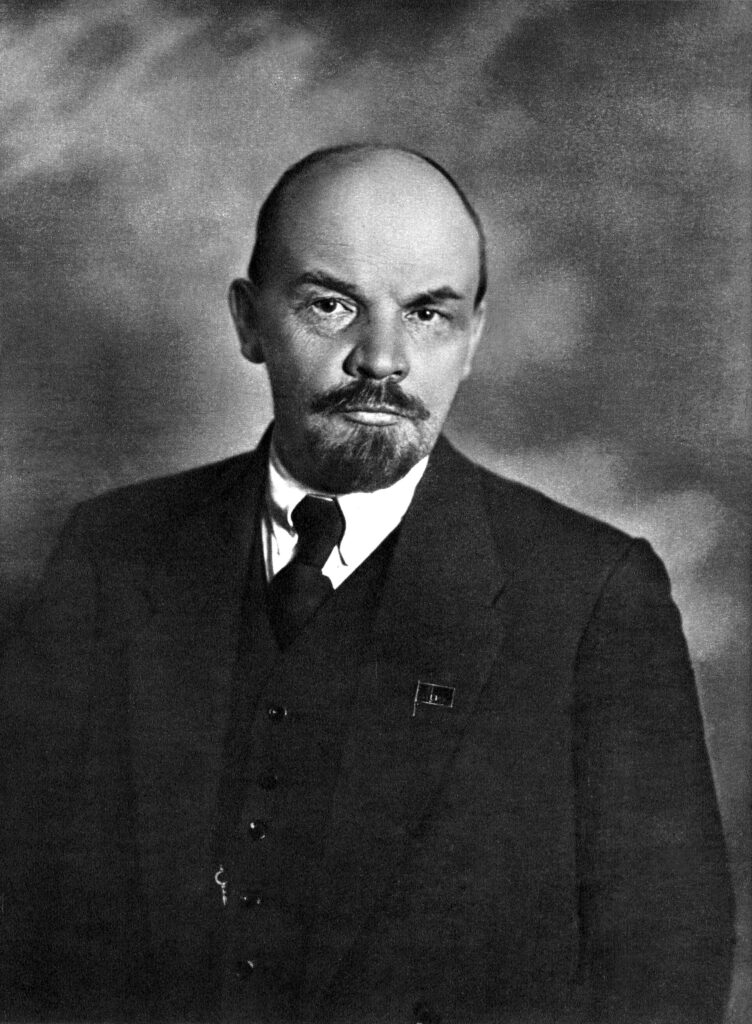
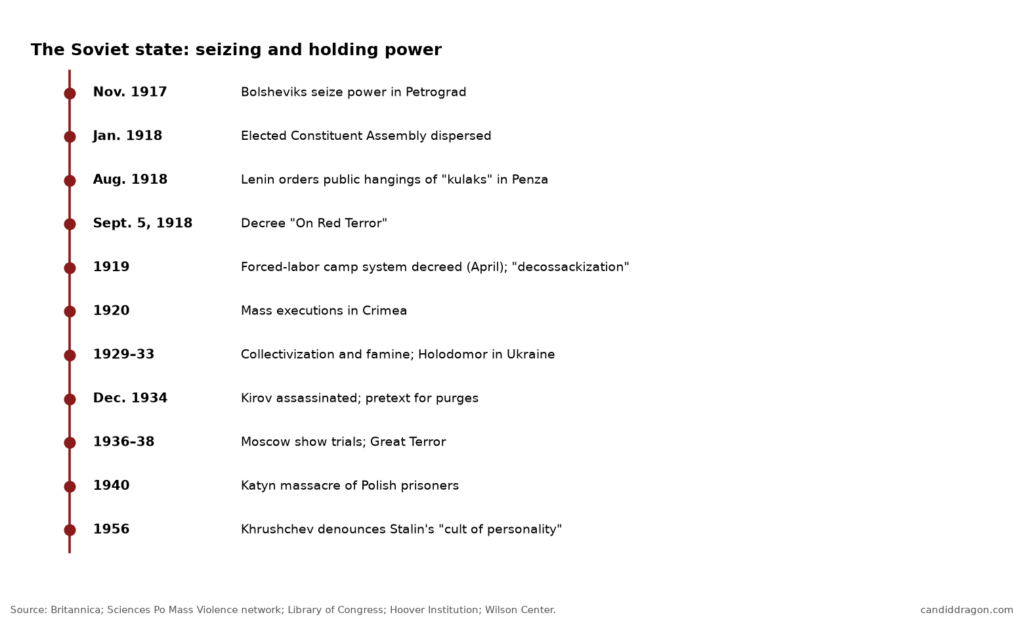
In October 1917 (November by the Western calendar) Lenin’s Bolsheviks seized power (Britannica). Elections for a Constituent Assembly, held that November, gave the Socialist Revolutionaries the most seats; the Bolsheviks won fewer than a quarter. When the Assembly met in January 1918 and refused to recognize Soviet authority, troops dispersed it the next day and the government dissolved it (Britannica). On July 17, 1918, the former tsar, his wife, their children and their retainers were killed at Yekaterinburg (Britannica).
The Red Terror and the civil war
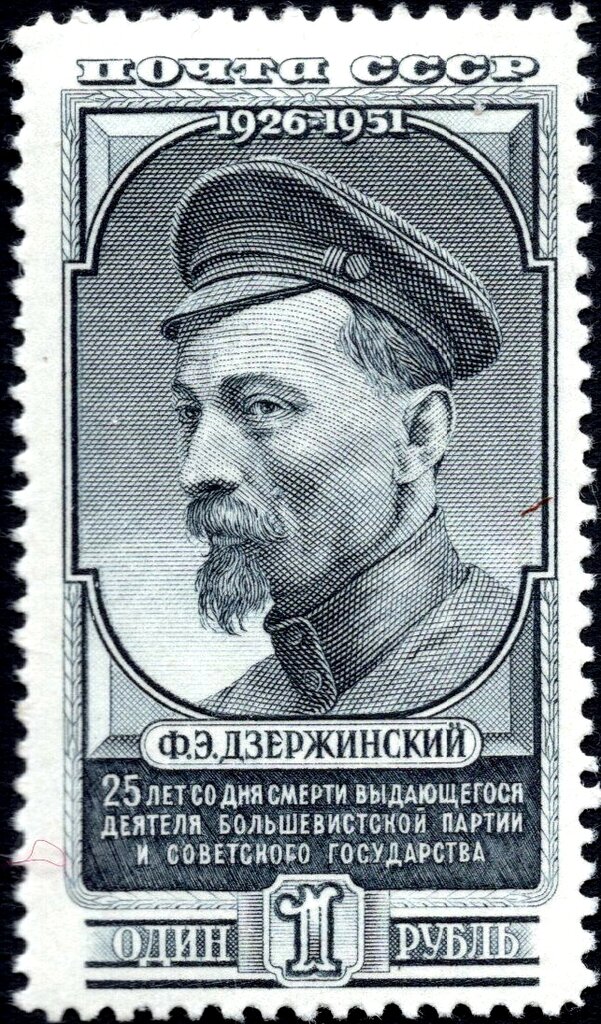
On August 11, 1918, Lenin cabled communists in Penza about a peasant revolt: “You need to hang (hang without fail, so that the public sees) at least 100 notorious kulaks, the rich, and the bloodsuckers. Publish their names. Take away all of their grain. Execute the hostages.” It had to be done “in such a way, that people for hundreds of miles around will see, tremble” (Library of Congress, Revelations from the Russian Archives).
- The Terror decree: after assassination attempts on Lenin and the Petrograd secret-police chief on August 30, 1918, Chekists massacred about 1,300 “bourgeois hostages” in Petrograd and Kronstadt. A decree of September 5 called for isolating “class enemies” in concentration camps and summary execution of anyone involved in White organizations or revolts. Estimated victims in September–October 1918: 10,000 to 15,000 (Nicolas Werth, Sciences Po).
- “Decossackization,” 1919–20: a secret Central Committee resolution of January 24, 1919, called for “mass terror against rich Cossacks, who should be exterminated and physically eliminated to the last.” About 8,000 Cossacks were executed within a few weeks; whole villages were later deported (Werth).
- Crimea, 1920: after the last White forces evacuated, “approximately 50,000 persons were shot or hung, the majority civilians,” in about six weeks (Werth).
- Not only one side: White forces also carried out terror, and White armies, Ukrainian nationalist units and others committed the worst pogroms against Jews ever seen in the region, using the “Judeo-Bolshevik” smear (Werth).
A Soviet decree of April 15, 1919, created the first forced-labour camps, the start of what became the Gulag (Britannica).
Stalin and the famine, 1929–34
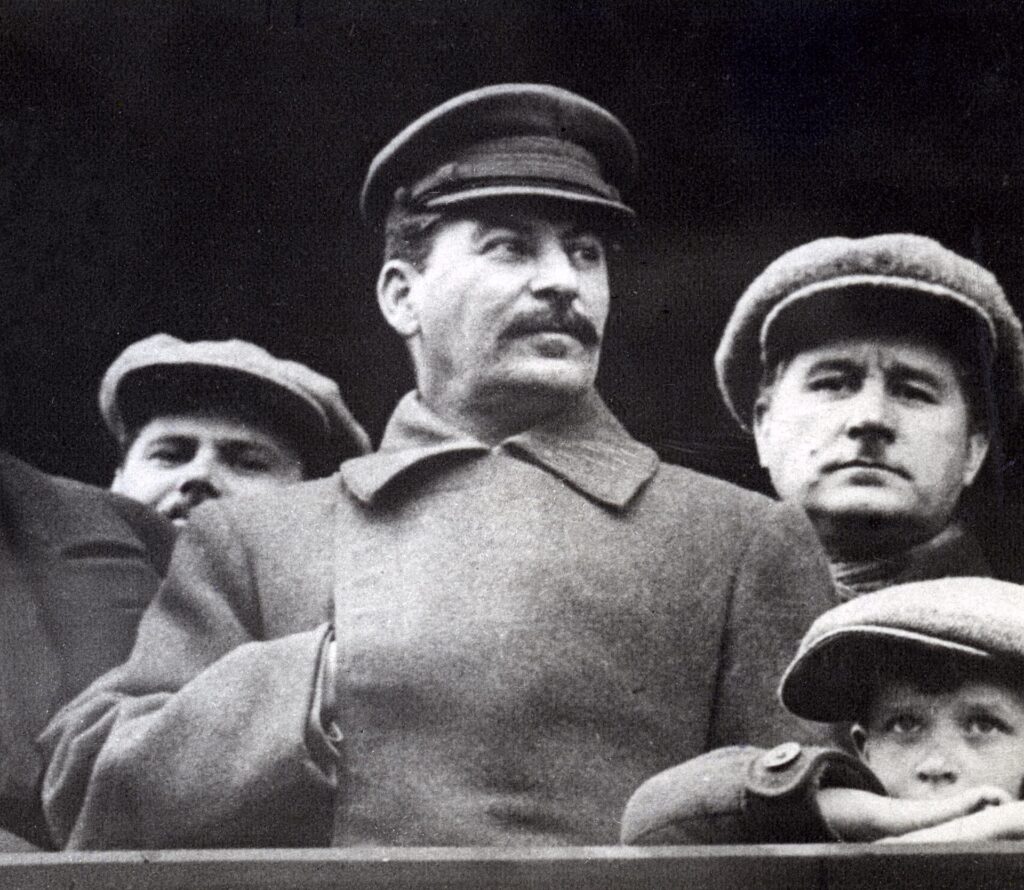
In 1929 Stalin ordered the collectivization of agriculture. Party agitators forced peasants onto collective farms and deported so-called kulaks and anyone who resisted. Production fell and rebellions broke out. “If we don’t make an effort now to improve the situation in Ukraine,” Stalin wrote in August 1932, “we may lose Ukraine” (Anne Applebaum, Britannica).
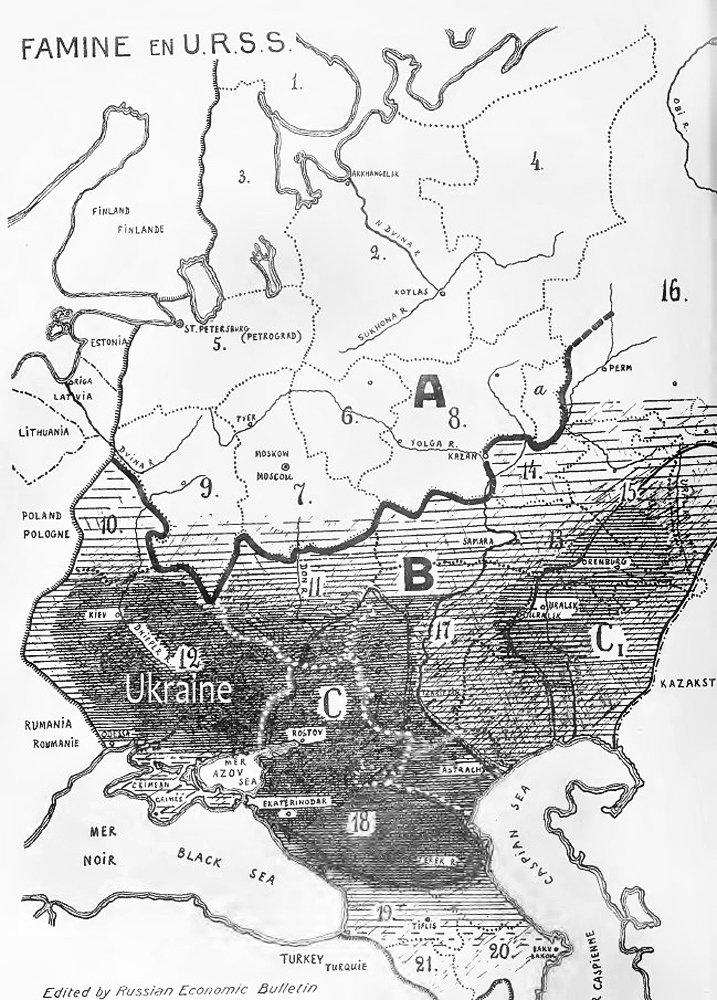
- The method: villages and towns in Ukraine were blacklisted and cut off from food; peasants were forbidden to leave the republic to find food; grain requisitions were raised as people starved; and in the winter of 1932–33 brigades of police and party activists searched homes and took “everything edible, from crops to personal food supplies to pets” (Britannica).
- The toll: at least 5 million people died of hunger across the USSR in 1931–34, including at least 3.9 million Ukrainians, by a study of Ukrainian demographers (Britannica). The famine also struck Russia’s grain regions and Kazakhstan.
- The cover-up: officials never mentioned it publicly; foreign correspondents were told not to write about it; the New York Times’ Walter Duranty dismissed reports by the journalist Gareth Jones; and when the 1937 census showed the losses, its administrators were arrested and murdered. The first public Soviet mention came in 1986 (Britannica).
By early 2019, 16 countries and the Vatican had recognized the Holodomor as genocide (Britannica).
The Gulag
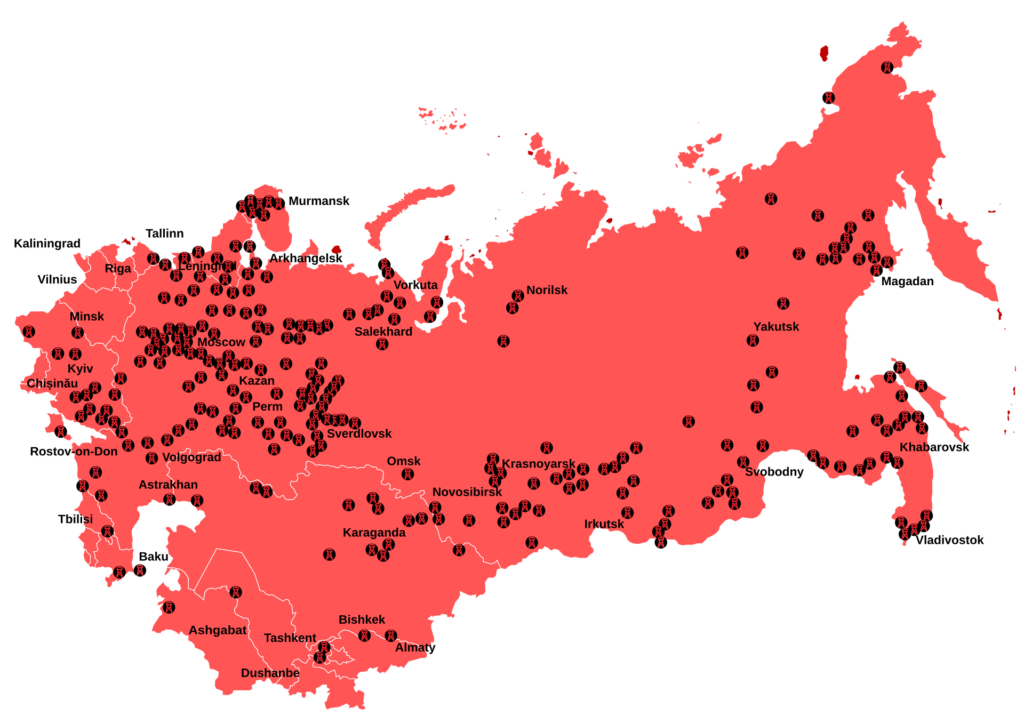
Founded as a central administration in 1930 under the secret police, the Gulag grew from about 100,000 prisoners in the late 1920s to about 5 million by 1936, a number probably equaled or exceeded every year until Stalin died in 1953. Prisoners felled timber, dug canals, built railroads and worked mines “under the threat of starvation or execution if they refused” (Britannica).
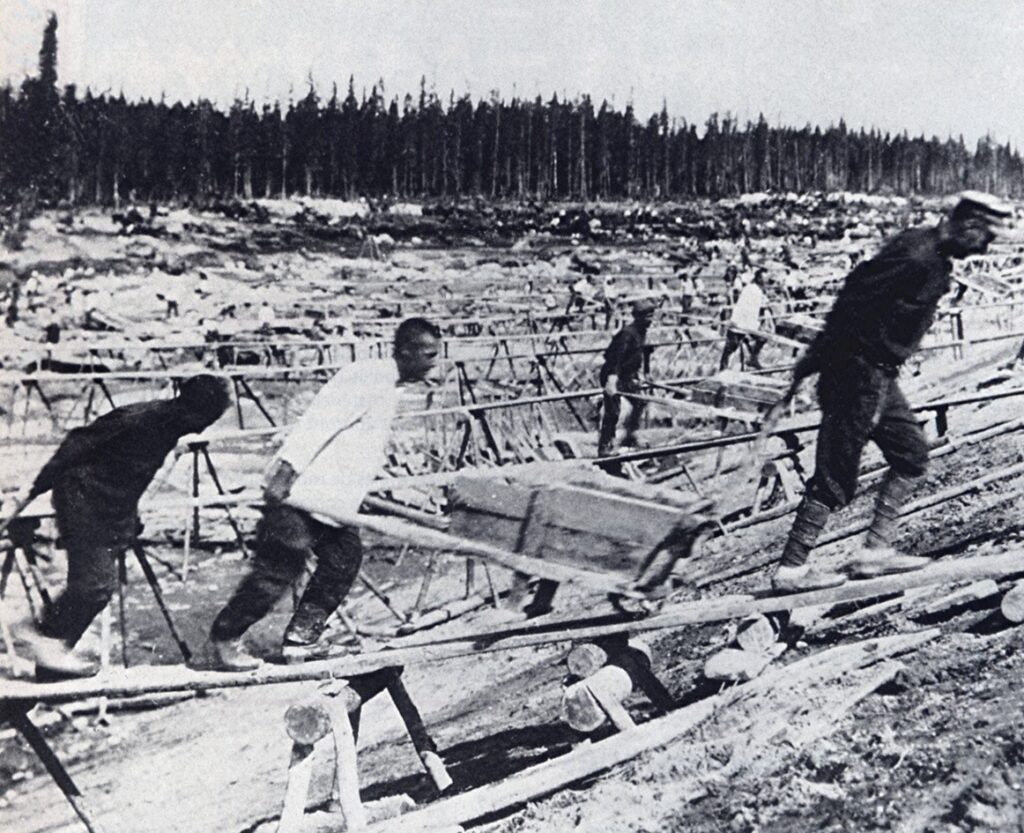
- How many passed through: unknown. Gulag administration figures released in 1989 show 10 million sent to the camps in 1934–47; Solzhenitsyn claimed 40 to 50 million served long sentences between 1928 and 1953 (Britannica). Contested; Solzhenitsyn’s figure is far higher than the archival record.
- How many died: Western scholarly estimates of deaths in the Gulag from 1918 to 1956 range from 1.2 to 1.7 million (Britannica). See our post on The Gulag Archipelago.
The Great Purge, 1936–38
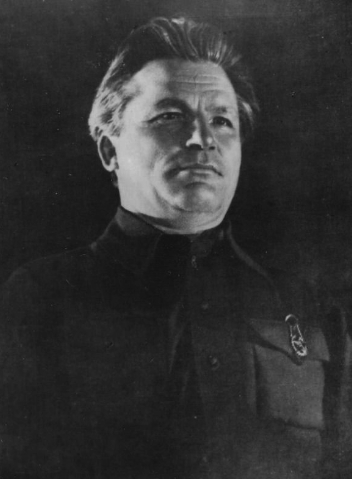
The pretext was the assassination of the Leningrad party chief Sergei Kirov in December 1934. Stalin claimed a vast conspiracy. Three public show trials followed, in August 1936, January 1937 and March 1938, against leading Old Bolsheviks including Zinoviev, Kamenev and Bukharin. “It was subsequently established that the accused were innocent, that the cases were fabricated by the secret police (NKVD), and that the confessions were made under pressure of intensive torture and intimidation.” Closed trials purged the military leadership, which left the Red Army badly weakened in 1941 (Britannica).
- The scale: for 1937–38 alone, NKVD statistics reported to the Pospelov Commission in 1956 record 1,548,366 people arrested and 681,692 shot. The historian Nicolas Werth adds that “some tens of thousands” of unregistered executions and deaths under torture must be added (Werth, Jahrbuch für Historische Kommunismusforschung 2006).
- Killing by quota: NKVD Order No. 00447 of July 30, 1937, aimed at “the definitive elimination of all socially harmful elements,” set regional quotas for shooting and imprisonment; regional party bosses, Nikita Khrushchev among them, asked for “additional quotas” (Werth).
How the regime sold itself
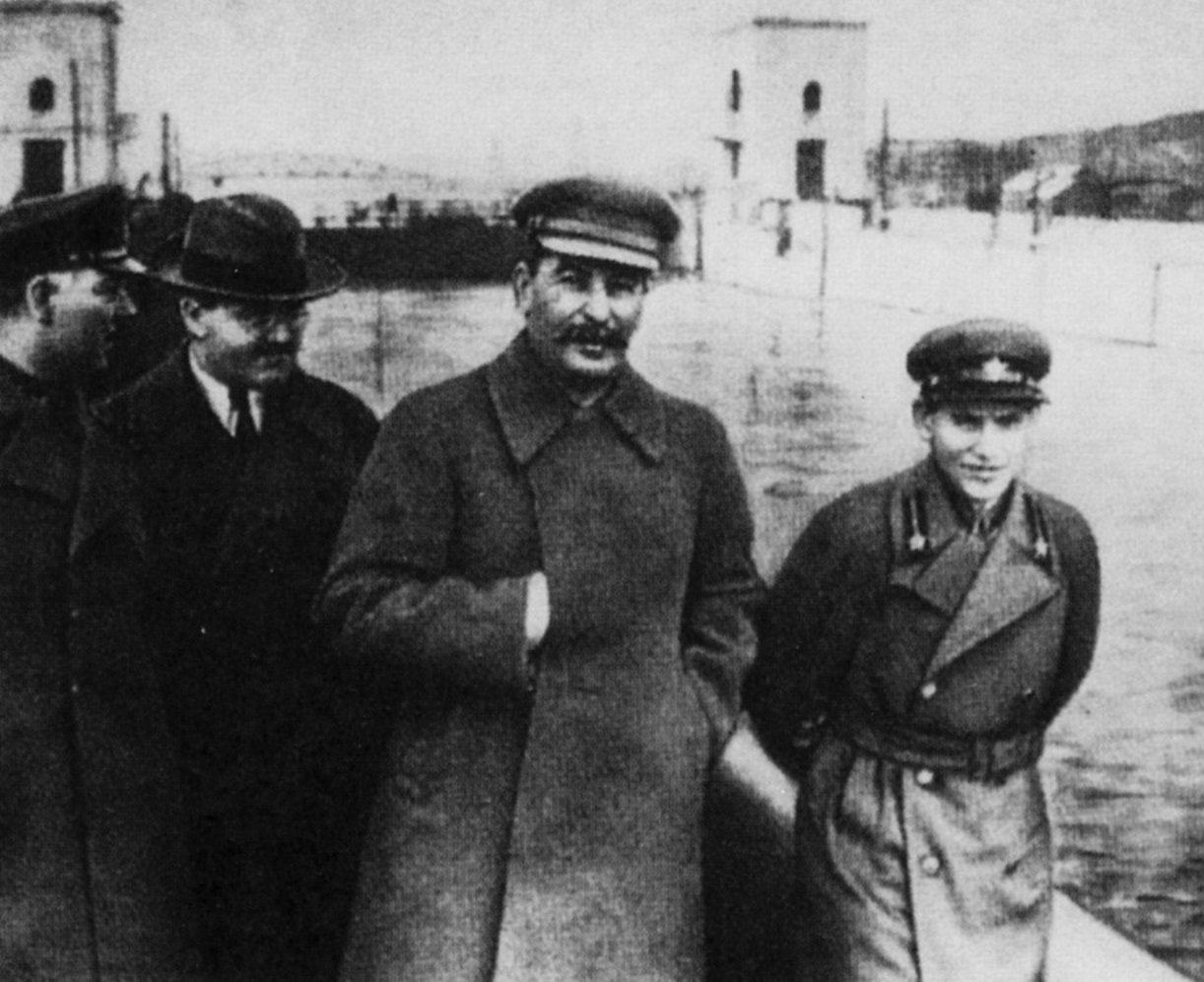
Every wave of violence came with a story: “class enemies,” “kulaks,” “wreckers” and “enemies of the people” plotting with foreign powers (Britannica). The famine was denied outright (Britannica). Stalin’s image was everywhere, and people who fell from favor disappeared from the record as well as from life. Soviet retouchers erased purged officials from photographs; in one picture of Stalin strolling along the Moscow–Volga Canal, a great slave-labor project, the NKVD chief Nikolai Yezhov, later arrested and shot, “becomes a stretch of water” (Hoover Institution).
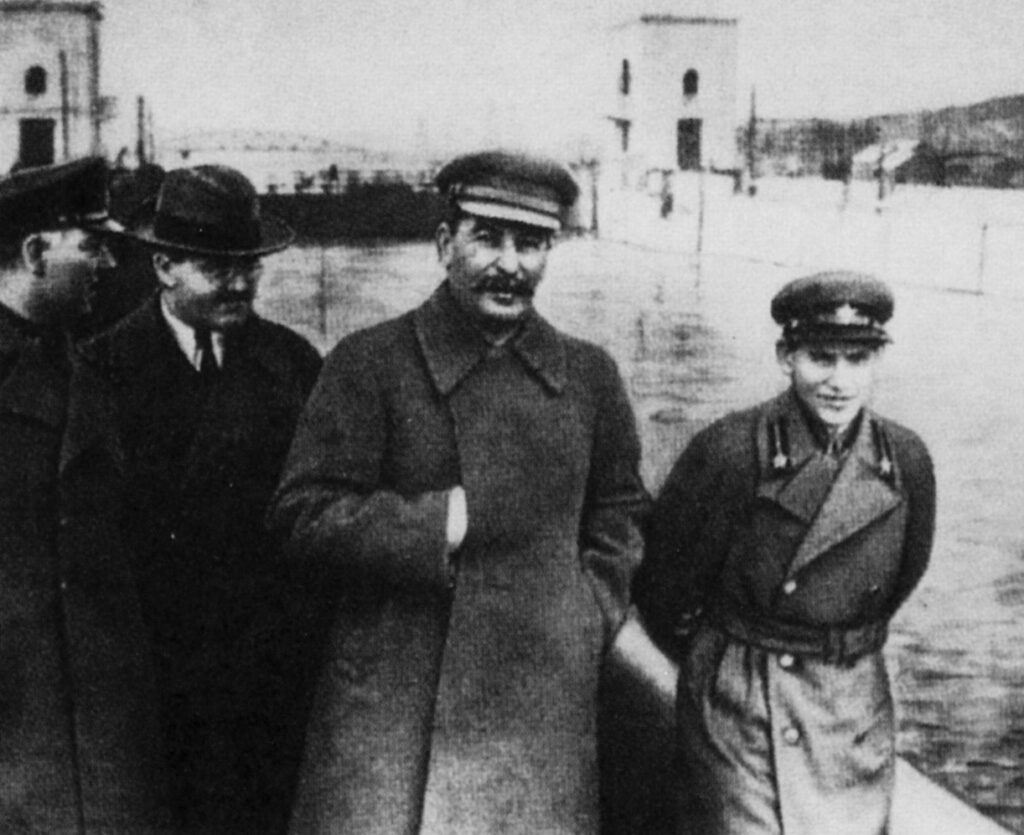
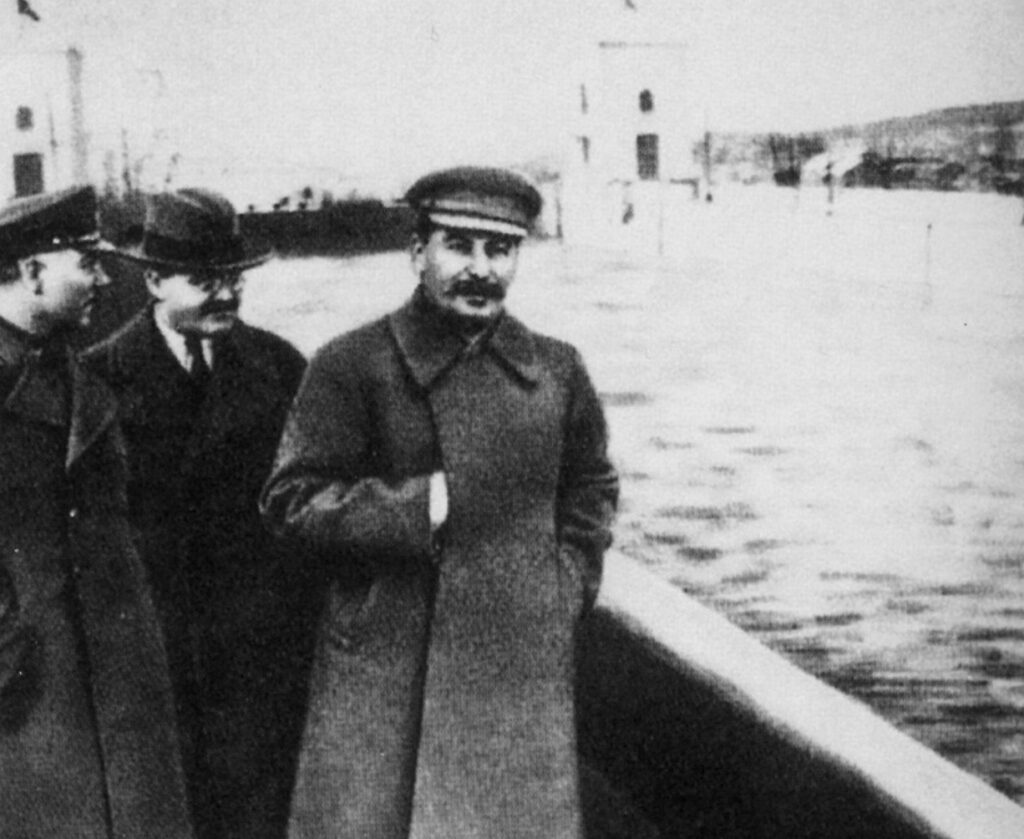
After Stalin’s death, his successor Nikita Khrushchev denounced him in a secret speech to the party congress on February 25, 1956, “On the Cult of Personality and Its Consequences,” attacking Stalin’s unlimited power and the “enemy of the people” formula (Wilson Center Digital Archive). Khrushchev himself had taken part in the Terror. The Soviet secret police also murdered 21,857 Polish prisoners at Katyn and elsewhere in 1940 and blamed the Germans for half a century (Hoover Institution); see our World War II post.
Why it matters
The Soviet state came to power promising liberation and quickly made terror an official instrument of government, with decrees, quotas and paperwork. It killed people not for anything they had done but for the category they were placed in: class enemy, kulak, Cossack, nationalist, enemy of the people. And it worked hard to make sure the world, and its own citizens, did not know.
Patterns to recognize (analysis)
Analysis and opinion. Tactics from Soviet history that are worth recognizing anywhere:
- Dissolving an elected body after losing the vote.
- Collective guilt by category: punishing whole classes, ethnic groups or regions rather than individuals.
- Terror by decree and by quota, turning killing into an administrative target.
- Show trials and coerced confessions to give persecution the look of justice.
- Using a crisis or an assassination as a pretext for a wider purge.
- Denying a disaster the state caused, and punishing those who count it.
- Erasing people from history: doctored photographs, rewritten records, suppressed censuses.
- A cult of the leader that places one person beyond criticism.
These are general warning signs drawn from the history above. They describe tactics, not any modern party or person.
Bottom line: Lenin and Stalin built a one-party state through a coup, a dispersed parliament and official terror. Their regime’s famine killed at least 5 million people, its police shot 681,692 in two years of the Great Terror, and its camps killed 1.2 to 1.7 million. Most of these figures come from the Soviet state’s own records.
The Rise to Power series
How empires and states took power and kept it, told with the same standards for each: propaganda and pretexts, violence, sourced death tolls, and patterns to recognize.
- Rome: Caesar, Augustus and the Fall of the Republic
- The Ottoman Empire: Conquest, the Devshirme and the Fratricide Law
- The USSR: Lenin, Stalin, the Terror, the Famine and the Gulag (you are here)
- The United States: Removal, Slavery, Expansion and Intervention
- Mao’s China: The Great Leap Famine and the Cultural Revolution
Label key
- ✅ Confirmed An official record, or two or more independent outlets, agree.
- ❓ Unconfirmed Reported or claimed, but not yet independently verified.
- ⚠️ Disputed Contradicted by the evidence or by credible sources, or actively contested.
- Factual Straight reporting that holds up across outlets on different sides.
 Leans Left The facts hold, but the coverage tilts left: one-sided, loaded language, missing context or a single anonymous source.
 Leans Right The facts hold, but the coverage tilts right: one-sided, loaded language, missing context or a single anonymous source.
 Likely Propaganda State-run or state-aligned media, a militant press office, a partisan campaign or group, or unverifiable spin.
Each story gets one confidence tag and one source-lean label, plus a one-line Lean note explaining the call. Every side is held to the same standard. More on how we cover the news.
Sources
- Britannica, Russian Revolution (Factual)
- Britannica, Constituent Assembly (Factual)
- Library of Congress, Revelations from the Russian Archives: Lenin telegram to Penza, August 11, 1918 (Factual)
- Nicolas Werth, “Crimes and Mass Violence of the Russian Civil Wars (1918–1921),” Sciences Po Mass Violence and Resistance Research Network (Factual)
- Anne Applebaum, Holodomor, Britannica (Factual)
- Britannica, Gulag (Factual)
- Britannica, Great Purge (Factual)
- Nicolas Werth, Jahrbuch für Historische Kommunismusforschung 2006 (German) (Factual)
- Hoover Institution, Inside Stalin’s Darkroom (Leans Right)
- Wilson Center Digital Archive, Khrushchev’s Secret Speech, “On the Cult of Personality and Its Consequences” (1956) (Factual)
- Hoover Institution, Remembering Katyn (Leans Right)
Featured image: Stalin with Nikolai Yezhov at a canal, original photograph, by Unknown authorUnknown author. Public domain, via Wikimedia Commons. See all image credits.