

Quick take
- The Dow fell 1,101 points to its first close below 50,000 since June, a sixth straight losing day for the S&P 500, while Anthropic’s record stock debut ended up 17%.
- JPMorgan, Visa and Mastercard say outside vendors were hacked and some customer emails exposed, but no card numbers. Full JPMorgan story.
- White House cyber chief Sean Cairncross is leaving, and Axios reports the Pentagon’s top tech officer will replace him. Officials still say the outages were not attacks. Full outage check.
- The Senate voted 48 to 51 against a resolution to pull U.S. forces from the Iran war, the first such vote since the midterms.
- Also: a UK court made the government admit a secret encryption order against Apple, an appeals court kept Venezuelan TPS frozen, Walmart and Costco confirmed outage stockpiling, and the Army blows up nearly 5 tons of explosive in Iowa on Friday.
1. Dow drops 1,101 points as Anthropic’s record debut closes up 17%
✅ Confirmed  Factual Lean note: CNBC and Reuters report the same closing figures. Strategists split on what the Anthropic debut means for the AI trade, and both views are quoted as opinion.
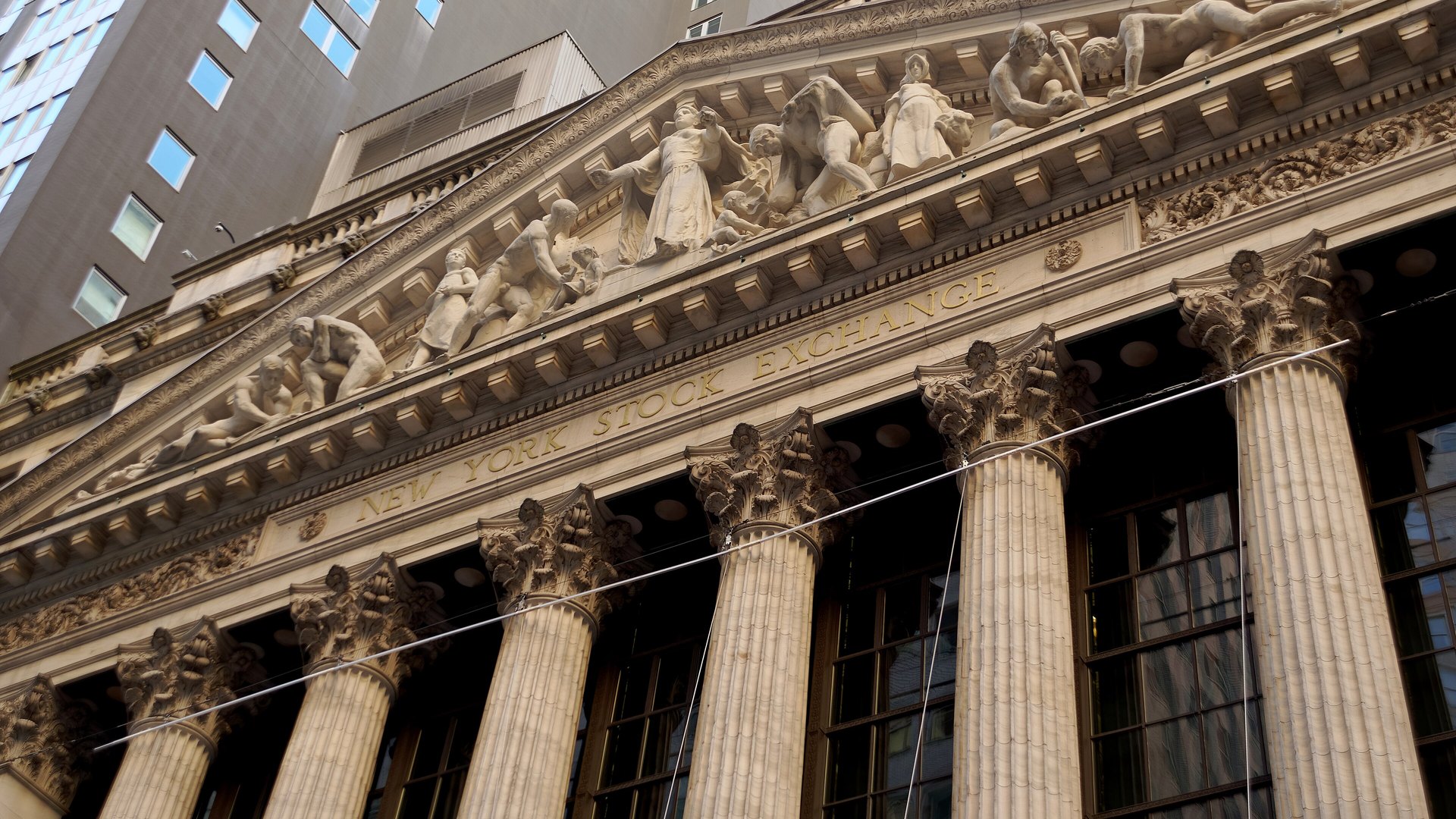
The Dow lost 1,101.11 points, or 2.19%, to 49,097.06, its first close below 50,000 since June. The S&P 500 fell 2.02% to 7,175.83 and the Nasdaq 2.25% to 23,879.20, as stocks fell for a sixth day. Anthropic, trading on the Nasdaq as ANT, opened at $111.50, 34% above its $83 offering price, and briefly hit a $2 trillion market value before closing at $97.17, about $1.77 trillion fully diluted, Reuters says. Wall Street’s “fear gauge,” the VIX, touched its highest level since March, and AMD fell 8% after a short seller questioned its China dealings. Some strategists read the debut as an endorsement of AI; others warn most of Anthropic’s revenue is usage-based and could dry up.
Sources: CNBC · Reuters via Investing.com
Full story: Candid Dragon Economy board
2. JPMorgan, Visa and Mastercard confirm vendors were hacked; no card numbers taken, they say
✅ Confirmed Factual Lean note: Reuters and The Verge carry the companies’ own statements. How much was taken comes from the hacking group’s posts and Reuters’ review of files it could not verify, so the size of the leak stays ❓ Unconfirmed.
JPMorgan says attackers reached “certain marketing data” held by vendors, possibly including customer names and email addresses, and that it will contact affected customers. Visa says its incident involved a third-party provider in Asia Pacific and no card numbers; Mastercard says a “limited amount of email addresses” from one benefit program was exposed, with no impact on its network. A group calling itself n0n posted the files; Reuters says they appear to include more than 16,000 customer emails, some with phone numbers and postal codes, but could not confirm they are real. JPMorgan says there is “no connection” to this week’s banking disruption, which it blamed on a software bug.
Sources: Reuters via Investing.com · The Verge
Full story: JPMorgan Chase vendor cyberattack: some customer names and emails exposed (chatter check) · The Nov. 16 bank outages
3. White House cyber director Cairncross is out; Pentagon’s tech chief named to replace him
✅ Confirmed Factual Lean note: A White House official confirmed the departure to Reuters. Axios calls the exit amicable but quotes a senior official saying new chief of staff Stephen Miller sought the change. Some headlines tie it to the outages; officials still say the outages were not attacks, and nothing on the record links the two.
National Cyber Director Sean Cairncross, whose office coordinates federal cybersecurity policy, is leaving, and Axios reports the White House has named Kirsten A. Davies, the Pentagon’s chief information officer, to succeed him. The job requires Senate confirmation, and Reuters, citing Axios, says the timing gives the White House a chance to confirm a successor before Democrats take control of Congress in January. The White House had not commented to Axios.
Sources: Reuters via Investing.com · Axios
Full story: Apple and NSA outages: is the week’s wave of failures an attack?
4. Senate rejects Iran war-powers resolution, 48-51
Not rated Lean note: Stories on the Iran war aren’t rated under our house rules. The tally is identical in The Guardian and Anadolu. The Guardian frames the vote around Republican midterm losses; that is its framing, not a finding.
The resolution, H.Con.Res. 93, would have directed the president to withdraw U.S. forces from hostilities with Iran; it passed the House 220-204 in September, and this was the first war-powers vote in either chamber since the Nov. 3 midterms. Republicans Susan Collins, Lisa Murkowski and Rand Paul voted for it, and John Fetterman was the only Democrat against it. Thom Tillis, who had backed earlier resolutions, voted no. Anadolu reports a Pentagon official told senators the war has cost $48.3 billion.
Sources: The Guardian · Anadolu Agency
5. UK court forces government to admit its secret encryption order against Apple
✅ Confirmed Factual Lean note: The tribunal’s own published judgment is the source, backed by TechCrunch and Computer Weekly. The Home Office’s security argument and the privacy groups’ transparency argument are both laid out in the ruling.
Britain’s Investigatory Powers Tribunal ruled Thursday that the Home Office had not shown it would damage national security to reveal “that the respondent has given Apple a technical capability notice,” an order that can require a company to build in access to data. The judges found officials had already confirmed the order to newspaper journalists and U.S. officials. What the order demands stays sealed, and a full hearing in the challenge by Apple, Privacy International and others is expected in the first half of 2027.
History echo (analysis): In 1993 the Clinton administration backed the NSA-designed Clipper chip, which built a government-held key into phone encryption so law enforcement could decode intercepted calls. The matching tactic is a government access point built into private encryption in the name of public safety. Where it breaks down: Clipper was a public proposal that was debated openly, researchers found ways to defeat it, and it was dead by 1996; the UK order is secret, binding on one company, and its terms are still sealed.
Sources: Investigatory Powers Tribunal (judgment) · TechCrunch · Computer Weekly
6. Appeals court keeps Venezuelan TPS frozen; administration drops Supreme Court request
✅ Confirmed Factual Lean note: SCOTUSblog and Reuters agree on the rulings and filings. The government says reviving TPS would force it to free detained Venezuelans; the TPS holders say ending it broke federal law. Both are claims in court, reported as such.
Judge Edward Chen’s order restoring Temporary Protected Status for Venezuelans was set to take effect Friday, so the Justice Department asked the Supreme Court to step in. Hours later the 9th Circuit put Chen’s ruling on hold until seven days after it rules again, and on Thursday the administration withdrew its Supreme Court request. The government says reviving TPS would require it to release about 1,800 detained Venezuelans and would halt deportations.
Sources: SCOTUSblog · Reuters via TimesLIVE
7. Walmart and Costco confirm shoppers stockpiled water and propane after the outages
✅ Confirmed Factual Lean note: Reuters and Yahoo Finance quote Walmart’s finance chief directly; the Costco figure comes from a Mizuho analyst note. “Panic buying” headlines go further than Walmart, which calls the bump small. None of this is evidence the outages were an attack.
Walmart says shoppers stocked up on propane, jug bottled water and camping gear earlier this month after the string of tech failures. CFO John David Rainey called it “relatively small to our overall business” and likely a pull-forward of future demand. A Mizuho analyst says Costco’s U.S. same-store sales, excluding fuel, jumped 11% to 12% in the last week of October. Walmart also raised its full-year sales forecast to 4.9% to 5.2% growth.
Sources: Reuters via Investing.com · Yahoo Finance · CNBC
Be ready: What to Have on Hand When Banks or Card Payments Go Down · What to Buy Before a Winter Storm
8. Army to blow up nearly 5 tons of unstable explosive at Iowa ammo plant Friday
✅ Confirmed Factual Lean note: The Army’s own advisory and ABC News agree on the plan. Residents’ worries about lead dust are real; the Army says the plume should last no more than an hour and it will monitor the air.
Two controlled detonations of degraded lead azide, 68 barrels or about 9,700 pounds according to an Army spokesperson, are set for around noon Friday, Nov. 20, at the Iowa Army Ammunition Plant in Middletown. The Army asks residents of the Middletown City Park neighborhood to leave from 8 a.m. to 2 p.m. because windows could break, and warns of a loud noise, vibrations and a dust plume containing some lead. The EPA permitted the operation, and the Army is offering shelter, pets included, at the Armed Forces Reserve Center in Middletown.
Sources: U.S. Army advisory · ABC News
Label key
- ✅ Confirmed An official record, or two or more independent outlets, agree.
- ❓ Unconfirmed Reported or claimed, but not yet independently verified.
- ⚠️ Disputed Contradicted by the evidence or by credible sources, or actively contested.
- Factual Straight reporting that holds up across outlets on different sides.
 Leans Left The facts hold, but the coverage tilts left: one-sided, loaded language, missing context or a single anonymous source.
 Leans Right The facts hold, but the coverage tilts right: one-sided, loaded language, missing context or a single anonymous source.
 Likely Propaganda State-run or state-aligned media, a militant press office, a partisan campaign or group, or unverifiable spin.
Each story gets one confidence tag and one source-lean label, plus a one-line Lean note explaining the call. Every side is held to the same standard. More on how we cover the news.
Featured image: The New York Stock Exchange’s Broad Street facade, Manhattan, Oct. 2, 2023 (file photo). Photo by Jakub Hałun via Wikimedia Commons, CC BY 4.0; cropped.