

Quick take
- World War I (1914–1918) began with an assassination in Sarajevo and became a war of trenches, artillery and poison gas across Europe and the Middle East.
- About 8.5 million soldiers died, by the U.S. War Department’s 1924 count, and an estimated 13 million civilians died of starvation, disease, massacre and fighting.
- Under cover of the war, the Ottoman government deported and destroyed its Armenian population: at least 664,000 and perhaps 1.2 million died.
Our rating: ✅ Confirmed  Factual
Content warning: this post describes mass killing, poison gas and genocide in plain terms.
The First World War was supposed to be over by Christmas 1914. It lasted more than four years, killed millions and broke four empires. Its trenches gave the language phrases like “no man’s land,” and its peace settlement set the stage for an even worse war two decades later. This is what happened, who did the killing, and how many died.
How it started
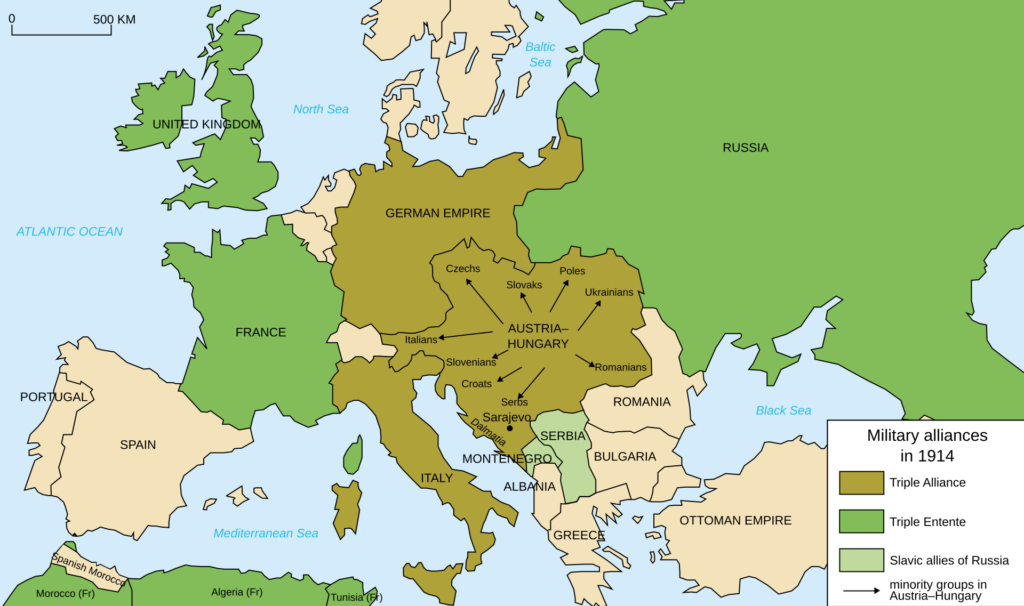
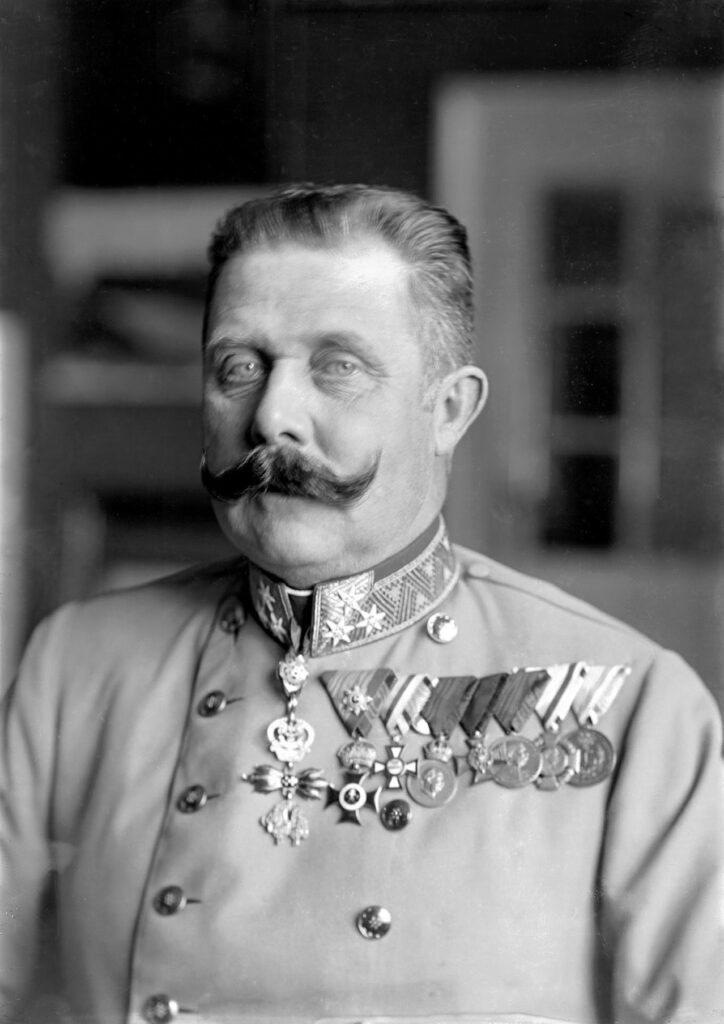
On June 28, 1914, a Bosnian-Serb terrorist shot and killed Archduke Franz Ferdinand, heir to the Austro-Hungarian throne, and his wife in Sarajevo. By early August, most of Europe’s great powers were at war (Imperial War Museums). The Imperial War Museums sum up the deeper causes as growing nationalism, increased militarism, imperial rivalry, and a system of opposing alliances built up over the previous 35 years: Germany, Austria-Hungary and Italy on one side; France and Russia, later joined by Britain, on the other. Germany’s invasion of neutral Belgium, whose neutrality Britain had guaranteed in 1839, brought Britain and its empire into the war on August 4 (IWM).
Civilians first: Belgium, 1914
As the German army swept through Belgium and northern France in August and September 1914, it killed about 6,500 civilians, by the count of the historians John Horne and Alan Kramer (German Atrocities, 1914, Yale University Press). At Dinant, 674 civilians were killed, 137 of them in a single mass execution; at Tamines, 383; at Louvain (Leuven), 248, and the university library with its rare collection was deliberately burned. Troops destroyed 15,000 to 20,000 buildings and used civilians as human shields (H-Net review). German soldiers claimed they were shooting guerrilla snipers (“francs-tireurs”); Horne and Kramer found no such irregular forces, only a mass panic believed and spread by the high command. In 1925 a Belgian military court in Namur convicted German officers for the Dinant killings and arson, naming 403 murdered residents, including old people, women and children under two (Legal Tools Database).
The trench war
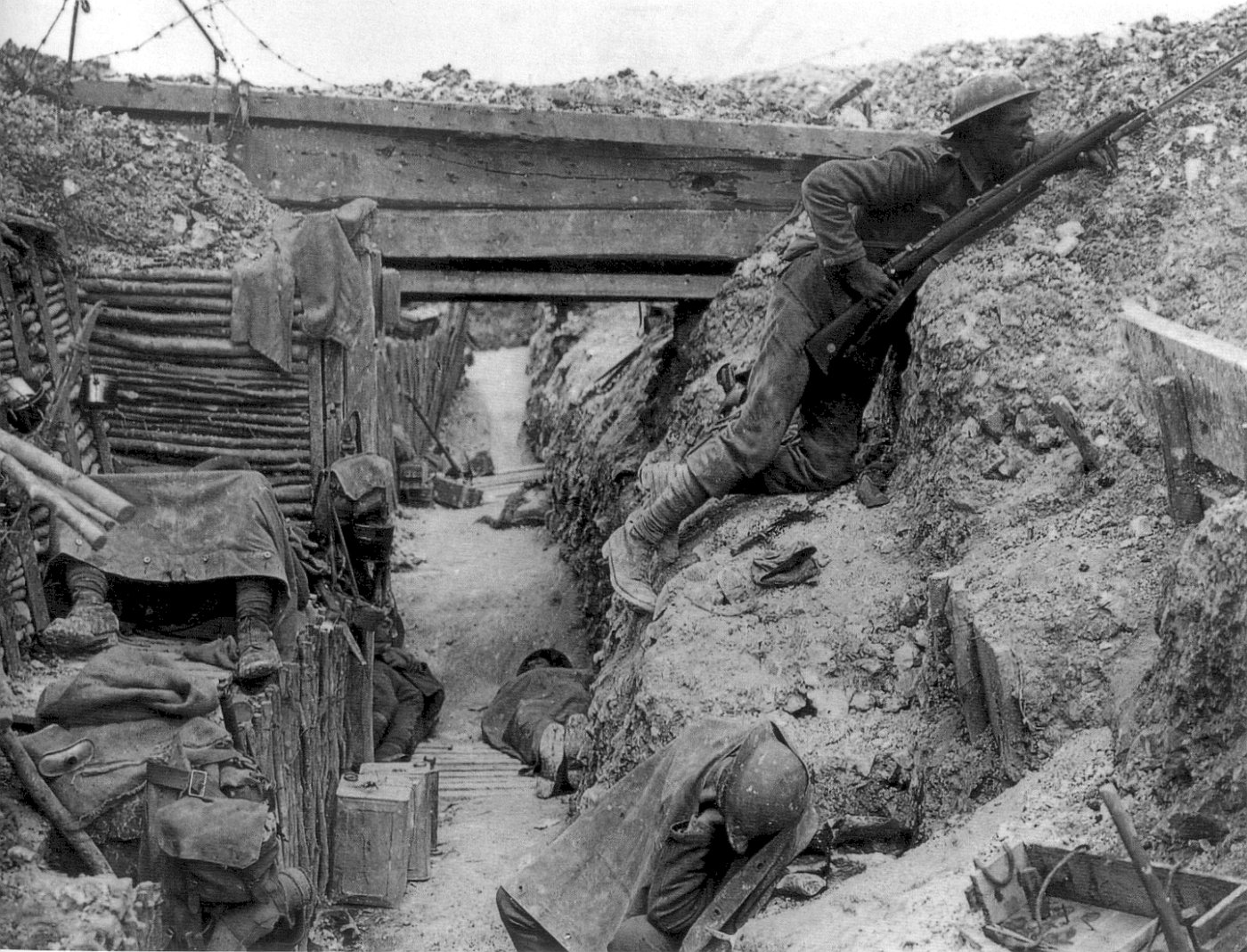
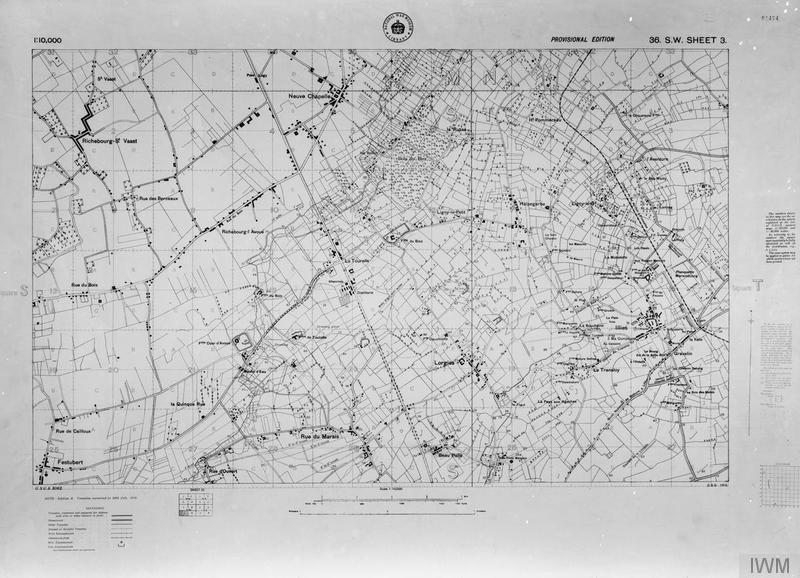
By late 1914 the Western Front had frozen into two lines of trenches from the Channel to Switzerland. Artillery caused the most casualties, followed by small arms and then poison gas; “on even a quiet day on the Western Front, many hundreds of Allied and German soldiers died” (Britannica). Men lived in mud with rats and lice, and attacks meant climbing out and crossing open ground into machine-gun fire and shellfire.
Poison gas
On April 22, 1915, near Ypres in Belgium, German troops opened about 6,000 cylinders and released more than 150 tonnes of chlorine over the French lines. The gas killed more than 1,000 French and Algerian soldiers within minutes and wounded about 4,000 more (American Journal of Public Health); the chemical weapons watchdog OPCW puts the toll of that first attack at up to 5,000 dead (OPCW). Chlorine and phosgene attacked the lungs; mustard gas blistered skin and eyes. By the armistice, chemical weapons had caused more than 1.3 million casualties and roughly 90,000 to more than 100,000 deaths, and thousands of survivors suffered lung damage for life (AJPH; OPCW). Both sides used gas.
Verdun, February 21–December 18, 1916
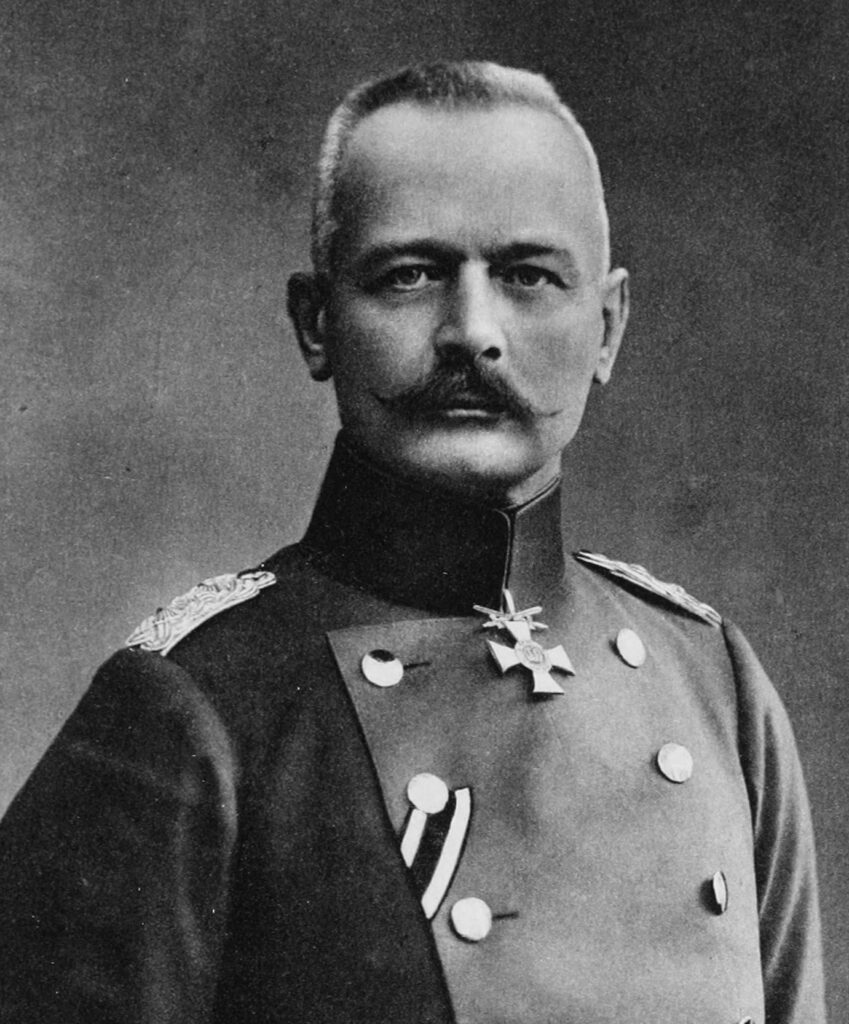
The German commander, Erich von Falkenhayn, chose Verdun as a place the French would defend at any cost, in order, as he put it, to “bleed France to death.” The battle lasted ten months. French casualties were about 400,000 and German about 350,000; some 300,000 men were killed. So many bodies were never found that a French monument at Verdun honors 150,000 unlocated dead believed buried nearby (Britannica; Britannica). Military dead.
The Somme, July 1–November 1916
After a week-long bombardment that largely failed to destroy the German defences, British infantry advanced at 7:30 a.m. on July 1, 1916, many at a walk under 66 pounds of equipment. By nightfall the British had 57,470 casualties, 19,240 of them killed: the deadliest day in British military history (Imperial War Museums; Britannica). By November the British had lost some 420,000 men and the French 194,000, against more than 440,000 German casualties, for little ground (Britannica). Casualties include killed, wounded, missing and captured.
The Armenian genocide, 1915–1916
About 1.5 million Armenians lived in the Ottoman Empire in 1915. The government, run by the Committee of Union and Progress (the “Young Turks”), aimed to secure Muslim Turkish dominance in central and eastern Anatolia by eliminating the Armenian population there. Claiming that Armenians would side with invading Russian troops, it began deporting them from the border regions in spring 1915, then from almost every province, far from any front (U.S. Holocaust Memorial Museum).
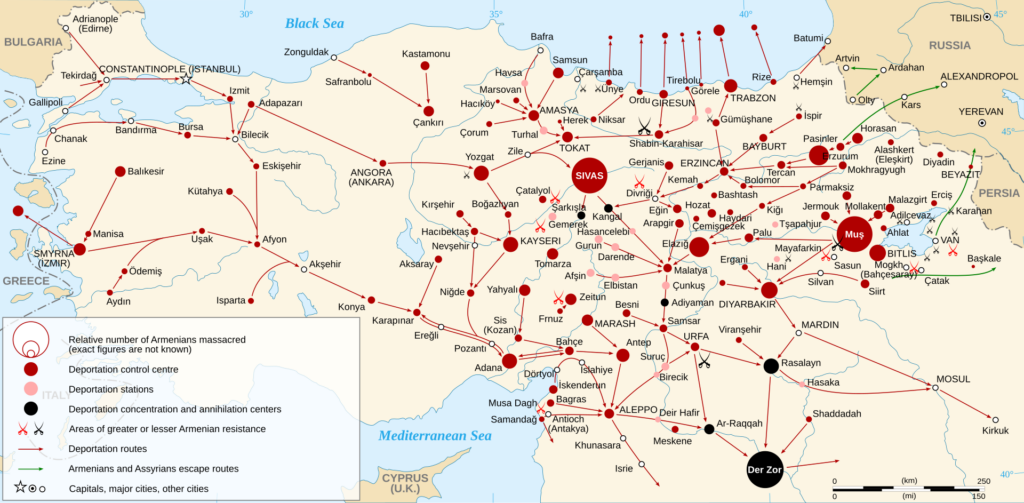
- The toll: at least 664,000 and possibly as many as 1.2 million Armenians died, “either in massacres and individual killings, or from systematic ill treatment, exposure, and starvation” on deportations to the desert regions of what is now Syria and Iraq (USHMM). The range reflects different counting methods and is contested.
- Who did it: the Ottoman state under the CUP government, whose troops guarded the deportation columns. The victims were civilians, killed in local massacres or dying of starvation, dehydration, exposure and disease on the way.
The dead, by country
No one kept full records, and four countries had revolutions in 1918, so “a completely accurate table of losses may never be compiled” (Britannica). The best-known military figures come from the U.S. War Department in 1924. That is an official period source, compiled from national returns of varying quality; the Russian and Ottoman figures in particular are rough.
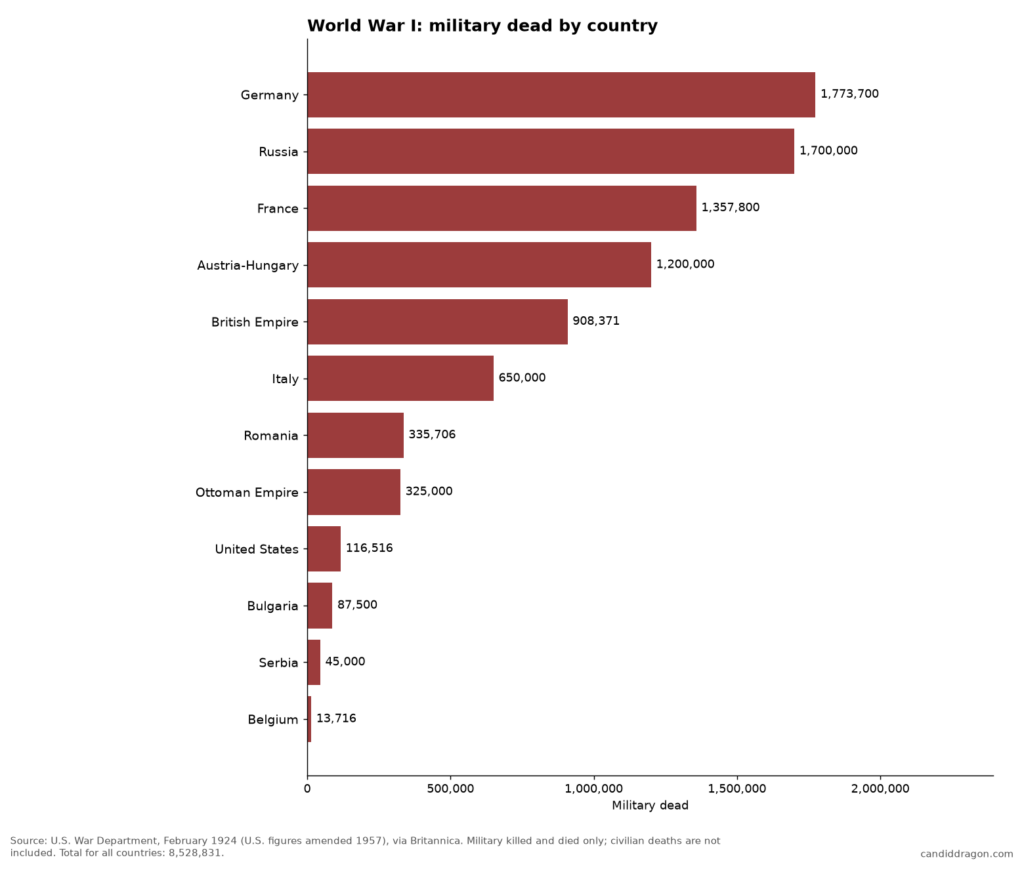
| Country | Mobilized | Military killed and died | Wounded | Prisoners and missing |
|---|---|---|---|---|
| Russia | 12,000,000 | 1,700,000 | 4,950,000 | 2,500,000 |
| Germany | 11,000,000 | 1,773,700 | 4,216,058 | 1,152,800 |
| France | 8,410,000 | 1,357,800 | 4,266,000 | 537,000 |
| Austria-Hungary | 7,800,000 | 1,200,000 | 3,620,000 | 2,200,000 |
| British Empire | 8,904,467 | 908,371 | 2,090,212 | 191,652 |
| Italy | 5,615,000 | 650,000 | 947,000 | 600,000 |
| Romania | 750,000 | 335,706 | 120,000 | 80,000 |
| Ottoman Empire (Turkey) | 2,850,000 | 325,000 | 400,000 | 250,000 |
| United States | 4,355,000 | 116,516 | 204,002 | 4,500 |
| Bulgaria | 1,200,000 | 87,500 | 152,390 | 27,029 |
| Serbia | 707,343 | 45,000 | 133,148 | 152,958 |
| Belgium | 267,000 | 13,716 | 44,686 | 34,659 |
| All countries | 65,038,810 | 8,528,831 | 21,189,154 | 7,750,919 |
Civilians: no agency counted civilian deaths. Britannica cites an estimate of about 13 million, higher than the military toll, caused “largely” by “starvation, exposure, disease, military encounters, and massacres,” made worse by the 1918 influenza pandemic (Britannica). That figure is a rough estimate and overlaps with flu deaths; it is not broken down reliably by country. Modern historians’ totals for military dead run from about 9 to 10 million (AJPH).
Why it matters
World War I showed what industrial states could do to people: millions killed by machines and chemicals, civilians shot as imagined guerrillas, and a whole minority deported to its death under the cover of “wartime security.” Its peace left grievances that a former Western Front soldier named Adolf Hitler would turn into a political career.
Patterns to recognize (analysis)
Analysis and opinion. How a crisis becomes a catastrophe:
- A chain of automatic commitments. Alliances and ultimatums can turn a local crisis into a general war before anyone stops to count the cost.
- Promises of a short, easy war. Leaders and newspapers on every side expected a quick victory.
- Rumor as justification. Stories of hidden snipers were used to justify shooting civilians in Belgium, even though the snipers did not exist.
- Treating a minority as an internal enemy. The Ottoman government cast Armenians as a security threat, then used wartime emergency to deport and destroy them.
- Dehumanizing the enemy. Wartime propaganda on all sides portrayed opponents as barbarians, which made atrocities easier to commit and to deny.
These are general warning signs drawn from the history above. They describe tactics, not any modern party or person.
Bottom line: World War I killed about 8.5 million soldiers and millions of civilians, introduced gas to modern war, and included one of the century’s first genocides. The numbers are uncertain because the killing outran the counting.
Label key
- ✅ Confirmed An official record, or two or more independent outlets, agree.
- ❓ Unconfirmed Reported or claimed, but not yet independently verified.
- ⚠️ Disputed Contradicted by the evidence or by credible sources, or actively contested.
- Factual Straight reporting that holds up across outlets on different sides.
 Leans Left The facts hold, but the coverage tilts left: one-sided, loaded language, missing context or a single anonymous source.
 Leans Right The facts hold, but the coverage tilts right: one-sided, loaded language, missing context or a single anonymous source.
 Likely Propaganda State-run or state-aligned media, a militant press office, a partisan campaign or group, or unverifiable spin.
Each story gets one confidence tag and one source-lean label, plus a one-line Lean note explaining the call. Every side is held to the same standard. More on how we cover the news.
Sources
- Imperial War Museums, The Outbreak of the First World War (Factual)
- John Horne and Alan Kramer, German Atrocities, 1914: A History of Denial (Yale University Press) (Factual)
- H-Net review of Horne and Kramer, German Atrocities, 1914 (Factual)
- Legal Tools Database, Prosecutor v. D’Elsa et al., Belgian military tribunal of Namur, 1925 (Factual)
- Britannica, World War I: Killed, wounded, and missing (Factual)
- Gerard J. Fitzgerald, Chemical Warfare and Medical Response During World War I, American Journal of Public Health (2008) (Factual)
- OPCW, Practical Guide for Medical Management of Chemical Warfare Casualties (Factual)
- Britannica, Battle of Verdun (Factual)
- Imperial War Museums, What Happened on the First Day of the Battle of the Somme (Factual)
- Britannica, First Battle of the Somme (Factual)
- U.S. Holocaust Memorial Museum, The Armenian Genocide (1915–16): Overview (Factual)
Featured image: A Cheshire Regiment trench at the Somme, July 1916, by John Warwick Brooke (Imperial War Museums Q 3990). Public domain, via Wikimedia Commons. See all image credits.