

← Back to the timeline Colonial Era1683
Quick take
- From mid-July to September 12, 1683, an Ottoman army under Grand Vizier Kara Mustafa besieged Vienna, the Habsburg capital.
- A relief army of Imperial, German and Polish troops under King John III Sobieski of Poland broke the siege at the Battle of Kahlenberg on September 12.
- Polish cavalry, led by the winged hussars, made one of the largest cavalry charges in history. The defeat began the Ottoman retreat from central Europe, sealed by the Treaty of Carlowitz in 1699.
- The cost was savage. Ottoman and Tatar raiders killed or carried off tens of thousands of civilians in Lower Austria and Hungary; a contemporary list counts 57,220 people taken as slaves. Roughly a third of Vienna’s defenders died, and the battle killed thousands more on both sides.
Our rating: ✅ Confirmed  Factual
Content warning: this post describes massacres, executions, enslavement of civilians and children, and siege disease in plain terms.
✅ Confirmed Factual Lean note: Based on Encyclopaedia Britannica, the City of Vienna’s history wiki and the Museum of King Jan III’s Palace at Wilanów. Death tolls come from city records, regional museum research, Polish and Austrian scholarship and period documents; where a number comes from a chronicler or a side with a motive, we say so next to it. Troop and casualty numbers vary widely, and we give ranges where they disagree.
History Lesson. In the summer of 1683, the largest Ottoman army sent into central Europe in a century and a half camped outside the walls of Vienna. Two months later it was in flight. What happened at Vienna, and on the slopes of the Kahlenberg on September 12, changed the map of Europe for the next two centuries. It was also a campaign of mass killing and slave-taking, by the attackers on the way in and, three years later, by the victors at Buda.
Why the Ottomans came
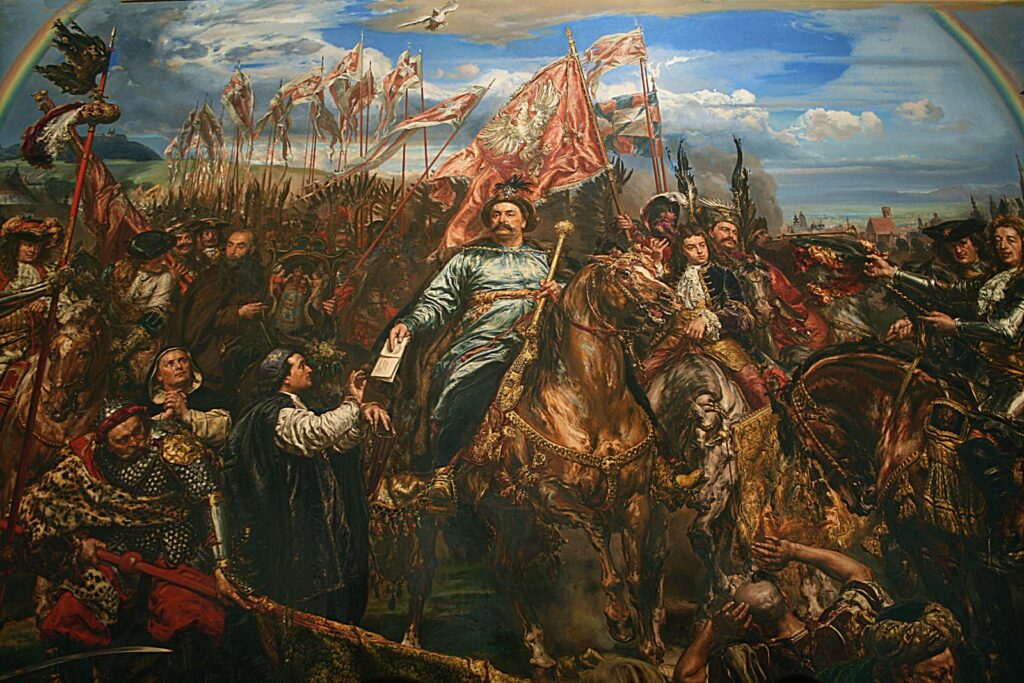
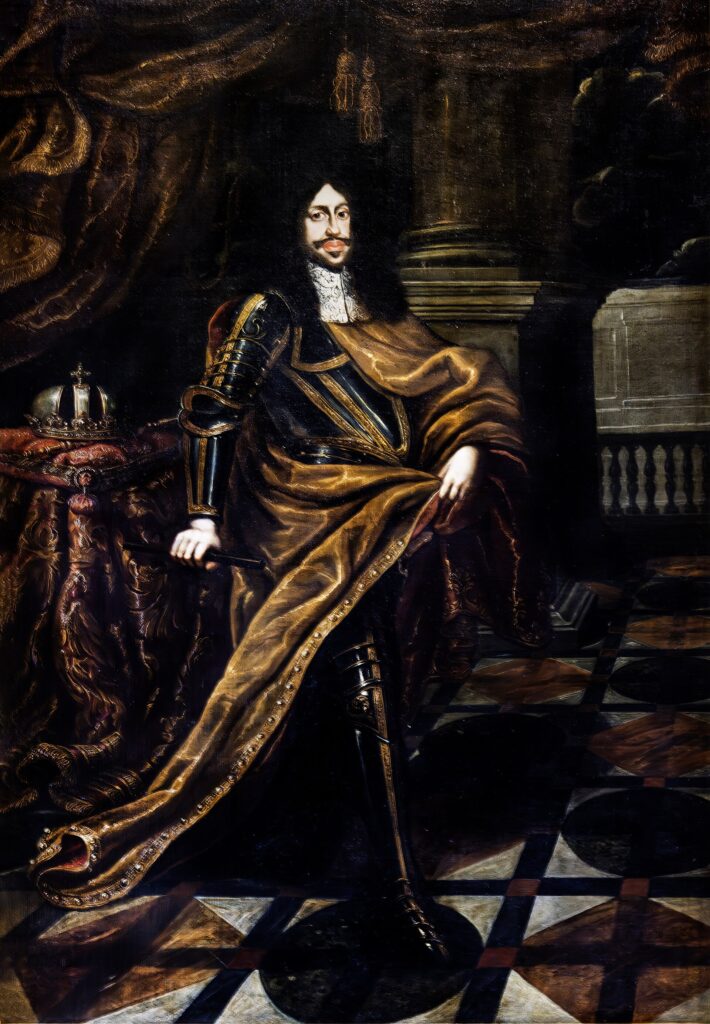
A 20-year peace between Emperor Leopold I and the Ottoman Empire, signed in 1664, was due to run out. In August 1682 the Ottomans decided on war, and Leopold rushed into alliances with Bavaria, Saxony and, on March 31, 1683, Poland. Pope Innocent XI sent money (Wien Geschichte Wiki). The Ottoman campaign was led by Grand Vizier Merzifonlu Kara Mustafa Pasha, and it was encouraged by Imre Thököly, leader of the anti-Habsburg Hungarian rebels (Britannica).
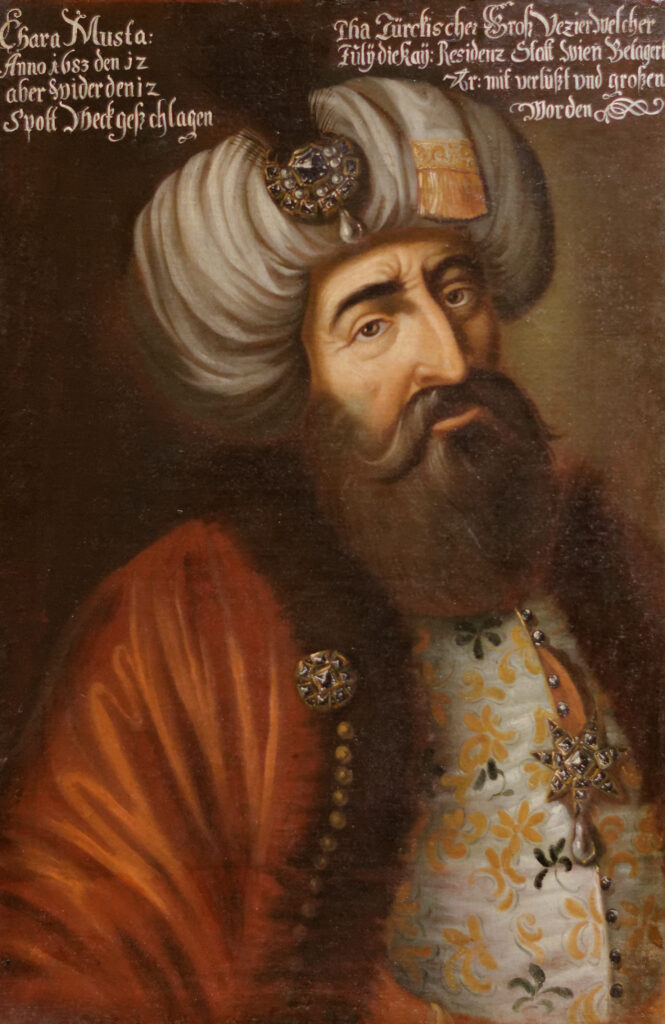
The army left Edirne at the end of March 1683. The City of Vienna’s history wiki puts the whole force at about 200,000, including some 80,000 in the baggage train. It passed Belgrade in May and Győr (Raab) by July 1 (Wien Geschichte Wiki).
The march: massacres and slave raids in Lower Austria
Ahead of the main army rode Crimean Tatar horsemen and Ottoman akıncı raiders, light cavalry whose job was to terrorize the countryside, cut supply lines and take plunder and captives. By July 3 they were already at Bruck an der Leitha. As the imperial garrisons pulled back, unwalled villages had only two choices: flee into the forests or into a fortified town (Museum Niederösterreich, Kriegsschauplatz Niederösterreich). Wealthier Viennese fled the city too; by the museum’s account, reportedly around 60,000.
- Hainburg, July 12: the walled town on the Danube was stormed. An Ottoman campaign diary kept by the army’s master of ceremonies records that the common people who stayed and fought were all put to the sword, that severed heads were rolled in the dust before the grand vizier, and that prisoners brought in alive were beheaded too. Reported death tolls differ sharply between sources; the museum’s historian, Elisabeth Vavra, thinks the most likely figure is 3,432 (contested; the period figures diverge, probably from a misreading) (Museum Niederösterreich).
- Baden: most of the population was killed or carried off. A damage survey that autumn recorded 848 victims and 328 survivors (Museum Niederösterreich).
- Mödling: townspeople who hid in the lower church of St. Othmar and the crypt of its charnel house were found and killed there (Museum Niederösterreich).
Perchtoldsdorf, July 16, 1683
The market town of Perchtoldsdorf, just south of Vienna, held out for days in its fortified church. Low on ammunition, the townspeople agreed to surrender in exchange for a ransom. The sum demanded was 6,000 gulden, bargained down to 4,000. In the agreed ceremony, the town judge, Adam Strenninger, and his daughter, dressed in white, handed over the money and the keys. The defenders were then made to come out one by one to be disarmed and listed. Then the killing started (Austrian Academy of Sciences, Türkengedächtnis: Perchtoldsdorf). Strenninger was murdered first. The disarmed men were cut down in the market square; children and young women were spared to be sold as slaves, and the town was plundered and burned (Museum Niederösterreich).
- The toll: the more credible accounts give 300 to 400 dead, about a sixth to a fifth of the population (Austrian Academy of Sciences, citing the historian Silvia Petrin) (source); the town’s own history agrees on a sixth to a fifth (Marktgemeinde Perchtoldsdorf). The regional museum’s account says about 500 men (source). A 1783 centenary notice in the Wiener Zeitung spoke of 3,500 dead (period commemorative figure, not credible) (source).
- An eyewitness: Balthasar Kleinschroth, a priest from Heiligenkreuz Abbey (a Christian witness who lost relatives there), passed through that autumn and wrote that he saw more than 300 dead lying in the square, the town judge still recognizable in his green silk stockings, a little girl dead at the church door, and burned bodies piled inside the church and its tower (Museum Niederösterreich).
- The other side’s account: the Ottoman master of ceremonies noted only that the town had been taken by a customary ruse, müdara, feigned friendliness, and wondered at how easily the Christians had been fooled (Museum Niederösterreich).
- The captives: survivors were marched off in iron fetters with little food or water. A few, like the chronicler Wenceslaus Frey, survived and came home; some returned only years or decades later (Austria-Forum; German Wikipedia, Perchtoldsdorf).
How many were killed or enslaved
- Slaves taken: a contemporary manuscript printed in Karl August Schimmer’s The Sieges of Vienna by the Turks (1879) lists 57,220 Christians carried off into slavery from Hungary, Austria and neighboring districts in 1683: 6,000 old men, 11,215 women, 14,922 unmarried women aged 26 or under (204 of them noble), and 26,093 children, the oldest 4 or 5 years old. The same list counts 4,092 villages and hamlets burned around Vienna and 871 around Pressburg (Schimmer, appendix no. 4, p. 172). This is a period Christian document with no stated method; treat it as an order of magnitude, not an exact count.
- Killed or taken, combined: the Polish historian Dariusz Wybranowski, working from Ottoman chronicles, writes that the Ottoman army and its Tatar allies used terror against the population: prisoners of war and civilians were executed, women and children were taken as slaves, soldiers were rewarded for captives who were later murdered, and there was mass looting and rape of women and boys. He cites calculations that between 80,000 and more than 100,000 people were killed or taken captive (Balcanica Posnaniensia, 2024). Estimate; no separate civilian death count exists.
The siege: two months of mines and assaults
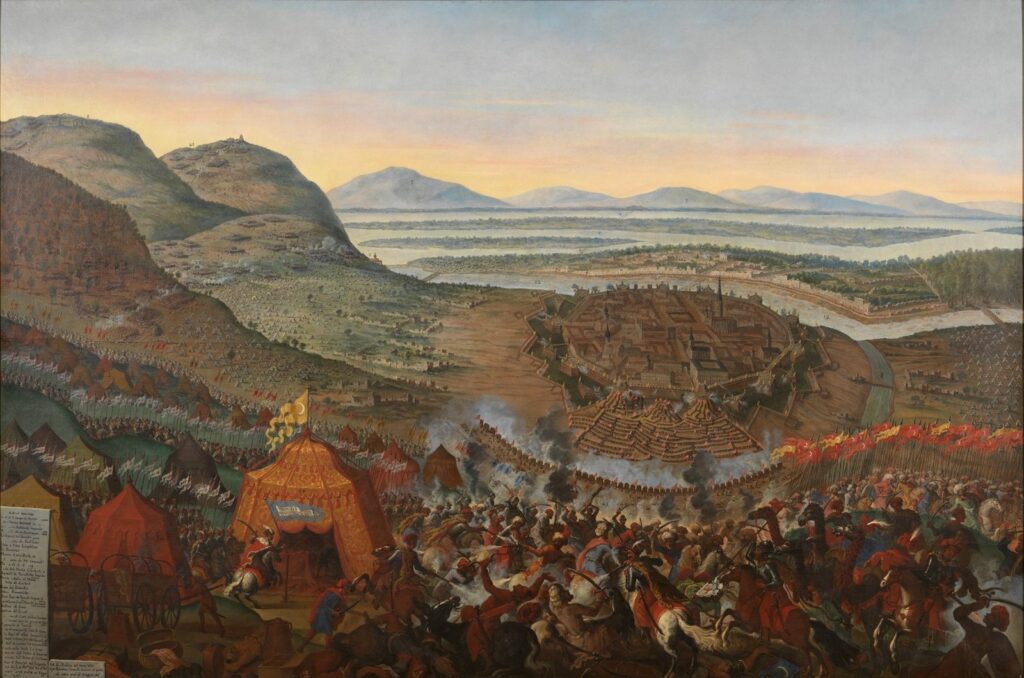
The imperial court fled Vienna on July 7. On July 13 the city commander, Count Ernst Rüdiger von Starhemberg, ordered the suburbs burned so they could not shelter the attackers. On July 14 the Ottomans closed the ring around the city, and Kara Mustafa’s tent went up on the Schmelz, west of the walls (Wien Geschichte Wiki). Starhemberg refused the demand to surrender.
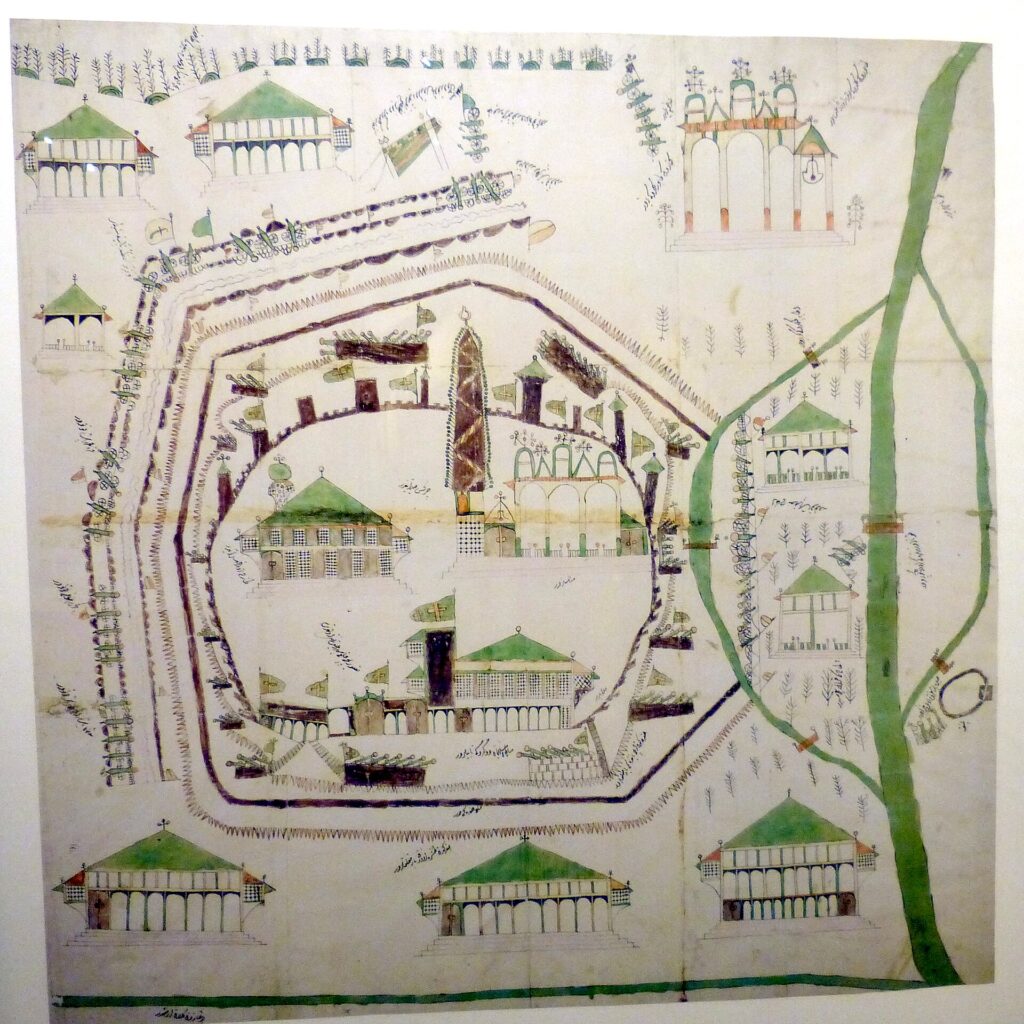
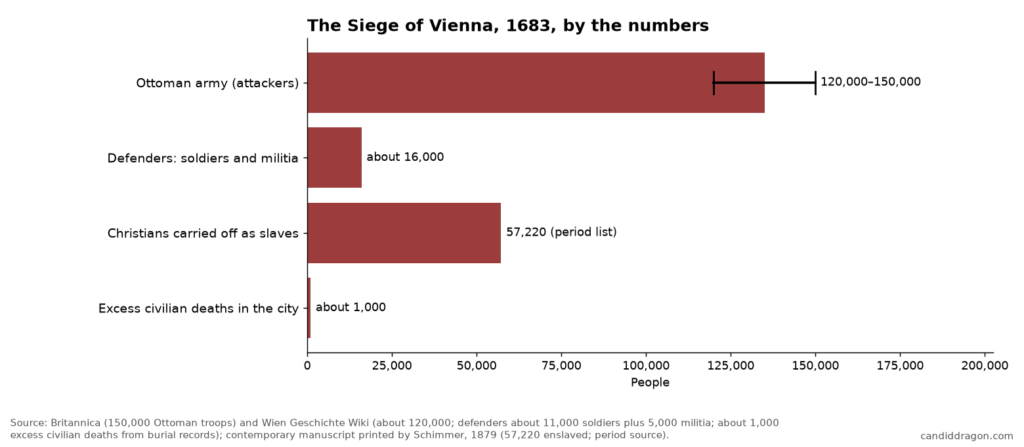
- The defenders: about 11,000 imperial soldiers plus about 5,000 citizen militia and volunteers, by the city history wiki’s count (source). Other sources give 15,000 to 20,000.
- The attackers: Britannica gives 150,000 Ottoman troops; Vienna’s history wiki says about 120,000. Encyclopedia.com notes that only about 40,000 were regulars of the standing army, and that the Ottomans lacked heavy siege artillery (source).
- The method: trenches and mines. The Ottomans had about 5,000 sappers and far more experience at mine warfare. They blew mines under the walls between the Burg and Löbel bastions on July 23 and 25, August 12, and September 4, when a mine wrecked the Burg bastion (Wien Geschichte Wiki). The defenders, led by the military engineer Georg Rimpler, dug countermines with miners brought in from Tyrol, and every householder in the city had to post a man in his cellar to listen for digging. (German Wikipedia, citing Kurt Rumpler). Each blast was followed by Janissary assaults into the breach and hand-to-hand fighting in the rubble.
- How close it came: Britannica says the Ottomans are generally believed to have come closer to taking Vienna than in the first siege of 1529 (Britannica). By September 10 and 11, Starhemberg was barricading the streets behind the Löbel bastion.
Inside the walls: disease and the dead
Dysentery broke out in the city in the summer of 1683. It struck Starhemberg himself (ill from August 9 to 19) and killed Mayor Johann Andreas von Liebenberg on September 9. Contrary to popular retellings, the city’s own history wiki says there were no serious food shortages during the siege; disease and combat, not starvation, did the killing. In early September, as the walls gave way, patrols searched houses to press able-bodied men into the defense (Wien Geschichte Wiki).
- Military dead: of roughly 16,000 fighters, about 5,000 of them townspeople, an estimated 5,000 did not survive the siege (Wien Geschichte Wiki). Other estimates say the garrison and population lost up to half their number to all causes (contested) (Wikipedia summary of the literature).
- Civilian dead: comparing burial records with the same months of 1682, the city counts only about 1,000 excess civilian deaths during the siege, though the death-inspection records missed many soldiers (Wien Geschichte Wiki).
- Ottoman losses in the siege: an Ottoman casualty list captured after the battle gives 48,544 losses up to September 10, including 16,000 laborers who were not combatants (period Ottoman document; scholars disagree on whether it counts deaths or all losses). The Habsburg envoy Kunitz, held in the Ottoman camp, reported about 20,000 by the end of August (enemy-side estimate) (Wikipedia summary, citing Şakul and Ágoston).
The relief army
Pope Innocent XI could not persuade Louis XIV of France to help; he backed Poland with a large subsidy instead (Britannica). Sobieski’s Polish army, about 21,000 strong and mostly cavalry, marched from Kraków and reached the Danube in three weeks (Wilanów Palace Museum). The relief force gathered on the Tulln field: Imperial troops under Duke Charles of Lorraine, Bavarians, Saxons, Franconian and Swabian contingents, and the Poles. Estimates of its size run from about 65,000 to 80,000.
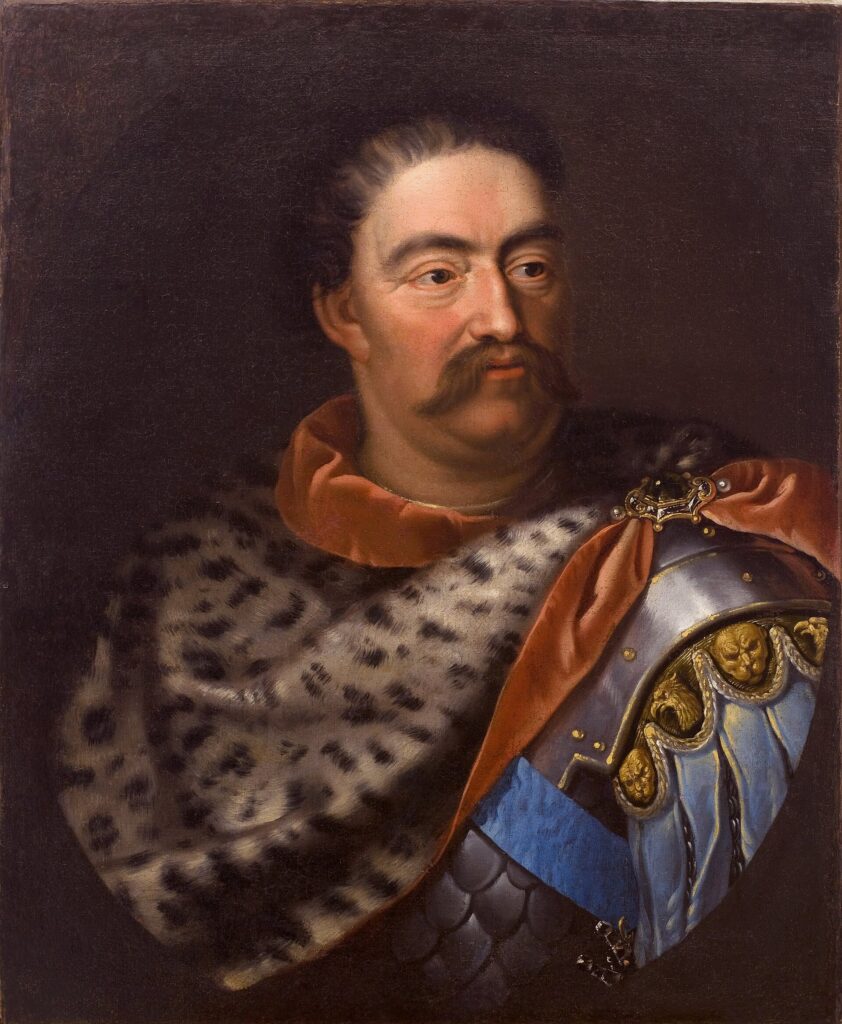
At a war council at Stetteldorf on September 3 or 4, the commanders chose to cross the Vienna Woods. The Imperial troops took the left along the Danube, the German princes the center, and the Poles the hard country on the right. On September 11 they held the heights and lit fires to signal the city (Wien Geschichte Wiki).
September 12: the Battle of Kahlenberg and the winged hussars
The day began with a Mass celebrated by the Capuchin friar Marco d’Aviano (Wien Geschichte Wiki). Fighting opened early on the left, where Kara Mustafa expected the main blow. Holding part of his army in the siege trenches, he faced the relief army with the rest. The Poles came into action around noon and fought their way down the hills.
At about 4 p.m., according to the Wilanów Palace Museum, Sobieski sent a test charge of hussars to probe the ground. It took heavy losses, and its commander, Stanisław Potocki, was killed, but it showed the way was open. Then about 20,000 cavalry, with the armored Polish hussars at their head, charged, “one of the greatest charges in world history,” in the museum’s words (Wilanów Palace Museum). The hussars wore wooden frames set with feathers on their backs, and they went in with long lances. The Ottoman lines broke.
Britannica says the battle lasted 15 hours (Britannica). As his army broke, Kara Mustafa ordered the guns in the trenches silenced, the equipment destroyed and the captives in the camp killed, according to Warfare History Network’s account; its writer describes Christian children found among hundreds of butchered prisoners (Warfare History Network). The military historian David Zabecki writes that the Ottomans executed thousands of Christian prisoners before they fled (HistoryNet). No reliable count of the murdered captives exists; “hundreds” to “thousands” is the reported range. The grand vizier escaped with the Holy Banner and his treasury. Sobieski wrote to the pope from the captured tents, adapting Julius Caesar: “Venimus, vidimus, Deus vicit,” or “We came, we saw, God conquered” (Wilanów Palace Museum).
The toll on September 12
- Ottoman army: about 15,000 dead and wounded plus 5,000 prisoners (HistoryNet); Spencer Tucker gives 8,000 to 15,000 dead and 5,000 to 10,000 captured, and the Polish historian Leszek Podhorodecki about 15,000 dead (Wikipedia summary, citing Tucker and Podhorodecki). Range: 8,000 to 20,000 casualties; no scholarly consensus on a single figure.
- Relief army: about 3,500 dead and wounded, 1,300 of them Poles (Podhorodecki), up to about 4,500 (Tucker; HistoryNet) (HistoryNet; Wikipedia summary).
- Civilians: no count exists for captives killed in the camp (see above).
The plunder: it took the victors and the Viennese a week to strip the Ottoman camp (Britannica). Sobieski wrote to his wife of “treasures unheard of,” tents, sheep, cattle and camels, and insisted that the Poles get first pick, which left the German and Austrian troops resentful. The Protestant Saxons, insulted by Catholic locals, went home without their share (Wikipedia summary, citing Sobieski’s letters).
What followed
- Kara Mustafa: he fell back to Buda and then Belgrade. There, on December 25, 1683, on the orders of Sultan Mehmed IV, he was strangled with a silk cord, the standard execution for Ottoman grandees. His head was skinned, the skin stuffed and shown to the sultan at Edirne on January 13, 1684 (Wien Geschichte Wiki). A 1684 English pamphlet describes the scene: he read the sultan’s warrant, knelt to pray and was strangled with a silk rope (A Short but True Account, 1684; period source). Britannica says instead that he was beheaded and his head brought to the sultan on a silver dish (Britannica); the accounts agree he was killed on the sultan’s order and his head sent to him. When imperial troops took Belgrade in 1688, musketeers were caught looting his grave; his skull was taken to Vienna, kept in the city arsenal and in 1886 moved to the city’s history museum, today’s Wien Museum (Wien Geschichte Wiki).
- The Holy League: in 1684 the emperor, Poland and Venice formed a Holy League against the Ottomans under the pope’s patronage; Russia joined later. The war lasted 16 years and was brutal on all sides. When the Holy League stormed Buda in September 1686, the troops sacked the city and killed Muslims and Jews alike. Of Buda’s roughly 1,000 Jews, who had fought alongside the Ottoman garrison, about a quarter were killed in the shelling and the sack and about 500 were taken captive to be ransomed (YIVO Encyclopedia). The survivor Isaac Schulhof, whose wife was killed and whose eight-year-old son died in captivity, recorded the looting and massacre in his Megillat Ofen (Encyclopedia.com). Muslim deaths at Buda are usually given as over 3,000, but we could not confirm that figure in a scholarly source.
- Carlowitz, 1699: after Prince Eugene of Savoy’s victory at Zenta in 1697, the Treaty of Carlowitz on January 26, 1699 gave Austria all of Hungary except the Banat of Temesvár, plus Transylvania. Britannica calls it the first time the Ottomans agreed to negotiate with a coalition of European nations and to admit defeat (Britannica).
- Vienna itself: with the Ottoman threat gone, the city entered a building boom. Much of baroque Vienna dates from the decades after 1683 (Wien Geschichte Wiki).
Myth and memory
The siege has been retold for more than three centuries. Vienna’s own history wiki notes that the early commemorations were mostly the court’s work: medals, prints and yearly thanksgiving processions. Later the memory was put to political use, especially under Austria’s authoritarian government of the 1930s (Wien Geschichte Wiki). Popular tales that the croissant or Vienna’s coffeehouses were born of the siege are later legends without solid contemporary evidence, so we leave them out of the record above. Troop numbers and death tolls deserve the same caution: sources disagree by tens of thousands, period figures were often inflated for effect, and we have given the ranges and flagged the period sources. Perchtoldsdorf is a good example: its suffering was real, but the 3,500 dead claimed a century later is about ten times what the records support.
Why it matters
Vienna is usually told as a story of a heroic charge. That is true, but it leaves out most of the people who suffered: the villagers of Lower Austria murdered after they surrendered, the tens of thousands of women and children marched off to slave markets, the defenders who died in the mine galleries and of dysentery, the captives killed in the Ottoman camp, and the Jews and Muslims slaughtered when Buda fell three years later. Leaving that out does not make the victory greater. It makes the history false.
Our view (opinion): Vienna in 1683 was won by a coalition: Austrians, Poles, Bavarians, Saxons and other Germans who had often fought each other, held together by a pope’s money and a common danger. A stubborn garrison bought the time, and a cavalry charge finished the work. The campaign also shows what an empire’s war of conquest meant for ordinary people in its path: surrender bought no safety, and children were counted as plunder. The victors were not innocent either, as Buda showed. Remembering both is the price of telling it honestly.
Patterns to recognize (analysis)
Analysis and opinion. Tactics from the siege and its aftermath that are worth recognizing anywhere:
- Terror against civilians to break a region’s will to resist.
- Taking people as plunder: enslavement treated as a reward of war.
- Public display of punished enemies as a warning to others.
- Collective reprisal: punishing a whole city’s population for the side it was on.
- Inflated commemorative numbers that grow with each anniversary retelling.
- Framing a war as a clash of civilizations, which turns every enemy civilian into a target.
These are general warning signs drawn from the history above. They describe tactics, not any modern party or person.
Sources
- Encyclopaedia Britannica, Siege of Vienna (1683) (Factual)
- Wien Geschichte Wiki (City of Vienna), Zweite Türkenbelagerung (1683) (Factual)
- Wien Geschichte Wiki, Kara Mustafa (Factual)
- Museum of King Jan III’s Palace at Wilanów, Battle of Vienna (Factual)
- Encyclopaedia Britannica, Treaty of Carlowitz (Factual)
- Encyclopedia.com, Vienna, Sieges of (Factual)
- Museum Niederösterreich (Elisabeth Vavra), Kriegsschauplatz Niederösterreich, 2016 (Factual)
- Austrian Academy of Sciences, Türkengedächtnis: Perchtoldsdorf (Factual)
- Marktgemeinde Perchtoldsdorf, History (Factual)
- Austria-Forum, Schicksalsorte: Perchtoldsdorf (Factual)
- Karl August Schimmer, The Sieges of Vienna by the Turks (1879), Internet Archive (Factual)
- Dariusz Wybranowski, Balcanica Posnaniensia 31 (2024), Kara Mustafa’s army and the population of Hungary and Austria, 1683 (Factual)
- David T. Zabecki, HistoryNet, Hallowed Ground: The Kahlenberg, Vienna (Factual)
- Warfare History Network, The 1683 Battle of Vienna (Factual)
- Wikipedia, Battle of Vienna (used for its summary of Tucker, Podhorodecki, Şakul and Ágoston) (Factual)
- Wikipedia (German), Zweite Wiener Türkenbelagerung (Factual)
- Encyclopaedia Britannica, Merzifonlu Kara Mustafa Paşa (Factual)
- A Short but True Account of the Death of the Grand Visier (1684), University of Michigan Library (Factual)
- YIVO Encyclopedia of Jews in Eastern Europe, Budapest (Factual)
- Encyclopedia.com (Encyclopaedia Judaica), Schulhof, Isaac (Factual)
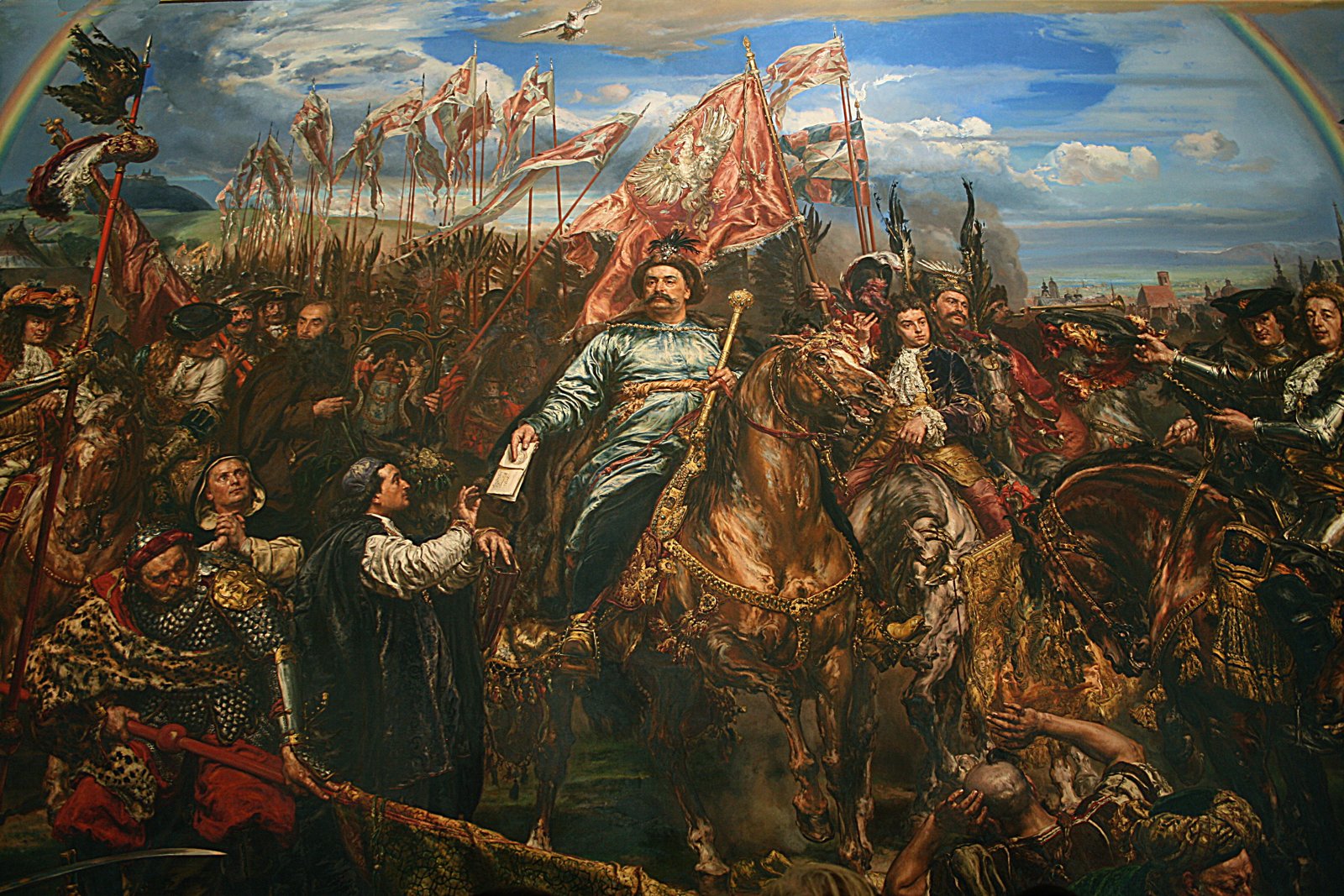
Images are public domain, credited in each caption. Featured image: Sobieski at Vienna by Jan Matejko, 1883, Vatican Museums, photo by Jean-Pol Grandmont; public domain, via Wikimedia Commons. See all image credits.