

Quick take
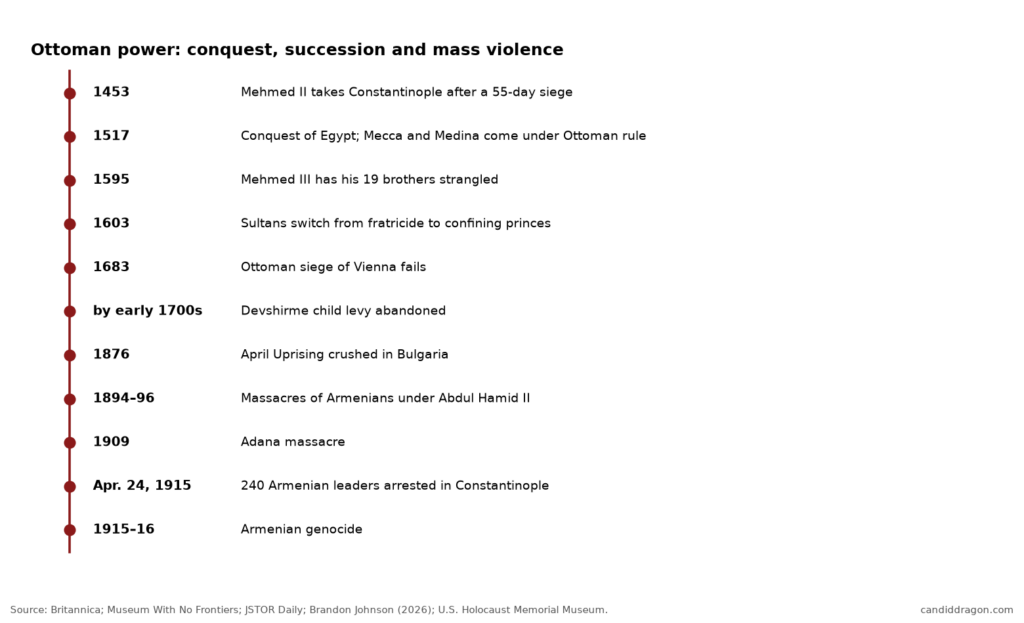
- The Ottoman dynasty ruled for centuries by conquest, by taking Christian boys as a human levy (the devshirme) to staff its army and state, and by a law that let a new sultan kill his brothers.
- Its legitimacy rested on victory and religion: Mehmed II claimed to be the heir of Rome after taking Constantinople in 1453, and after 1517 the sultans guarded Mecca and Medina and took the title of caliph.
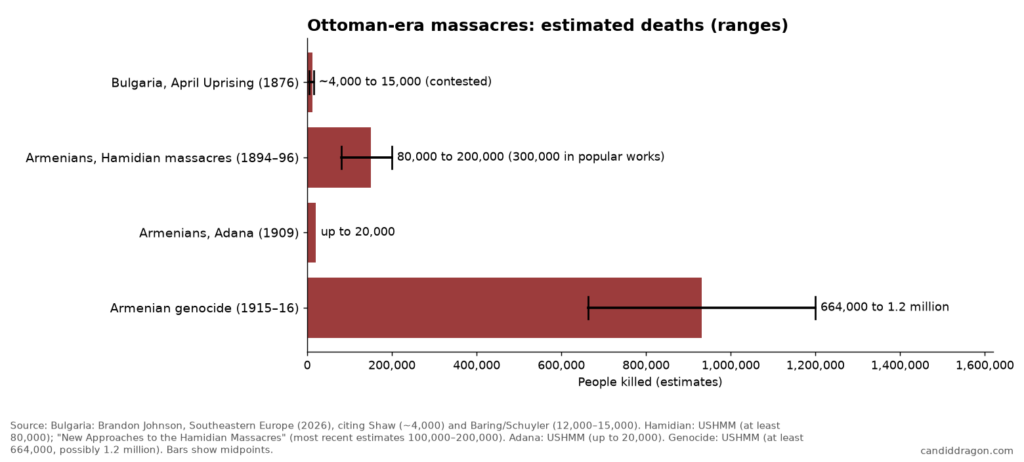
- In its last decades the state turned on its own subjects: at least 80,000 Armenians killed in 1894–96, up to 20,000 at Adana in 1909, and 664,000 to 1.2 million in the genocide of 1915–16 (USHMM).
Our rating: ✅ Confirmed  Factual
Content warning: this post describes massacres, executions of children and genocide in plain terms.
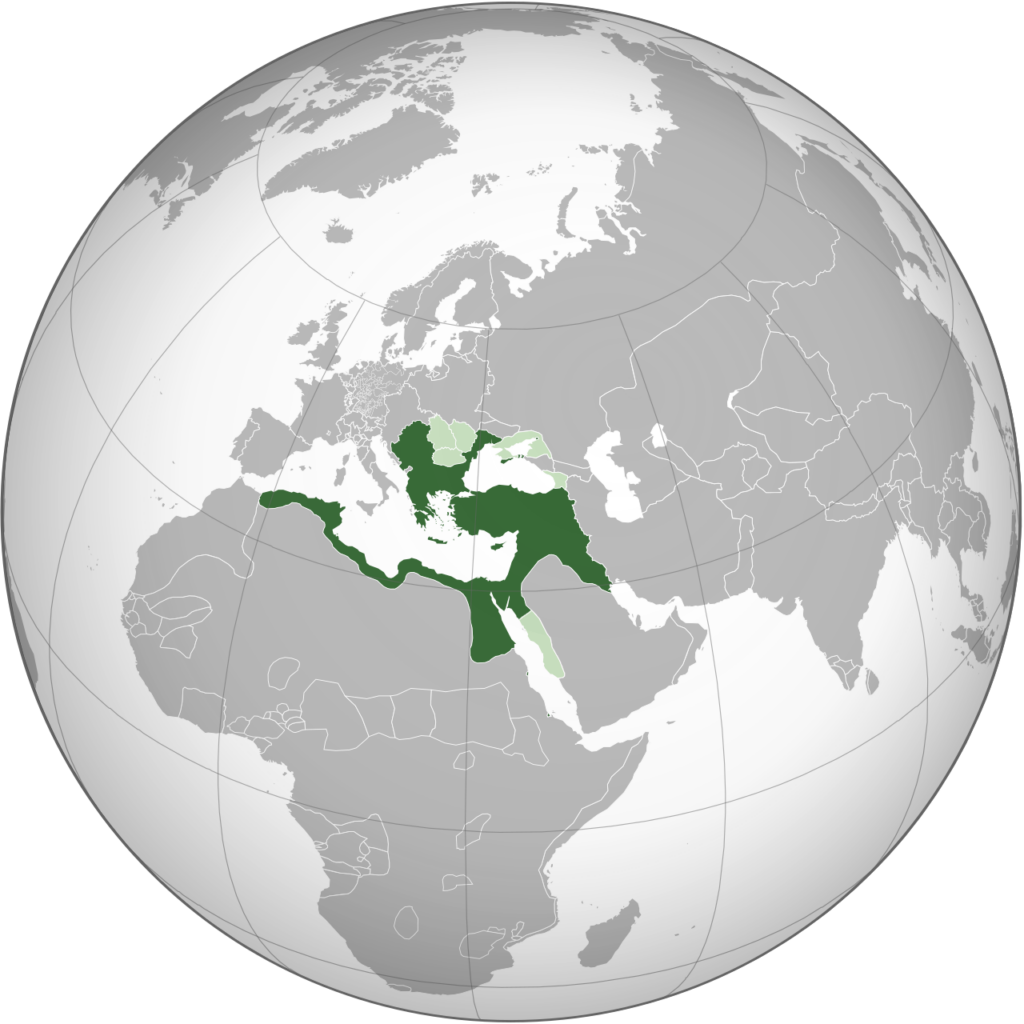
The Ottoman Empire was one of the longest-lasting states in history, stretching at its height from Hungary to Arabia. This post looks at how its rulers took and held power, and at the violence that came with it, from the sack of Constantinople to the destruction of the Armenians.
Conquest: Constantinople, 1453
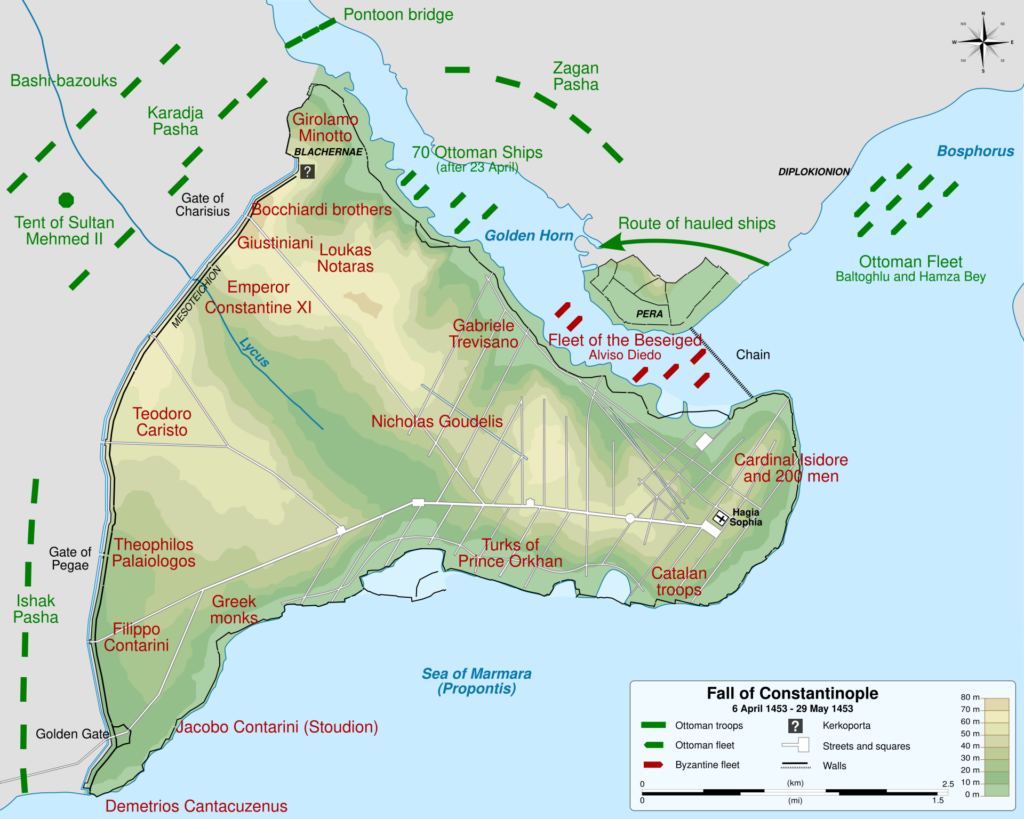
On May 29, 1453, Sultan Mehmed II took Constantinople after a 55-day siege, with an army of 60,000 to 80,000 men and 69 cannon against a city whose population had fallen to 40,000–50,000. The last Byzantine emperor, Constantine XI, died in the fighting. Mehmed permitted an initial period of looting that destroyed many Orthodox churches, then rode to Hagia Sophia, converted it into a mosque and ordered the looting stopped; Britannica says the city was pillaged for three days (Britannica). Afterward, Britannica notes, Mehmed’s army “largely refrained from slaughtering commoners and nobility,” ransoming many and executing mainly those who fought on after the surrender.
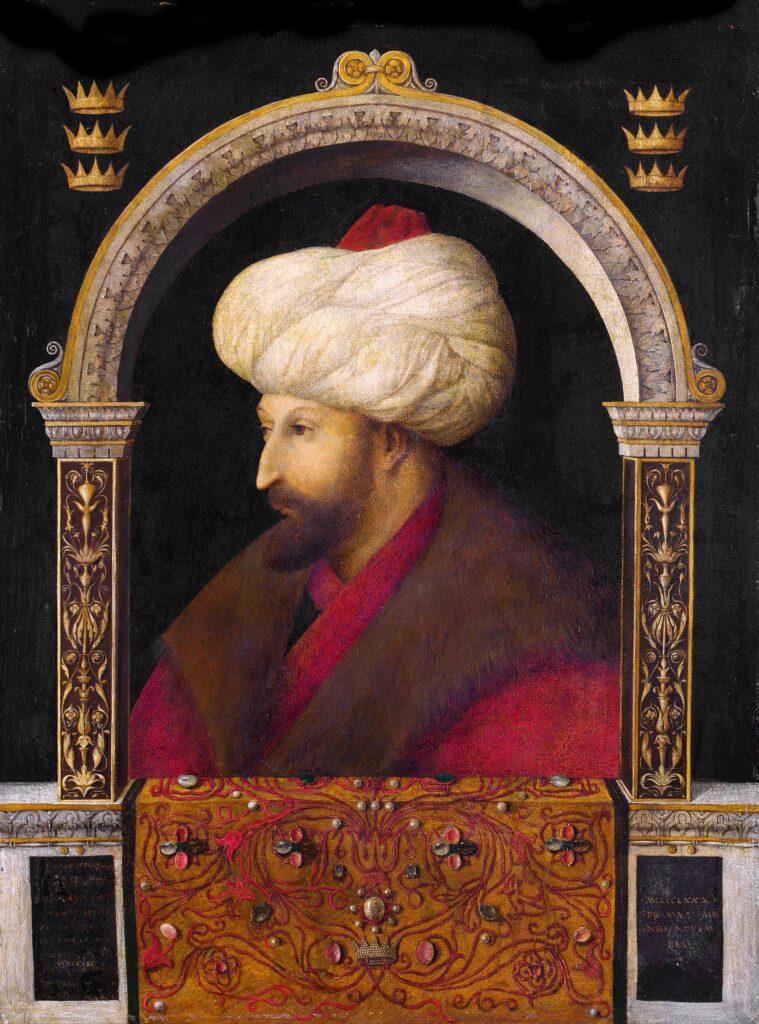
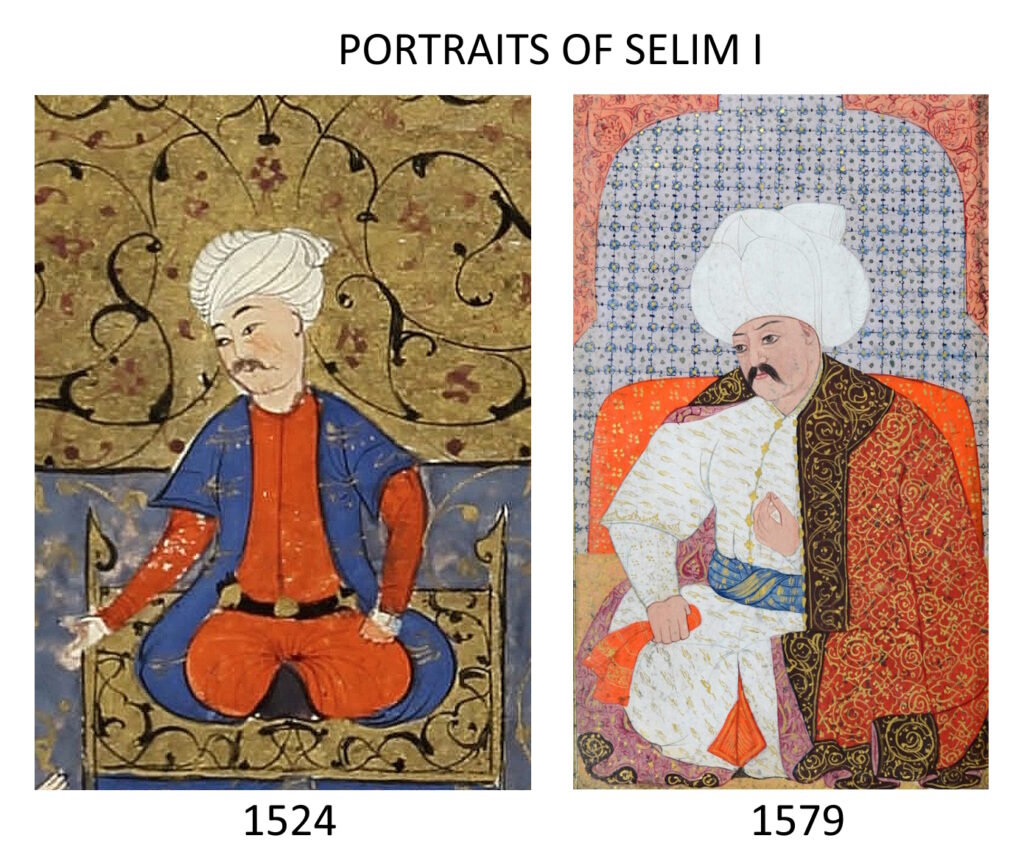
Legitimacy: Mehmed began to call himself Kayser-i Rûm, “Caesar of Rome,” heir to the Roman Empire and all its historical lands, and used that claim to justify campaigns that subjugated the Balkans and Greece (Britannica).After Sultan Selim I conquered Egypt in 1517, Mecca and Medina became part of the empire “and the sultans took the title of Caliph,” with their generous support of the holy sites as proof of their role (Museum With No Frontiers).
The devshirme: taking boys as tribute
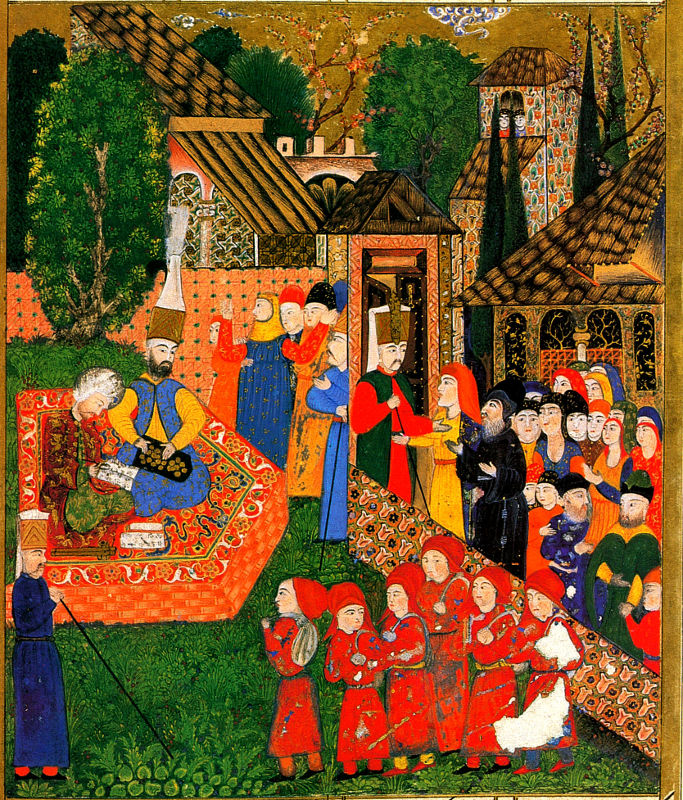
The devshirme (devşirme) “drafted Christian children from the Balkan provinces into Ottoman service. They were converted to Islam and were trained to become soldiers and administrators” (Britannica). Legally they were slaves, but they could rise to great power: they filled the elite Janissary infantry and the highest offices of state. Muslims were excluded, so the corps owed everything to the sultan. Some Christian families wanted their sons taken for the chance of a better life; others did not want to lose their children, and the system caused unrest (Britannica). The Janissaries were bound by strict rules including celibacy, and by the early 18th century the levy had been abandoned (Britannica). No reliable total of boys taken exists.
The law of fratricide
Without a fixed rule of succession, every son of a sultan could claim the throne, and civil wars between brothers were a constant danger. Mehmed II wrote the solution into law: “The majority of legists have declared that those of my illustrious children and grandchildren who shall ascend the throne shall have the right to execute their brothers” (JSTOR Daily). Because royal blood was not to be shed, the method was strangulation.
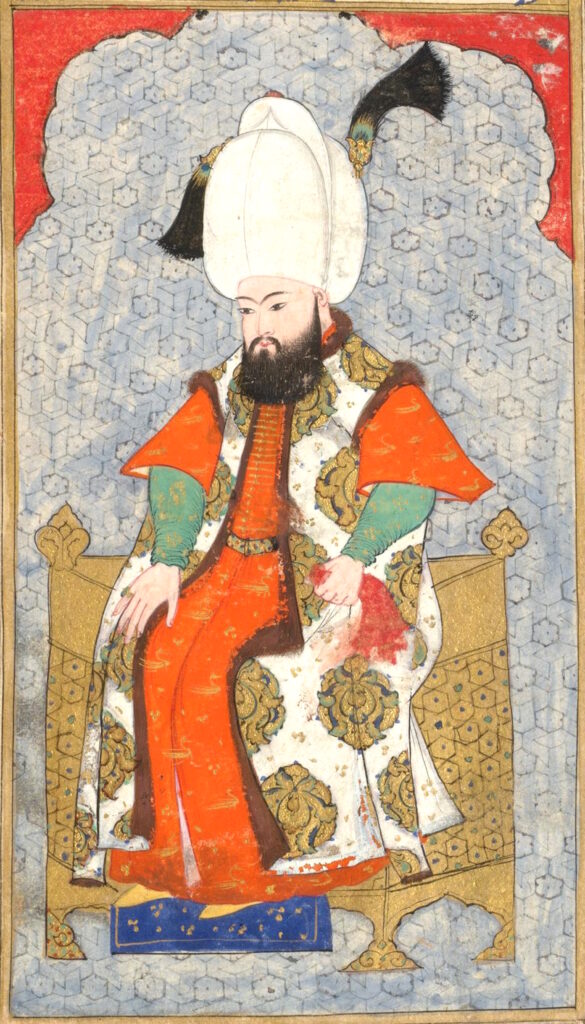
The most notorious case came in 1595. When Mehmed III took the throne, he called his nineteen brothers to the palace; in the account retold by JSTOR Daily, he told them they were there to be circumcised, and “one by one, they were throttled with a silken bowstring” (JSTOR Daily). The circumcision detail comes from later retellings. After Mehmed III died in 1603, the dynasty switched from fratricide to confinement: surplus princes over the age of seven were locked in a palace-prison, the kafes (“cage”).
The empire turns on its subjects
As the empire lost territory in the 19th century, its rulers treated Christian minorities seeking autonomy or reform as an internal threat, and irregular forces and soldiers were turned loose on them.
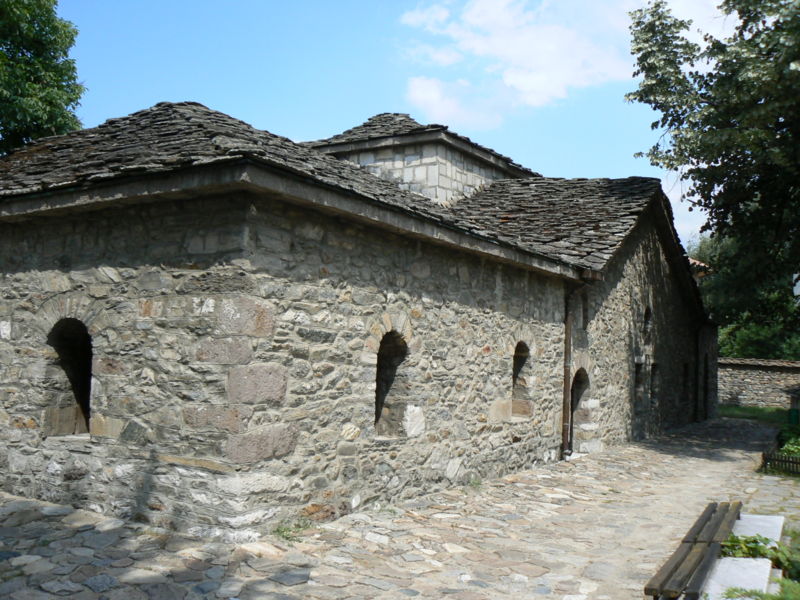
Bulgaria, 1876: after the April Uprising, Ottoman irregulars massacred Bulgarian villagers. The death toll is a textbook case of contested numbers. Early British and American reports put it between 12,000 and 100,000, mostly around 15,000: the British diplomat Walter Baring estimated 12,000 and the American Eugene Schuyler 15,000, the figure Gladstone used in his pamphlet Bulgarian Horrors. The historian Stanford Shaw later argued no more than 4,000 Bulgarian Christians were killed, “and considerably more Muslims,” a claim the historian Brandon Johnson says Shaw made “without evidence” (Brandon Johnson, Southeastern Europe, 2026). Contested; period sources were partisan on both sides.
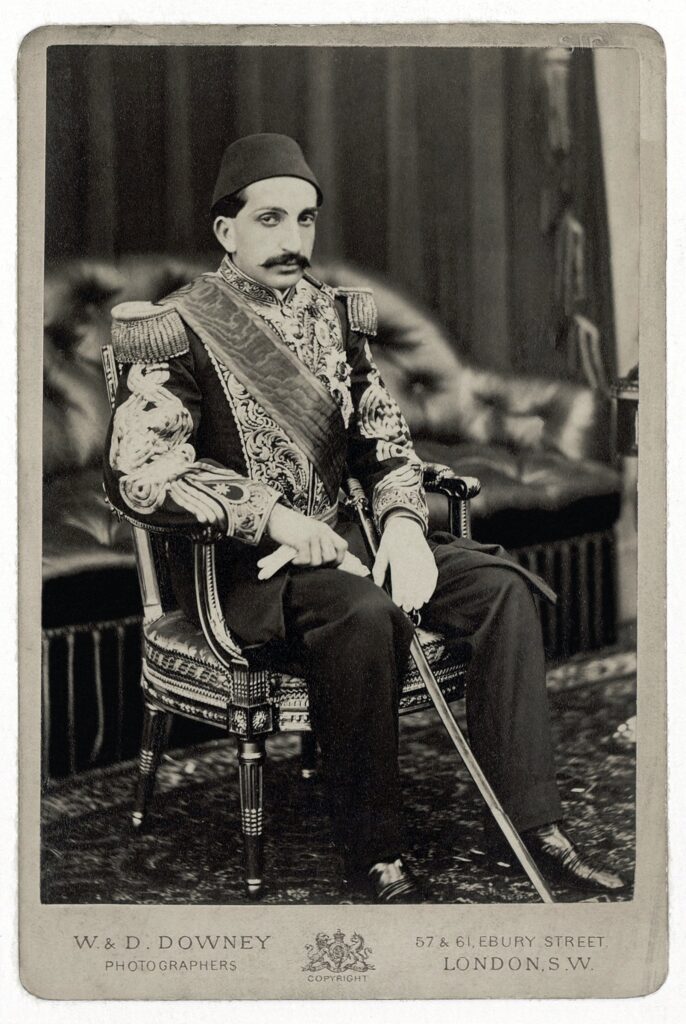
Armenians, 1894–96: under Sultan Abdul Hamid II, a series of massacres killed at least 80,000 Armenians, according to the U.S. Holocaust Memorial Museum (USHMM). The German pastor Johannes Lepsius counted 88,243 dead in 1897. A recent scholarly review finds that most recent estimates fall between 100,000 and 200,000, while the popular figure of 300,000 “is rarely mentioned in critical literature” (New Approaches to the Hamidian Massacres). Contested range.
Adana, 1909: after Armenian demonstrations for autonomy turned violent, “Ottoman soldiers, irregular troops, and civilians murdered as many as 20,000 Armenians in and around the city of Adana; up to 2,000 Muslims were killed by Armenians during the fighting” (USHMM).
The Armenian genocide, 1915–16
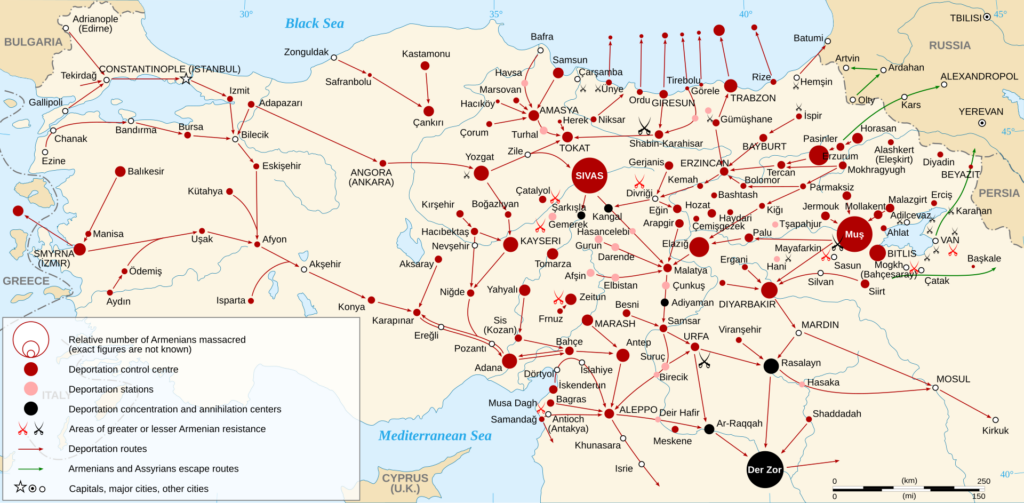
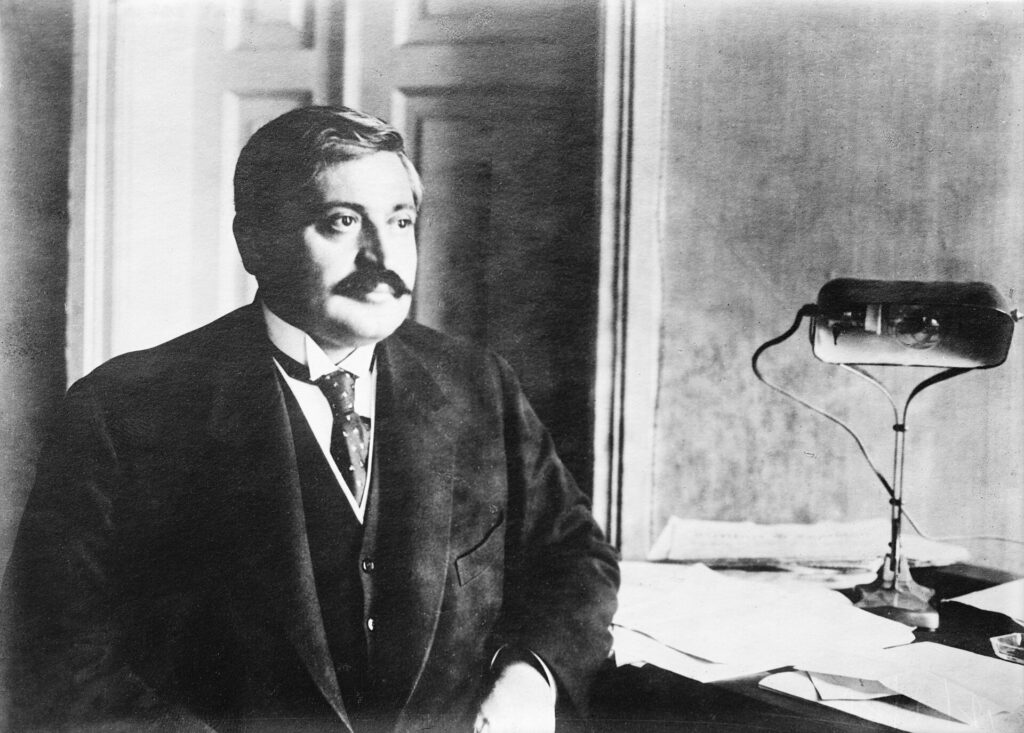
Between 1909 and 1913 the ruling Committee of Union and Progress (CUP) moved toward a strident nationalism. In World War I it used the war as cover. On April 24, 1915, fearing Allied landings at Gallipoli, authorities arrested 240 Armenian leaders in Constantinople and deported them east. The CUP gave orders from the capital and enforced them through its Special Organization and local officials. At the center were Talât Pasha (interior minister), Enver Pasha (war minister), Bahaeddin Şakir (field director of the Special Organization) and Mehmed Nâzım (USHMM).
- The pretext: when challenged by the Allies and the then-neutral United States, the government “explained the deportations as a precautionary measure” against Armenians siding with Russia (USHMM).
- The method: mass shootings; deportation marches to desert camps in what is now Syria and Iraq, moving people “back and forth across the desert” without adequate food, water or clothing; robbery, rape, abduction of women and girls, torture and murder by guards, nomads and local civilians (USHMM). Tens of thousands of Armenian children were taken from their families and converted to Islam (USHMM).
- The toll: “At least 664,000 and possibly as many as 1.2 million died” (USHMM).The range reflects different counting methods and is contested. See also our World War I post.
Why it matters
For centuries the Ottoman state held power through conquest, religious legitimacy and a ruling class bound to the sultan alone. In decline, its rulers increasingly treated a minority as a fifth column, and in 1915 the government organized the destruction of its Armenian subjects under the cover of war and “security.”
Patterns to recognize (analysis)
Analysis and opinion. Tactics from Ottoman history that recur elsewhere:
- Claiming a historic or sacred mandate, such as the inheritance of Rome or guardianship of holy places, to justify conquest.
- A ruling class that owes everything to one ruler, cut off from family and community.
- Legalizing the killing of rivals “for the order of the world.”
- Calling a minority a security threat in wartime, then using “precautionary” deportation as a cover for destruction.
- Using irregular forces and local mobs so the state can deny direct responsibility.
- Fighting over the numbers: inflating or minimizing death tolls to serve a national story, then denying the event itself.
These are general warning signs drawn from the history above. They describe tactics, not any modern party or person.
Bottom line: The Ottomans built a durable empire through conquest, the devshirme and a legalized fratricide, and justified it with Roman and Islamic titles. In the empire’s final decades its rulers massacred Bulgarians and Armenians and then carried out the Armenian genocide, killing between 664,000 and 1.2 million people. The ranges are contested; the events are documented.
The Rise to Power series
How empires and states took power and kept it, told with the same standards for each: propaganda and pretexts, violence, sourced death tolls, and patterns to recognize.
- Rome: Caesar, Augustus and the Fall of the Republic
- The Ottoman Empire: Conquest, the Devshirme and the Fratricide Law (you are here)
- The USSR: Lenin, Stalin, the Terror, the Famine and the Gulag
- The United States: Removal, Slavery, Expansion and Intervention
- Mao’s China: The Great Leap Famine and the Cultural Revolution
Label key
- ✅ Confirmed An official record, or two or more independent outlets, agree.
- ❓ Unconfirmed Reported or claimed, but not yet independently verified.
- ⚠️ Disputed Contradicted by the evidence or by credible sources, or actively contested.
- Factual Straight reporting that holds up across outlets on different sides.
 Leans Left The facts hold, but the coverage tilts left: one-sided, loaded language, missing context or a single anonymous source.
 Leans Right The facts hold, but the coverage tilts right: one-sided, loaded language, missing context or a single anonymous source.
 Likely Propaganda State-run or state-aligned media, a militant press office, a partisan campaign or group, or unverifiable spin.
Each story gets one confidence tag and one source-lean label, plus a one-line Lean note explaining the call. Every side is held to the same standard. More on how we cover the news.
Sources
- Britannica, Fall of Constantinople (Factual)
- Museum With No Frontiers, The Ottomans: Guardians of the Holy Sites (Factual)
- Britannica, Ottoman Empire (student edition) (Factual)
- Britannica, Janissary (Factual)
- JSTOR Daily, Why Ottoman Sultans Locked Away Their Brothers (Factual)
- Brandon D. Johnson, “The Bulgarian Massacres of 1876 Reconsidered Again,” Southeastern Europe (2026) (Factual)
- “New Approaches to the Hamidian Massacres, 1894–7” (Bilkent University repository) (Factual)
- U.S. Holocaust Memorial Museum, The Armenian Genocide (1915–16): In Depth (Factual)
- U.S. Holocaust Memorial Museum, The Armenian Genocide (1915–16): Overview (Factual)
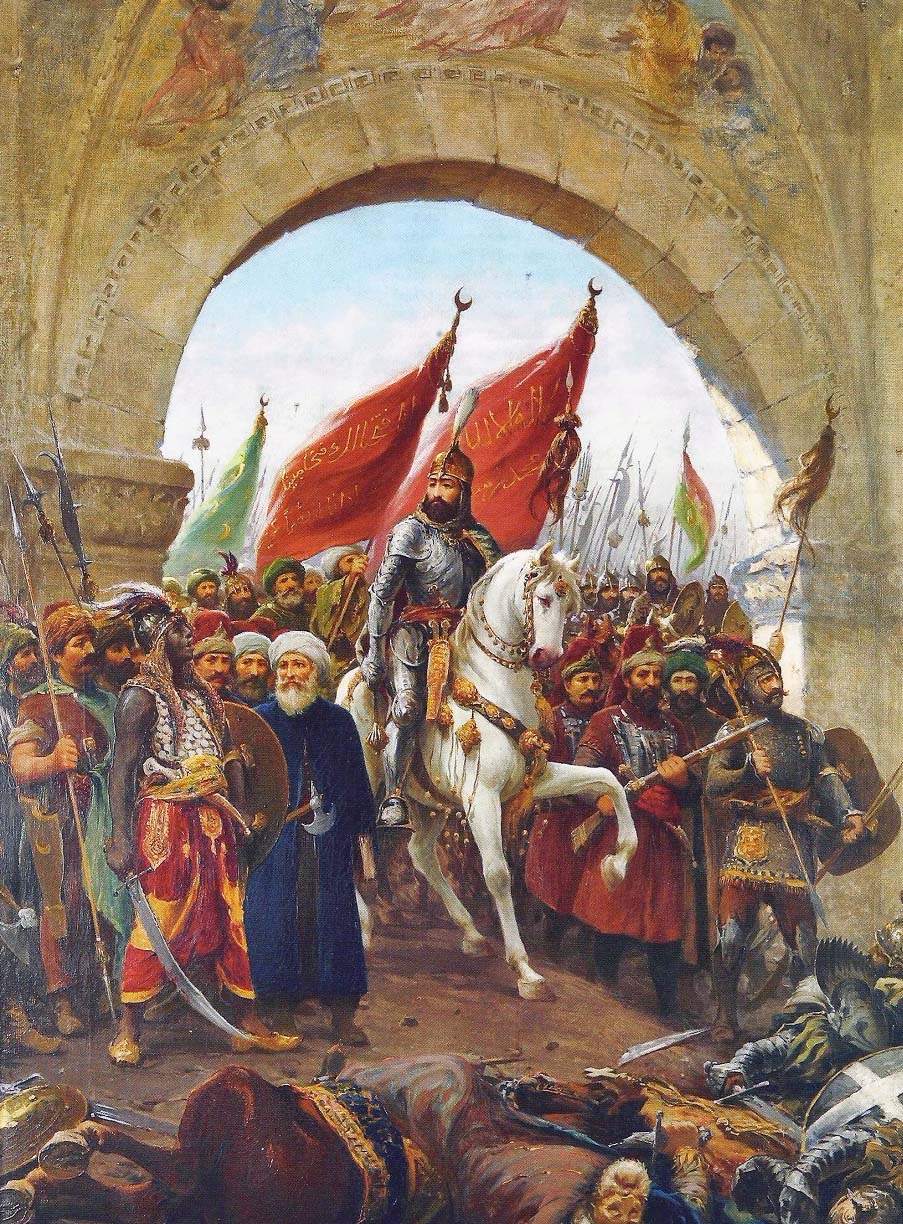
Featured image: Mehmed II Entering Constantinople, by Fausto Zonaro, by Fausto Zonaro. Public domain, via Wikimedia Commons. See all image credits.