

Quick take
- U.S. stocks had a sharp down day: the S&P 500 fell 3.7% and entered a correction, more than 10% below its Oct. 6 record, and the Nasdaq composite fell 5.3% and turned negative for the year.
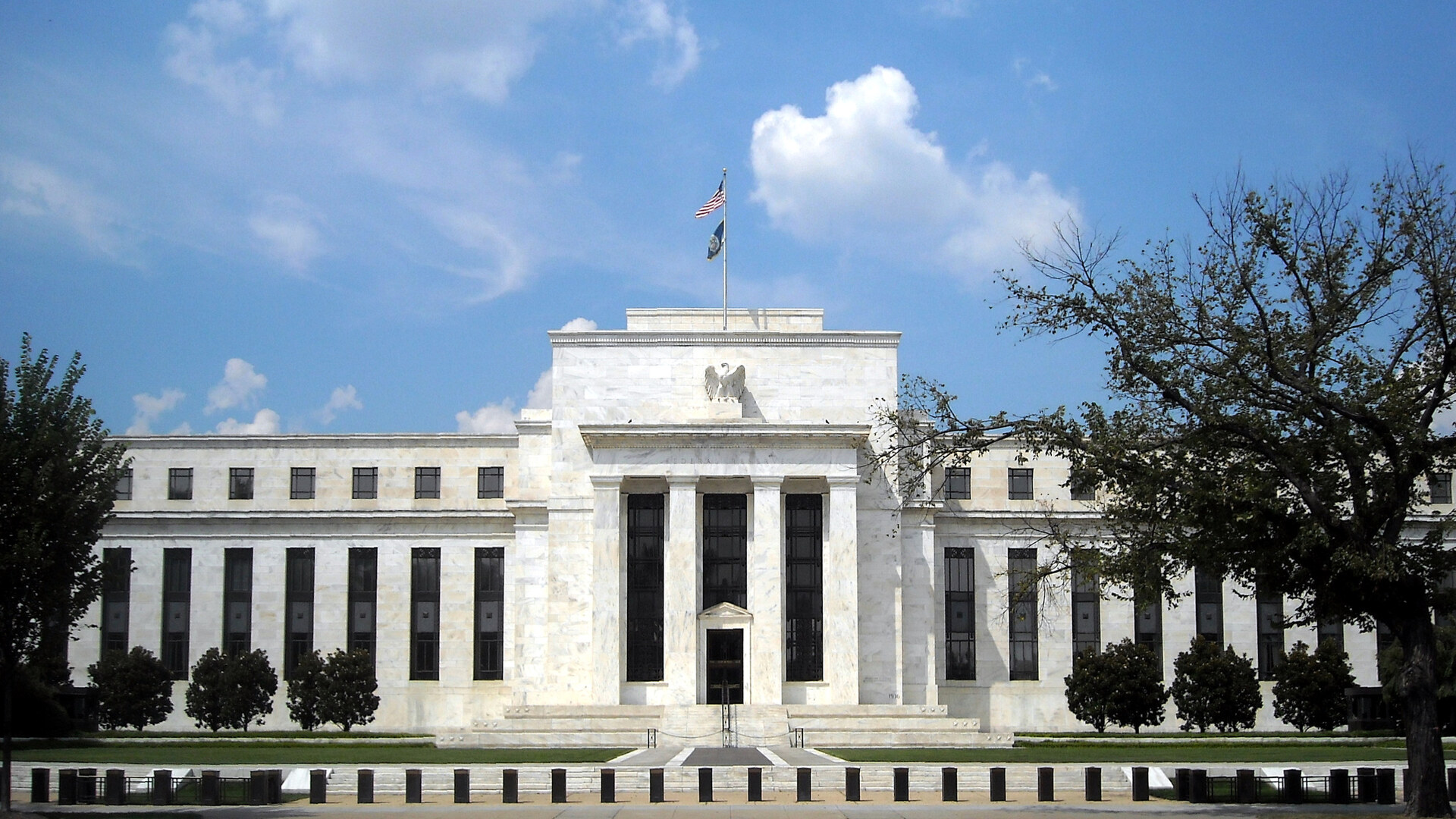
- Fed Governor Lisa Cook said Friday that waiting to raise rates risks falling “behind the curve.” Markets expect a quarter-point hike at the Dec. 8–9 meeting. The average 30-year mortgage rate rose to 7.28%.
- New unemployment claims ticked up to 203,000, still historically low. Continuing claims jumped by 70,000, to 1.763 million.
- AAA’s national average for regular gasoline fell to $3.69 a gallon, down from $4.28 a month ago, ahead of Thanksgiving road travel. Diesel remains near $5.90.
1. Stocks sink; the S&P 500 enters a correction as AI shares lead the drop
✅ Confirmed  Factual Lean note: Closing levels match across the Associated Press and CNBC. The correction label is the standard market definition of a drop of more than 10% from a recent high.
A sell-off in artificial intelligence stocks knocked the major U.S. indexes lower on Friday. The S&P 500 fell 265.44 points, or 3.7%, to 6,910.39, and is now more than 10% below its Oct. 6 record close, which puts it in a correction. The Nasdaq composite fell 1,261.47 points, or 5.3%, to 22,617.73 and is down 2.7% for the year. The Dow Jones Industrial Average fell 949.73 points, or 1.9%, to 48,147.33. For the week, the S&P 500 dropped 8.6%, the Dow 8% and the Nasdaq 10%, the S&P 500’s worst weekly loss in more than 18 months, according to the Associated Press.
What this means for your wallet: A drop like this is a paper loss unless you sell. If you will not need the money for years, a single down day is not a reason to lock in the loss. If you are close to retirement, a house closing or another large withdrawal, check your mix now rather than after another swing.
Sources: Associated Press, via The Seattle Times · AP · CNBC · The Washington Post
Full story: Evening Briefing: Friday, November 20, 2026 · Chatter Check: Did the Stock Market Wipe Out $5 Trillion Since the Midterm Elections?
2. Fed’s Cook says waiting on rate hikes risks falling “behind the curve”; 30-year mortgage rises to 7.28%
✅ Confirmed Factual Lean note: Cook’s remarks are from the Federal Reserve’s official transcript. Mortgage figures come from Freddie Mac and the Associated Press. Market expectations of a December hike are reported by CNBC and Reuters, not a Fed decision.
Federal Reserve Governor Lisa Cook, speaking Friday in Santiago, Chile, said inflation has been above the Fed’s 2% target for 67 months and that she is focused on price stability. “Waiting longer to implement rate increases risks getting behind the curve,” she said. “If we fall behind, additional and larger rate increases may be required later to catch up, which could increase stress on our financial system and have unnecessarily damaging effects on American households.” The Federal Open Market Committee held its target range at 3.75% to 4% in October; Cook dissented and said she preferred a quarter-point increase then. CNBC and Reuters report that markets expect a quarter-point hike at the Dec. 8–9 meeting. In official data already on the books, the Consumer Price Index rose 0.4% in October after 0.6% in September, the Bureau of Labor Statistics said; BLS could not publish most 12-month changes because it did not collect October 2025 data. The Bureau of Economic Analysis’s advance estimate put third-quarter growth at a 3.4% annual rate, a figure Cook also cited.
Separately, Freddie Mac said Thursday that the average 30-year fixed mortgage rate rose to 7.28% as of Nov. 19, up from 7.11% the week before and 6.26% a year ago. The 15-year average rose to 6.66% from 6.45%. It was the first weekly increase since early October, when the 30-year average reached 7.40%, the Associated Press reported.
What this means for your wallet: A December hike would keep new borrowing costs high on credit cards, auto loans and mortgages. If you are shopping for a home, the 30-year average is already back up to 7.28%. Compare several quotes, and do not assume last week’s lower reading will return before the Fed meets.
Sources: Federal Reserve (Cook speech) · CNBC · Reuters, via Investing.com · U.S. Bureau of Labor Statistics (CPI) · U.S. Bureau of Economic Analysis (GDP) · Freddie Mac · AP (mortgage rates)
Full story: The Federal Reserve, Explained · Inflation Explained: What It Is and What It Costs You · What This Means for Your Wallet: Mortgage Rates
3. New jobless claims stay low; continuing claims jump by 70,000
✅ Confirmed Factual Lean note: The Labor Department’s official weekly claims release is confirmed by Reuters and The Washington Post. Commentary about hiring conditions is labeled as economist opinion where it appears in those reports, and is not treated as a fact here.
The Labor Department said Thursday that initial claims for state unemployment benefits rose by 1,000, to a seasonally adjusted 203,000, for the week ended Nov. 14. The prior week was revised up to 202,000. The four-week moving average, which smooths week-to-week noise, rose by 2,000 to 197,750. Continuing claims, a count of people already receiving benefits, rose by 70,000 to 1.763 million in the week ended Nov. 7. Reuters and The Washington Post both described new claims as still low by historical standards, even as the uptick in continuing claims suggests some people already out of work are taking longer to find a new job.
What this means for your wallet: This is not a layoff wave. New claims remain low. The jump in continuing claims is a warning for people already looking for work, not a signal that most workers are about to lose a job. Keep an emergency fund, and be cautious about leaving a steady paycheck if your field has been slow to hire.
Sources: U.S. Department of Labor (weekly claims) · St. Louis Fed (FRED) · Reuters, via Investing.com · The Washington Post
4. Gas falls to $3.69 a gallon ahead of Thanksgiving travel; diesel stays near $5.90
✅ Confirmed Factual Lean note: Friday’s national averages come from AAA’s own daily table and are carried by CNBC and The Washington Post. AAA’s comment about a possible further drop into Thanksgiving is the group’s projection, not a measured price.
AAA’s national average for a gallon of regular gasoline was $3.6898 on Friday, Nov. 20, typically reported as $3.69. That is down from $3.72 on Thursday, $3.87 a week earlier and $4.28 a month ago. It is still about 59 cents higher than a year ago, when the average was $3.10. Diesel averaged $5.90 a gallon, down from $6.32 a month ago but well above last year’s $3.79. CNBC, citing AAA, said about 73 million people are expected to travel by car over Thanksgiving and that AAA said it is possible the national average could fall another 15 cents by Thursday. In the October consumer price index, already released, the food index rose 0.5% and energy rose 0.7% from September.
What this means for your wallet: A fill-up is cheaper than it was a month ago, which helps if you are driving for Thanksgiving. It is still more expensive than last year, and diesel remains high for anyone who heats with oil or drives a diesel truck. Food prices also rose in the October inflation report, so the grocery bill may not ease as fast as the gas pump.
Sources: AAA Fuel Prices · CNBC · The Washington Post · U.S. Bureau of Labor Statistics (CPI)
Full story: Gas Prices Are Easing · A Week of Flight Cancellations: What Caused Them and What It Means for Thanksgiving Travel
Our forecast (opinion)
This is Candid Dragon’s outlook, clearly labeled as opinion. It is based only on the figures and official comments in this post. It is not investment, loan or tax advice, and it does not invent numbers.
- Rates — likely: The Fed raises its target range by a quarter point at the Dec. 8–9 meeting. That rests on Cook’s Friday warning that waiting risks falling “behind the curve,” her October dissent in favor of a hike, and reporting by CNBC and Reuters that markets already expect a quarter-point move. What would change our view: a clear break in the labor market in the next claims or jobs report, or a Fed official walking back the need to move in December.
- Mortgages — possible: The 30-year average stays at or above this week’s 7.28% into that December meeting. That rests on this week’s first increase after a four-week slide, to 7.28% from 7.11%, as hike expectations built. What would change our view: a lasting drop in longer-term Treasury yields, or a Fed signal that it will stand pat.
- Gas — possible: The national average eases further into Thanksgiving week. That rests on AAA’s own comment, reported by CNBC, that another 15-cent decline is possible, and on the drop already in place from $3.87 a week ago and $4.28 a month ago. What would change our view: a reversal in AAA’s daily averages, or a fresh jump in crude prices.
- Markets — possible: Volatility stays elevated into the December Fed meeting. That rests on this week’s 8.6% drop in the S&P 500 and the move into a correction. We are not calling a bottom or a further collapse. What would change our view: a broad rebound across the major indexes, or another sharp down week after this one.
Label key
- ✅ Confirmed An official record, or two or more independent outlets, agree.
- ❓ Unconfirmed Reported or claimed, but not yet independently verified.
- ⚠️ Disputed Contradicted by the evidence or by credible sources, or actively contested.
- Factual Straight reporting that holds up across outlets on different sides.
 Leans Left The facts hold, but the coverage tilts left: one-sided, loaded language, missing context or a single anonymous source.
 Leans Right The facts hold, but the coverage tilts right: one-sided, loaded language, missing context or a single anonymous source.
 Likely Propaganda State-run or state-aligned media, a militant press office, a partisan campaign or group, or unverifiable spin.
Each story gets one confidence tag and one source-lean label, plus a one-line Lean note explaining the call. Every side is held to the same standard. More on how we cover the news.